






Over the last several years as the Science of Reading research has gotten louder and louder, we are learning more and more about how our brains actually learn to read. It’s not as simple as we my have thought. It actually is science. There is real brain work required to teach ourselves how to decode words and make sense of sentences. This all begins with setting a solid foundation of reading skills. Let’s take a look at the foundational reading skills kids need in order to grow into skilled readers.
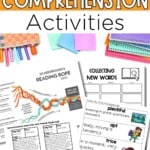
Scarborough’s Reading Rope (2001) gives us a very clear visual about the skills needed. Instead of viewing reading as a single skill, Scarborough shows us that skilled reading is like a rope—made up of many strands that are woven together over time.
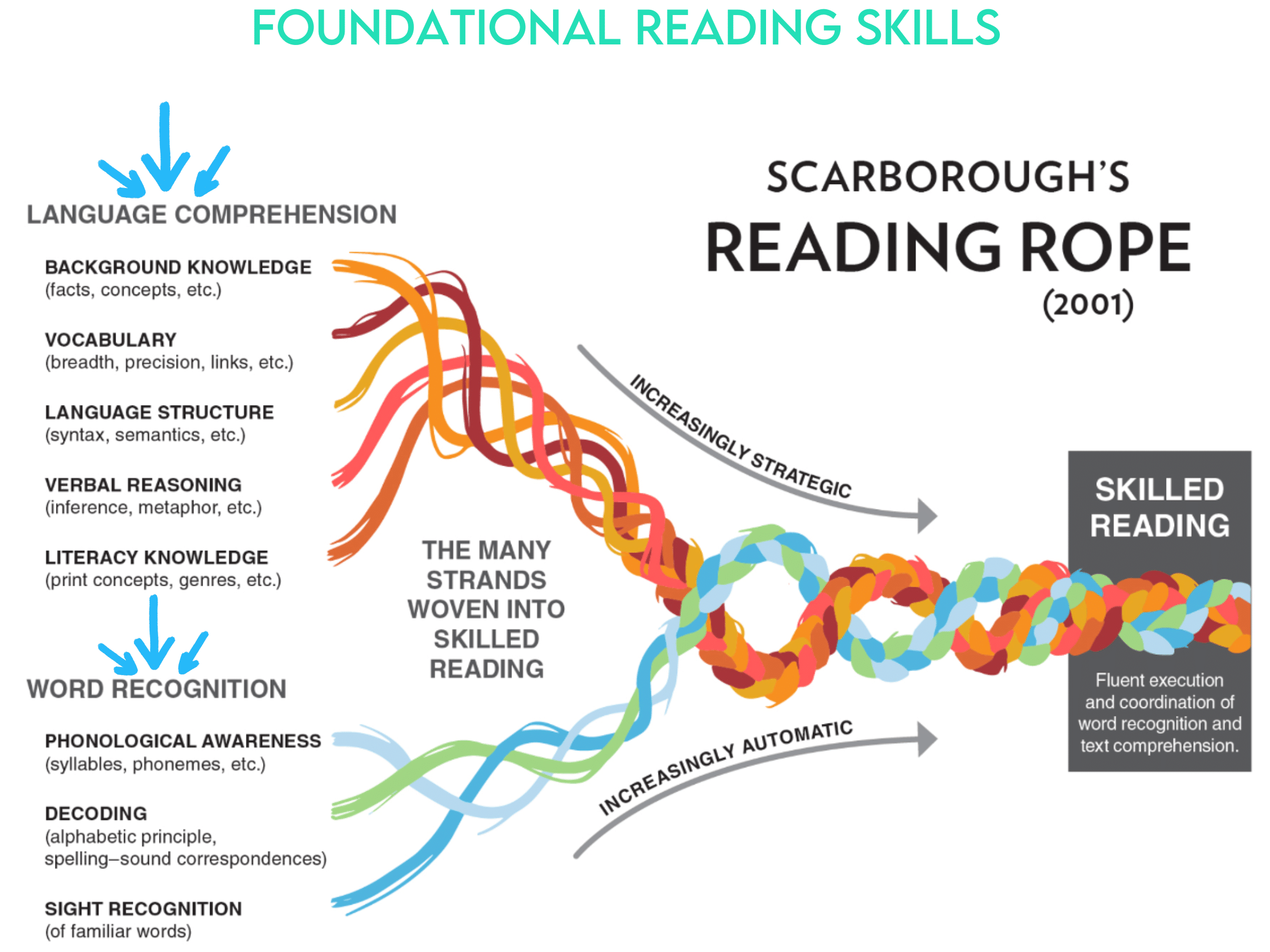
When all of the strands become increasingly strategic and increasingly automatic, students become skilled readers.
The rope is divided into two major sections:
Let’s break down what each strand means as we are laying foundational reading skills—and what it looks like in a K–2 classroom.
In the image, you’ll see multiple strands twisting together. On one side, language comprehension strands become increasingly strategic. On the other side, word recognition strands become increasingly automatic.
When both sides are strong and tightly woven, students achieve skilled reading, which Scarborough defines as fluent execution and coordination of word recognition and text comprehension. This is you and I, most likely. We can pick up and read anything without really thinking through it much.
If one strand is weak, the rope looses its strength. This is why we must pay attention to all the strands and support readers where we can to help them develop into skilled readers.
Language comprehension is about understanding language—both spoken and written. These strands develop primarily through rich conversations, interactive read alouds, and explicit vocabulary instruction. many of these areas grow and develop without us thinking about them. They happen on the playground, while reading a book at bedtime, and through every day conversations.
Background knowledge is what we have that we bring to a text or area of learning. Everyone’s background knowledge is different. What one student brings to the table may not be the same as what another child brings to the table. This is dependent on many factors.
When it comes to reading, the more knowledge a student has about a topic, the easier it is to understand what they read. That’s why building knowledge through experiences, conversations, and content-rich read alouds is essential for our foundational reading skills.
You can support background knowledge growth through:
Inside The Read Aloud Library, you’ll find done-for-you interactive lessons that build knowledge while strengthening comprehension skills.
Vocabulary is the breadth and precision of word knowledge. In early elementary, its easy to work it in naturally as we are introducing concepts and reading aloud to build foundational reading skills.
Students need:
Explicit vocabulary instruction makes a huge difference. During read alouds, you can pause to define words in kid-friendly language, act them out, and revisit them throughout the week.
If you are looking for an engaging way to hold yourself accountable for teaching vocabulary, use this hand out from our Shifting the Balance book study to go on a word hunt!

Language structure, simply put, refers to how we put words together to make sentences and how we use those sentences to communicate.
Our early elementary students benefit from hearing complex sentence structures read aloud—even before they can read them independently. Exposure builds understanding.
You can strengthen this skill by:
We also must remember that we have to give an explaination in a way they can understand. I like to say, “We use letters to build words. We use those words to build sentences. Then, we use those sentences to make books!” This is a concrete way of explaining it that they can understand. It also builds excitement and gives them a REASON to learn the smaller concepts–like letter sounds.

Verbal reasoning is our ability to understand and work through concepts that are presented with words–written or oral. NewsELA.com says, “When students have strong verbal reasoning skills, they can extract, interpret, and work with the meaning and implications from a text. They’re able to think constructively and go beyond just recognizing vocabulary or demonstrating simple fluency.”
This is where comprehension strategies like questioning and inferring live.
When we ask:
…we are working to strengthen verbal reasoning. We want readers to work to think beyond the text and verbal reasoning is at work when we do this as we are building foundational reading skills.
Literacy knowledge includes understanding print concepts, how print conveys meaning, and understanding different genres.
Students need to know:
Explicitly teaching concepts about print during shared reading and teaching genre during read alouds helps students approach texts with purpose.
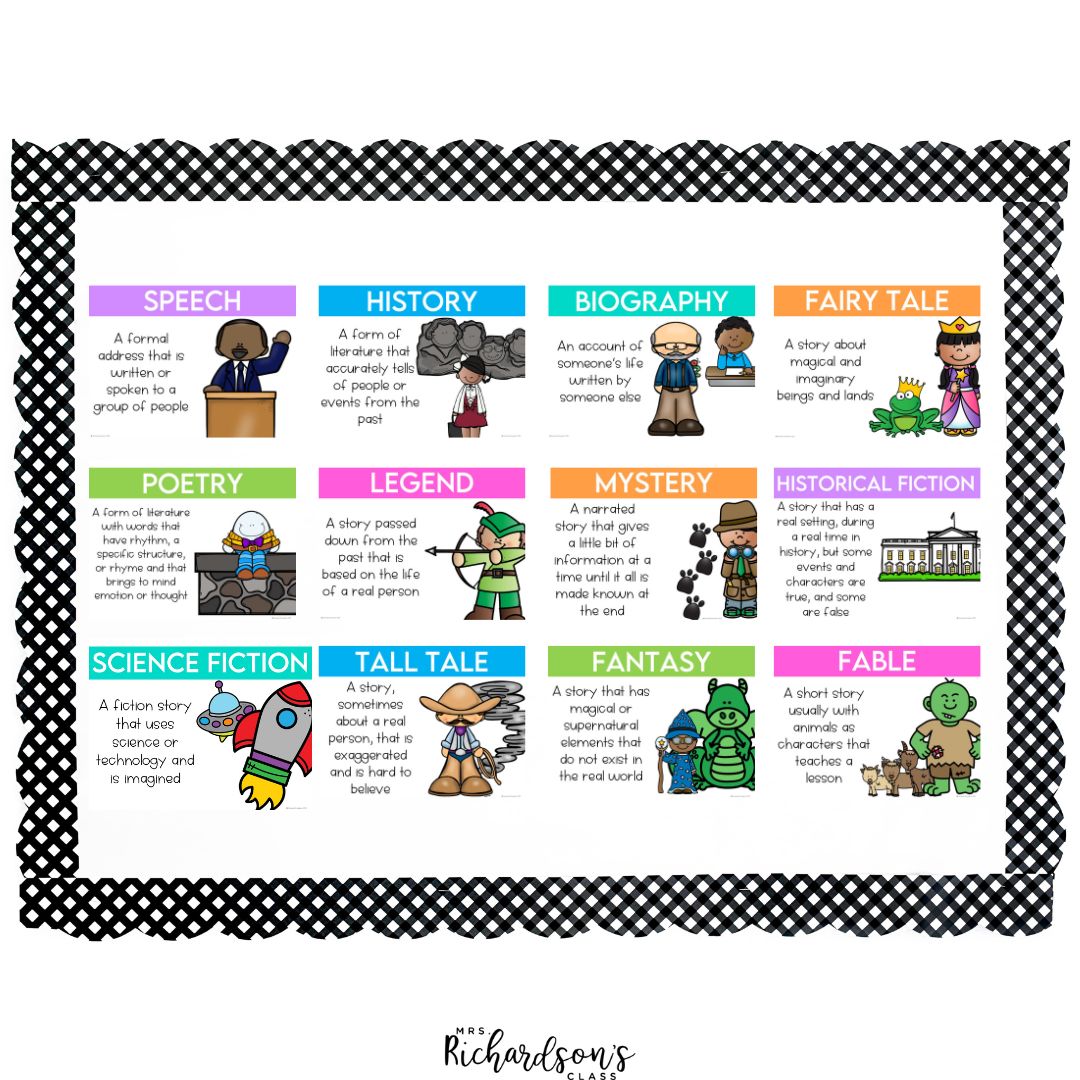
Using anchor charts and genre sorting activities can make this learning stick. You can find this set of Reading Genre Posters HERE.
While language comprehension becomes increasingly strategic, word recognition must become increasingly automatic. These foundational reading skills must be taught. We can never assume they are just “picked up” through exposure.
Phonological awareness is the ability to hear and manipulate sounds in spoken words.
This includes:
For years, we said that phonological awareness was best built with auditory activities only, meaning no letters were present. However, more recently, research is showing that using letters during activities shows beneficial. We are able to more easily bridge the gap to phonics when using letters.
Daily phonological awareness activities are essential in K–1. Quick oral activities during your literacy block can dramatically strengthen decoding readiness. Knowing where students are and how to best support them is critical to building foundational reading skills.
Grab this FREE Reading Assessment form when you join my email list!
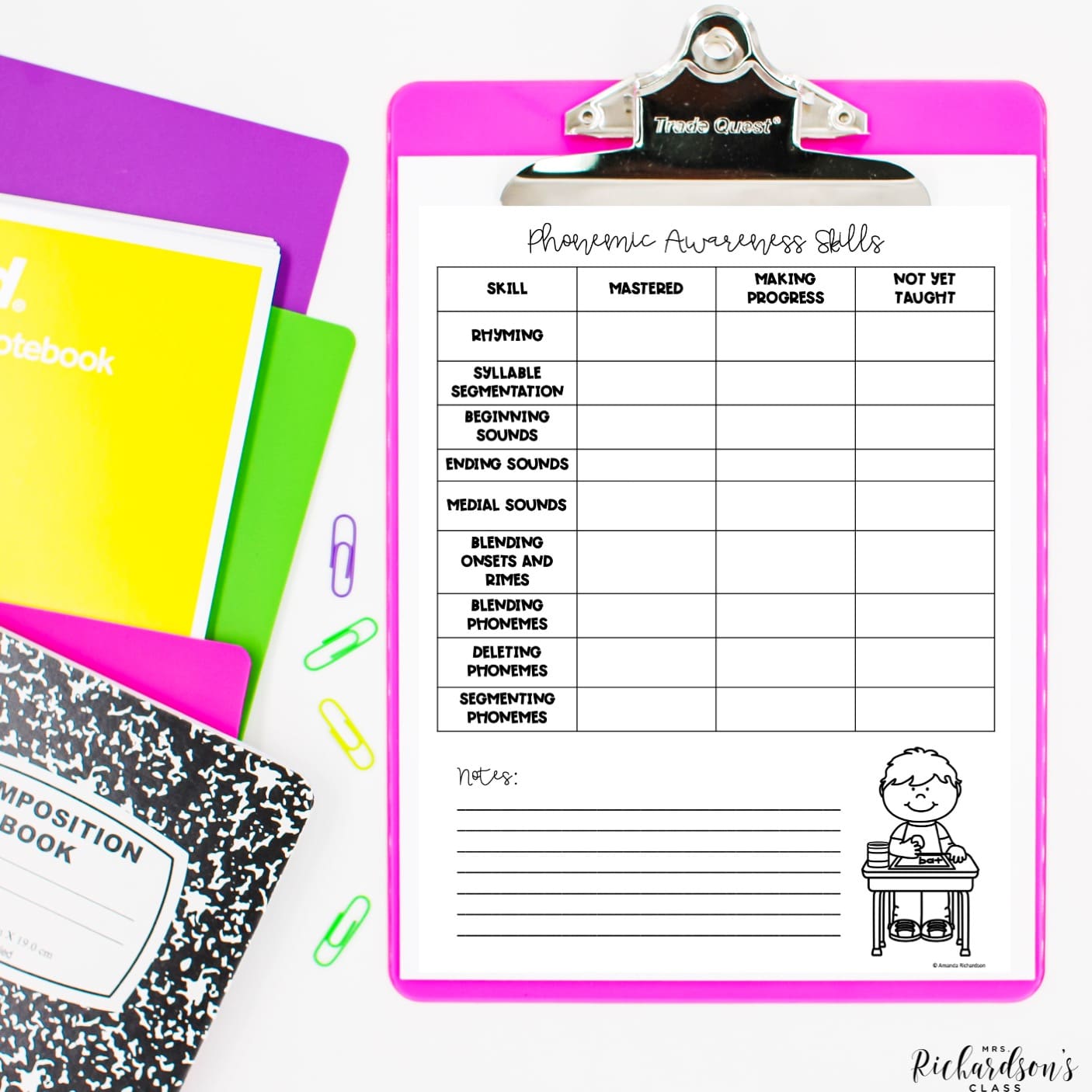
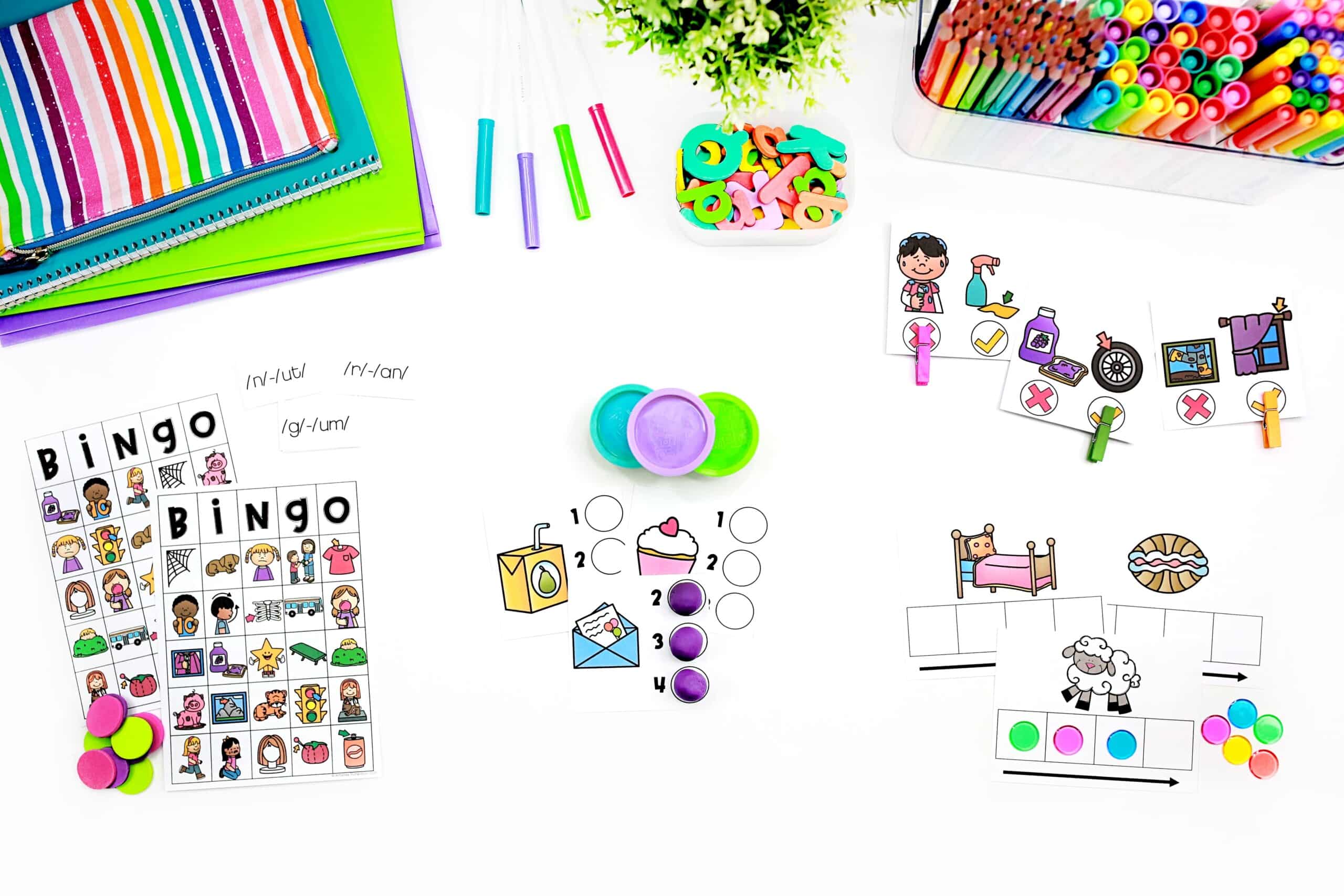
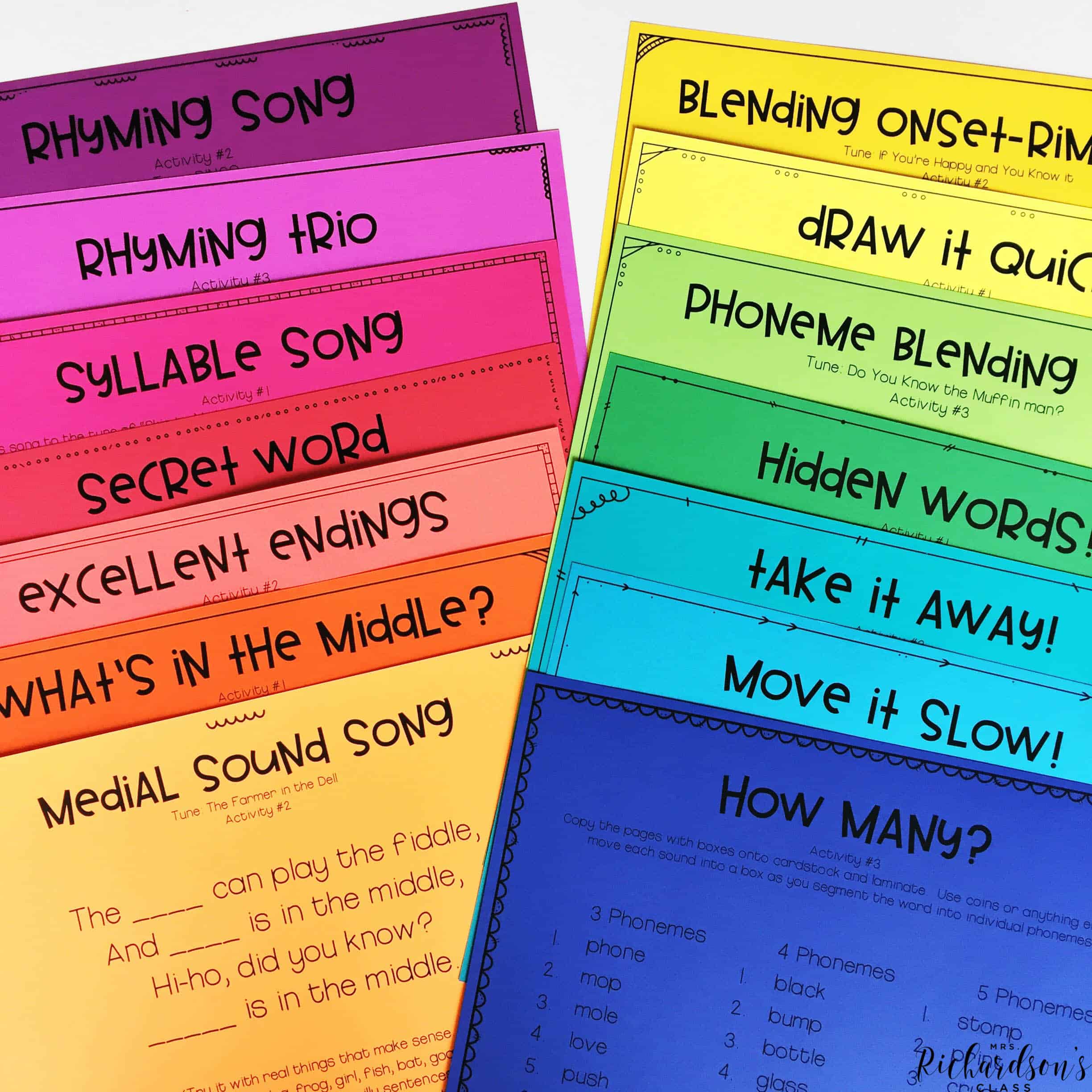
You can find ready to use phonological awareness activities and small group warm-ups that make this practice simple and effective HERE.
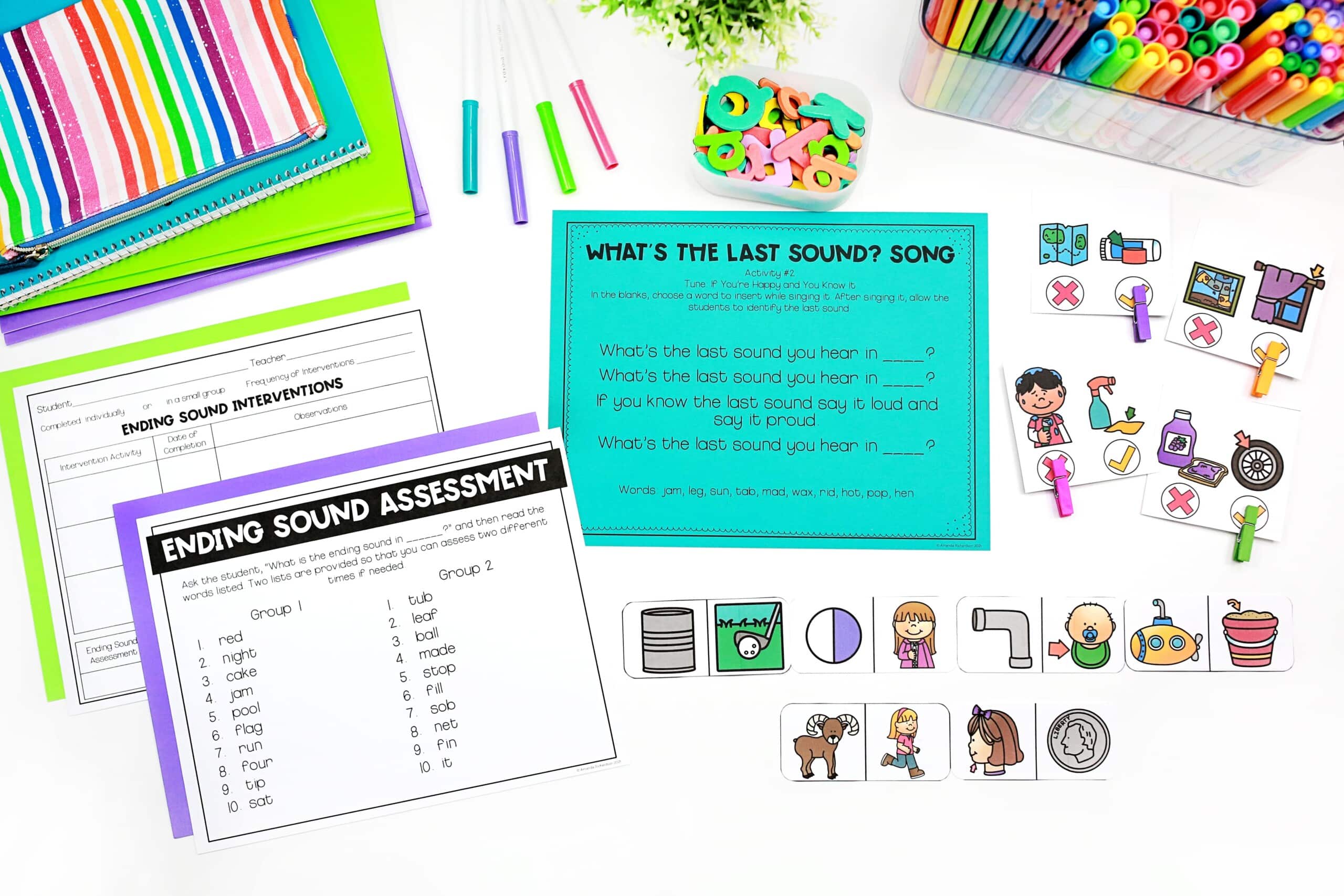
Decoding involves understanding the alphabetic principle and mapping letters to sounds.
Students must learn:
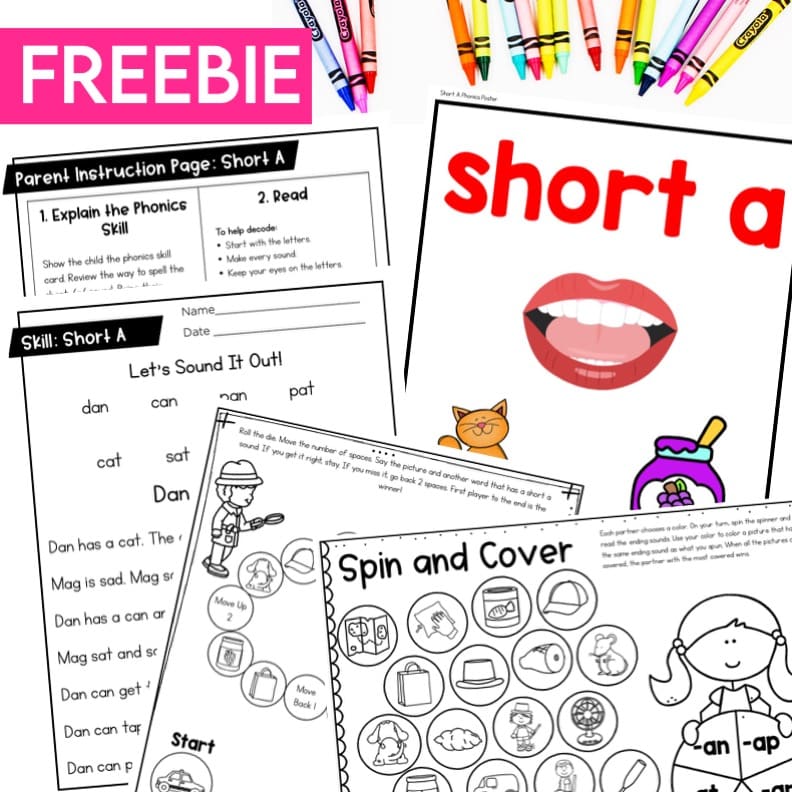
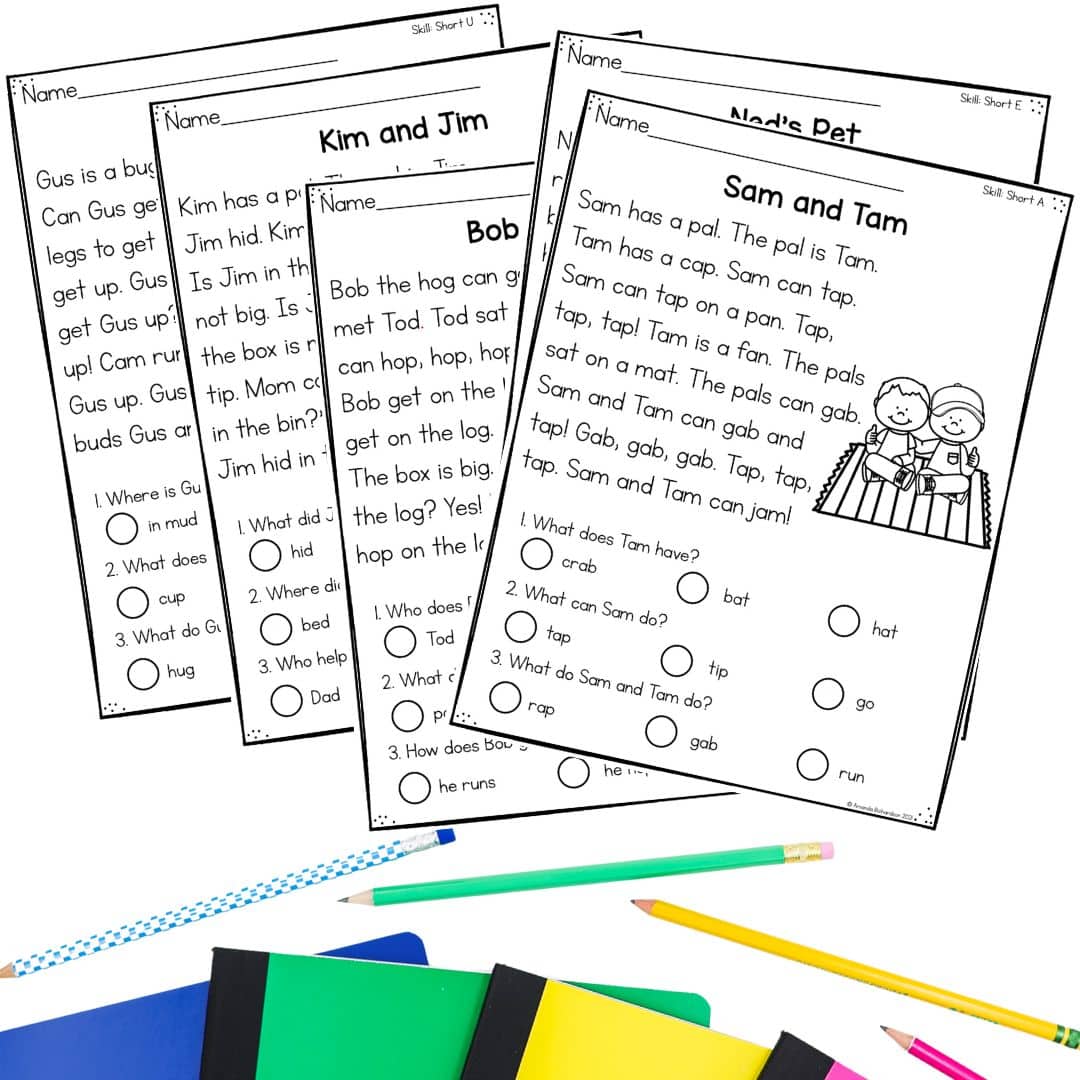
Systematic phonics instruction is critical in building foundational reading skills. We want instruction to make sense and we want to provide opportunities for students to practice authentically with decodable text. You can grab a set of FREE Decodable Passages for CVC words when you join my email list.
Sight words recognition is another part of foundation reading skills. It is the ability to instantly recognize familiar words. This is different than high-frequency word knowledge. You can learn more HERE in this post.
Sight word recognition includes:
As students practice decoding, words become automatic through repeated exposure. They become sight words to us as readers. The goal is effortless word reading so students can focus on comprehension.
Scarborough’s Reading Rope reminds us that reading success is not about choosing between phonics or comprehension. With careful attention and planning, we can strengthen every strand in building foundational reading skills for our growing readers.
As primary teachers, we are rope builders. Every read aloud discussion, every phonics lesson, every small group session matters. Because when every strand is strong, our readers are unstoppable.