



Have you ever asked yourself, “What DOES a child really need to know before learning to read?” My friend shared that she felt this question a little deeper with her second child. After all, her first born got all the letter matching activities, alphabet puzzles, and one-on-one time with her. I can relate to this so much and my children are very close in age. But you know what, friends? Our second children are a-okay! My friend’s child is growing and thriving as a 5 year old and my 12 year old can barely get away from books. Our kids learned so much from just us reading together daily, some short, but intentional activities we did just as teacher-moms, and when this was followed by explicit instruction, they truly began to thrive!
As parents and educators, we often feel anxious and nervous, wondering, “Is my child ready to learn to read? How do I know if they are ready?” Let’s chat about some things it would be helpful for your child to know before they learn to read on the blog today.
When thinking about learning to read and what would make the big jump easier, there are a handful of things that would be helpful for your child to know.
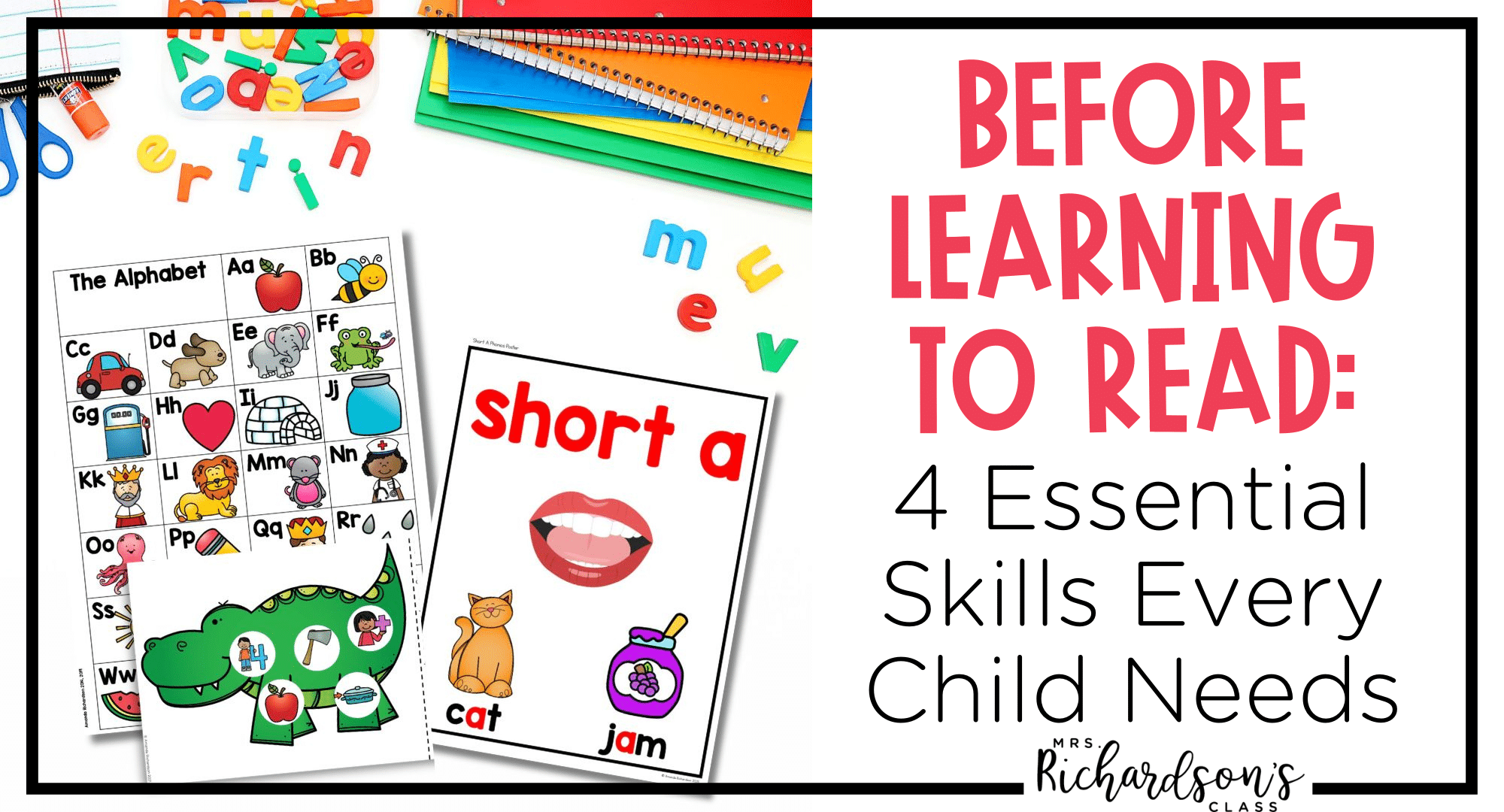
Knowing the 26 letters of the alphabet is crucial to learning to read. The letters that make up our alphabet are the same letters they will see in the words they will read. It is also important your child knows there are uppercase and lowercase letters for each letter of the alphabet.
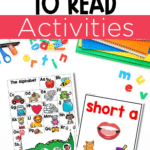
I have an alphabet chart HERE that you can use with your child to teach them the letters of the alphabet.
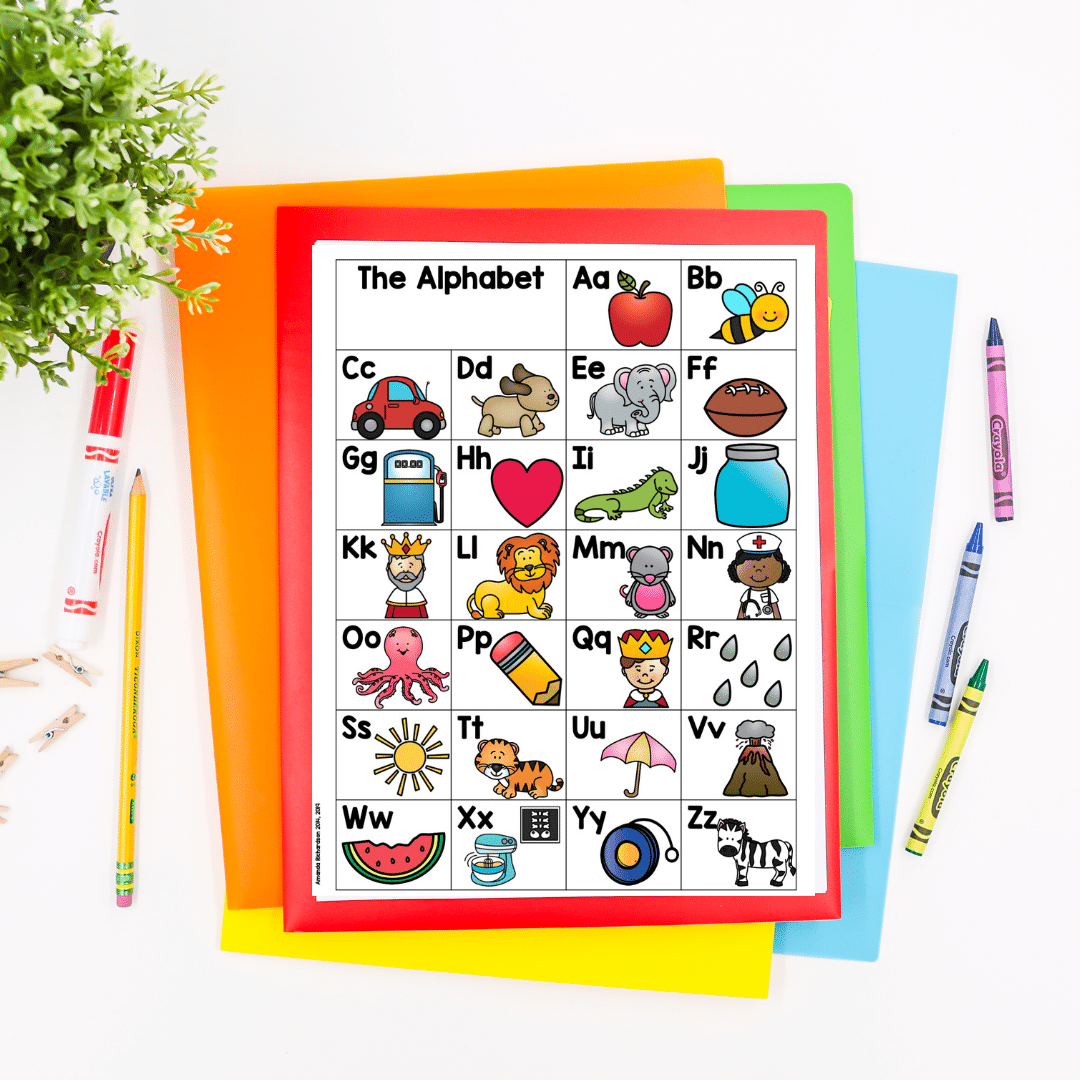
Sing the alphabet, do a puzzle, or hunt for letters on signs when driving-these are quick easy ways to solidify the alphabet in your child’s mind.
The letters of the alphabet make sounds. Those sounds are what we use to help us decode words so we can read accurately. Some letters make one sound and some letters make more than one sound. You can use the alphabet chart from above to start teaching your child their letter sounds. I like to say, “We spell the /a/ sound with a letter a.” This will help get kids used to knowing that every sound is spelled with one or more letters.
This is a fancy term that is often used when referring to children knowing how to handle a book. It is important that your child knows words on a page represent spoken words. We want them to know the words they see have meaning! Children also need to know books are read from beginning to end, top to bottom, and words are read from left to right on a page. It is also a good idea to teach them the proper way to hold a book and that a book has a title, an author, and sometimes an illustrator. This is easily taught and caught by reading together daily!

An important part of learning to read is the ability to hear and manipulate, or play, with sounds. We want children to identify and produce rhyming words, play word games where the first, middle, or last sound is changed, and identify the number of syllables in a word. These are so important to the process of reading and can be easily done on the go! Head to this blog post for more ideas as you are.
I have created a “Learn to Read” resource just for you and your child at home or students at school to use as they are learning to read! This sample set includes teaching of the phonics skill for you, a passage for the child to practice the short A sound in words, as well as comprehension questions, and a writing component.
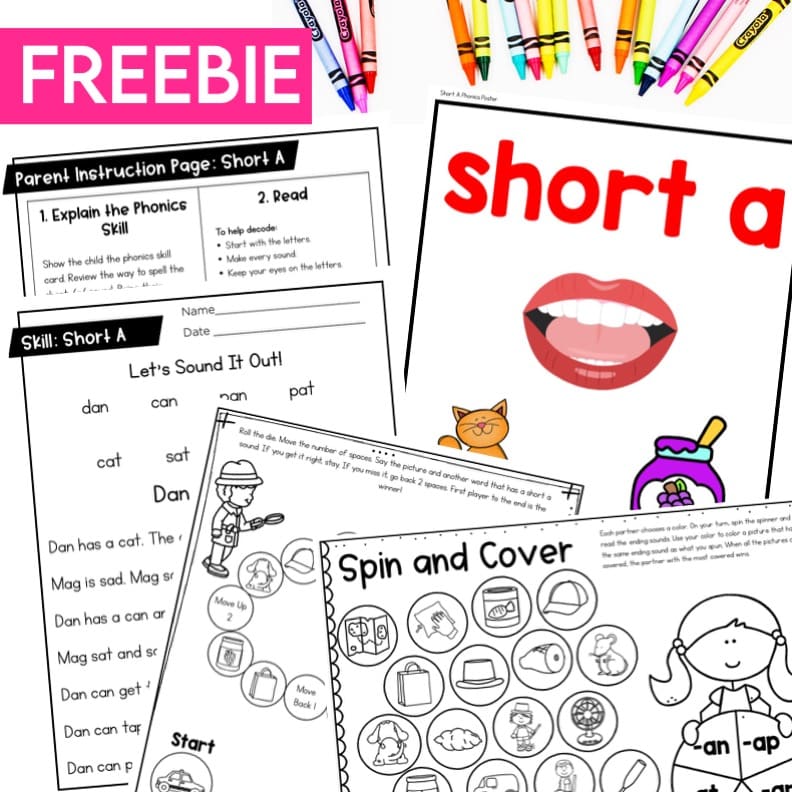
You can grab it HERE!
Are you wanting to learn more about these important pre-reading skills for learning to read? As parents and educators, we want to be intentional in our child’s reading journey. Be sure to stay tuned to my email list. I am always sharing helpful tips for teachers and parents.

How have you taught children pre-reading skills for learning to read? Did you do anything not listed above? Let me know in the comments!