







Is your December plan already full of gingerbread men? Mine always was. Students love chasing that cookie through story after story, and you can feel the energy in the room the moment you open the book.
But here’s the question I kept asking myself: are we doing more than retelling? Retelling matters, and we’ll start there. The good news is that gingerbread man reading comprehension activities can stretch so much further, from story elements to comparing versions to writing about what students read.
In this post, I’m sharing six ways to use your gingerbread read alouds and gingerbread man reading comprehension activities to build strategic readers. These are the readers who think while they read, and they grow into skilled readers.
Before we go beyond retelling, let’s give it the credit it deserves. When students retell a story, they show you what they understood and remembered. When they sequence events, they learn that stories have a structure, with a beginning, middle, and end that connect.
That sense of how stories work is part of the language comprehension side of Scarborough’s Reading Rope. It’s the base every other comprehension skill sits on. A student who can’t retell The Gingerbread Man will have a hard time comparing it to another version.
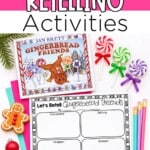
So start here. Read the story, then have students put the gingerbread man sequencing cards in order. Pass out the character cards, or glue them on popsicle sticks as puppets, and let students act it out with a partner. Acting it out gives students who aren’t writing yet a way to show what they know throughout these gingerbread man reading comprehension activities.

Then, read the mini reader together.
One fun way to make this retell even more interactive is to have students act it out as a whole group! Glue each retell character card on a sentence strip and have students wear them. Then, have the students retell the story by playing the characters! This is always a classroom hit!
Once students can retell, you can ask them to do more with the story. Each activity below builds a different thinking skill. Together, they teach students what to think about as they read.
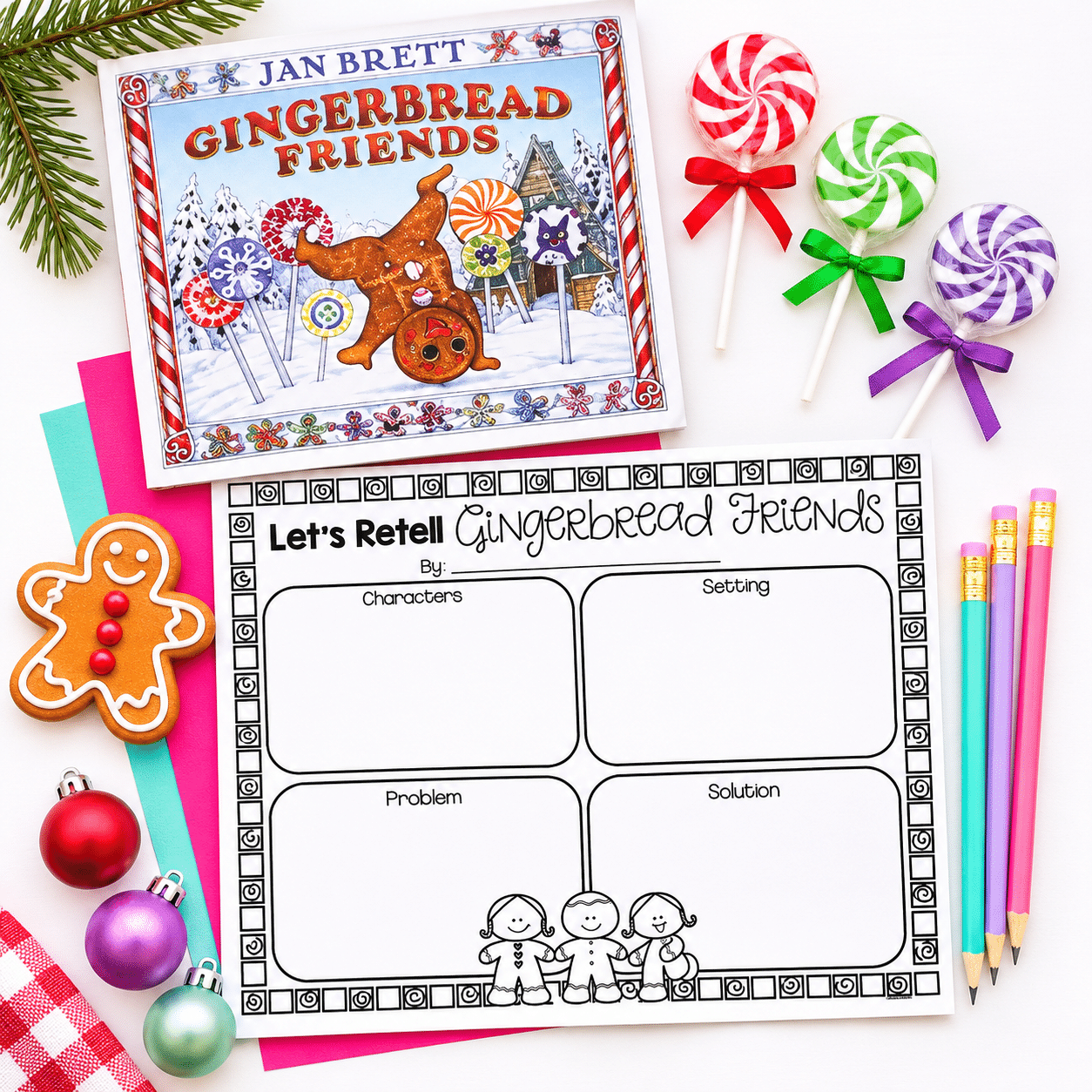
Who are the characters? Where does the story happen? What’s the problem, and how is it solved?
A story elements sheet asks students to slow down and name the parts of the story. Use one for each gingerbread book you read. Students will start to notice the same parts showing up in every story, and that’s exactly the point.
Start with what students can see: the gingerbread man has raisin buttons and he runs fast. Then push into what he’s like on the inside. Is he brave? Is he a show-off? How do you know?
Asking students to point back to the story for evidence is the beginning of character analysis. This is a must-do for your gingerbread man reading comprehension activities!
Kindergarten: Describe one character together on an anchor chart, using words and pictures.
First Grade: Students describe a character with two describing words and one detail from the story.
Second Grade: Students describe two characters, such as the Gingerbread Man and the Gingerbread Girl, and explain how they’re alike and different.
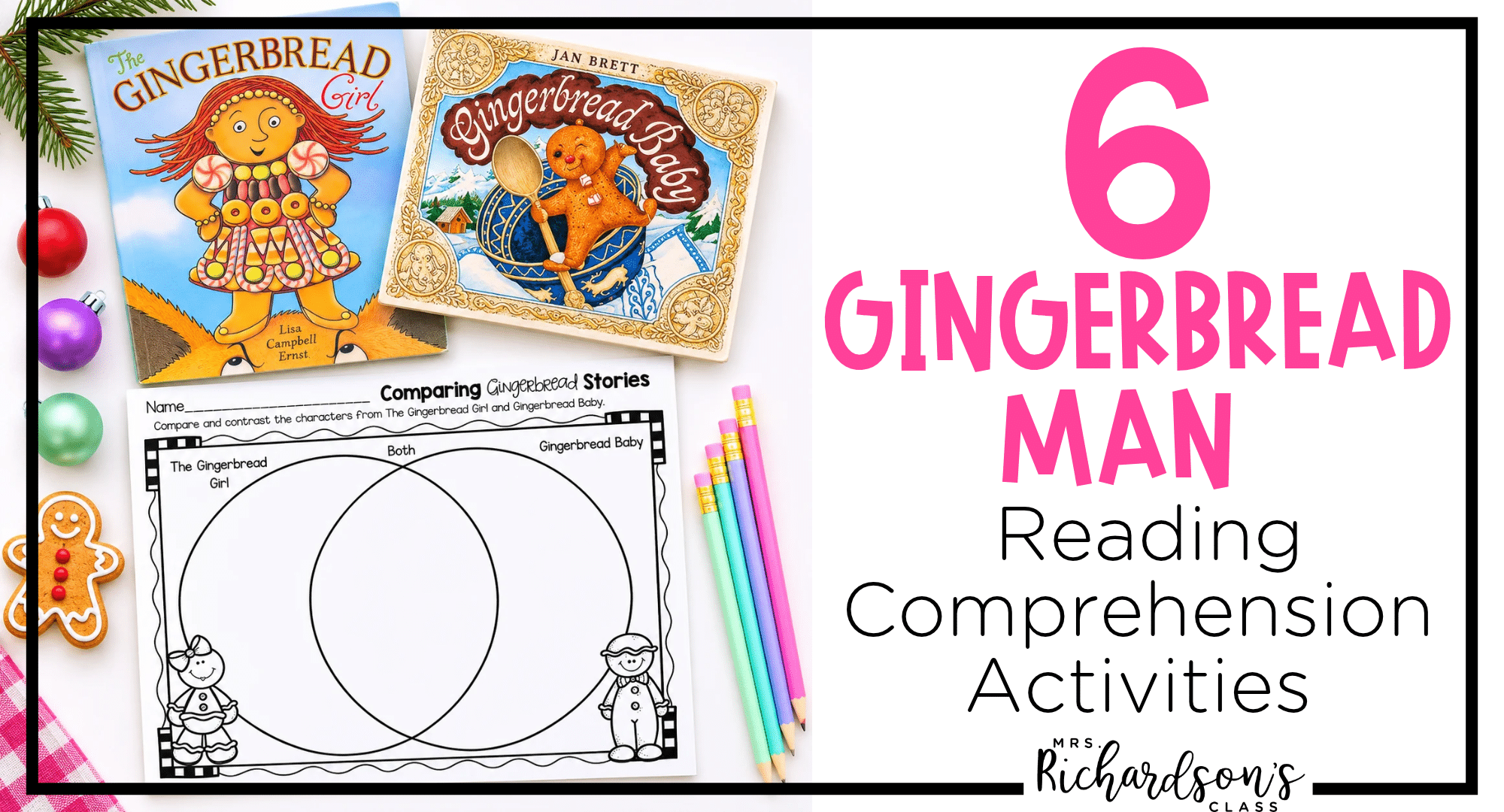
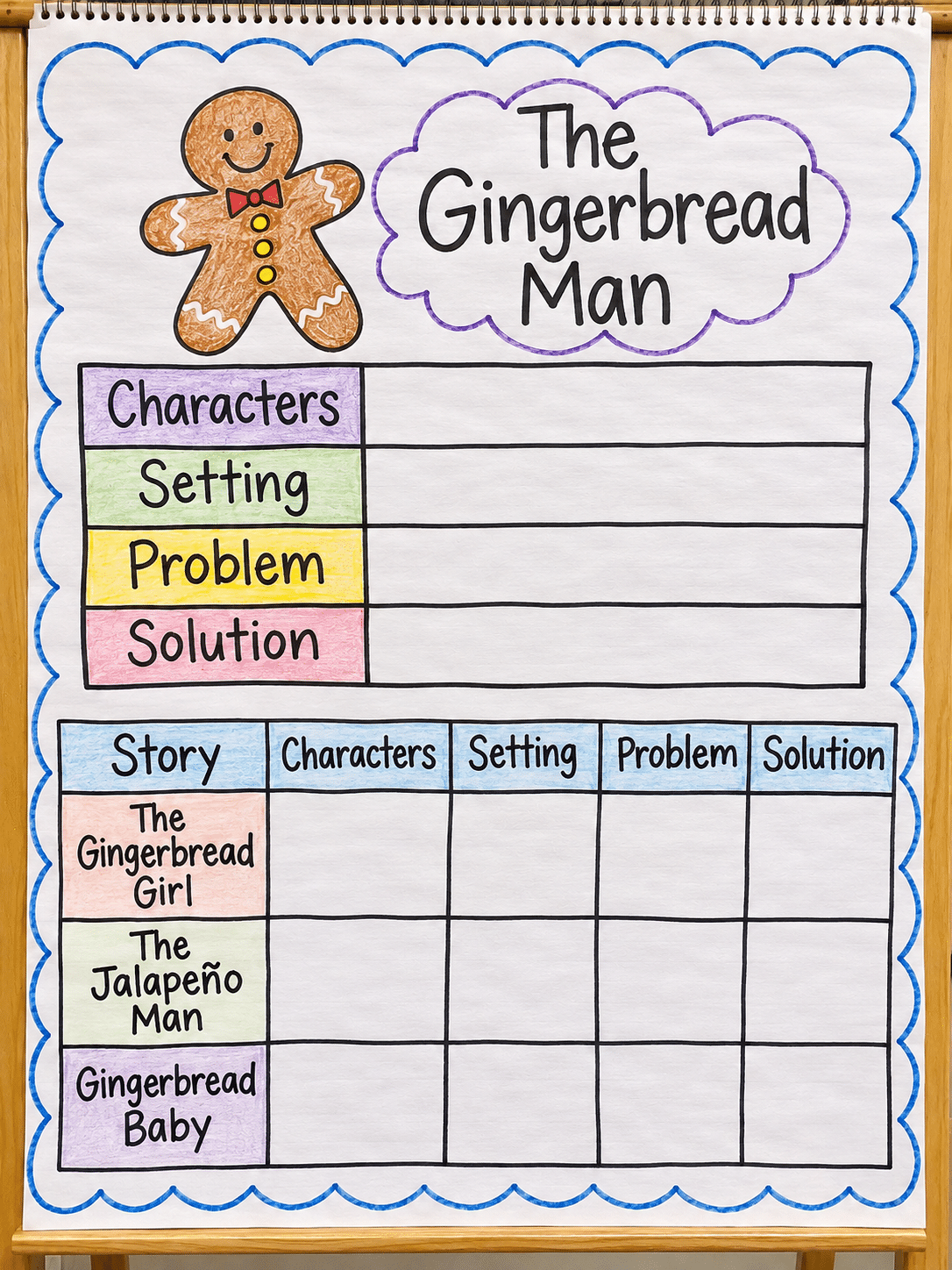
This is where gingerbread stories really shine. With so many versions, students can compare characters, settings, and endings across books like Gingerbread Baby by Jan Brett, The Gingerbread Girl by Lisa Campbell Ernst, and The Gingerbread Man Loose in the School by Laura Murray.
Comparing two texts asks students to hold one story in mind while they listen to another. That’s a big step up from retelling, and it’s a skill they’ll use for years.
Teacher Tip: Read the traditional version first and keep its story elements on an anchor chart. Every new version gets added to the anchor chart so students are able to track their learning and see the differences and similarities as they read.
This one doesn’t need a printable. It happens in your teaching during the read aloud. Model both your thinking and invite the students to join you. Pause and ask questions that make students think beyond the words on the page:
When students combine clues from the story with what they already know, they’re practicing the verbal reasoning that strong comprehension depends on. If you are reading gingerbread man stories, these gingerbread man reading comprehension activities are simple to plan and implement. Grab my FREE sticky note template to plan your stopping points!
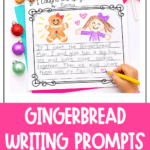
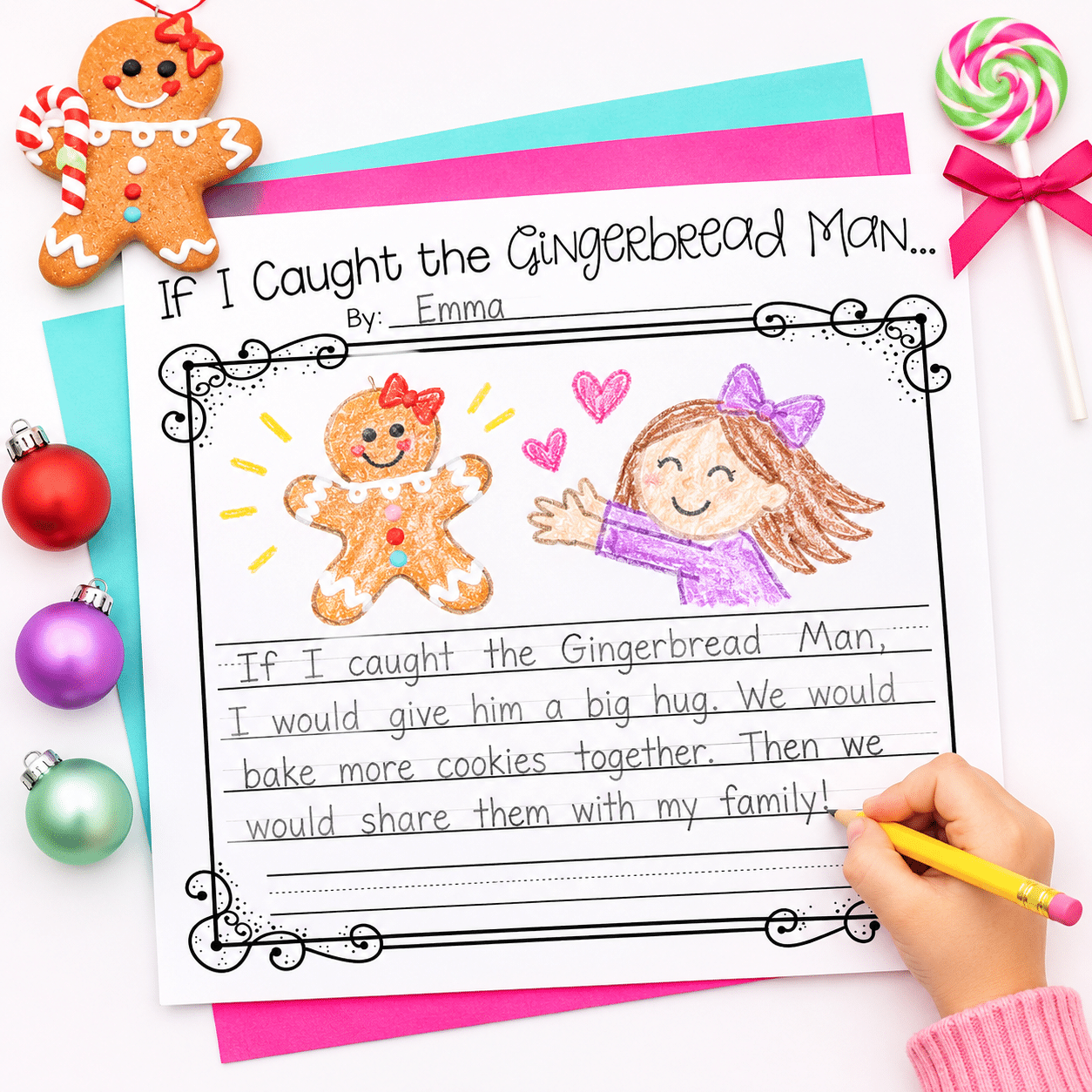
Writing about reading shows you what students really understood. Prompts like “If I Caught the Gingerbread Man…” and “If the Gingerbread Man Was Loose at My School…” ask students to apply the story to their own world.
A how-to piece, like How to Catch a Gingerbread Man, brings sequencing right back into play. Students have to put their steps in order, just like the events in the story. Offer primary lines for students who are ready, or no lines for students who are drawing and labeling.
After reading several versions, ask students which one is their favorite and why. A “My Favorite Gingerbread Book” page gives students practice stating an opinion and backing it up with a reason from the text.
Kindergarten students can draw and dictate. First and second graders can write a sentence or two with a because.
Strategic readers don’t just get through the words. They notice how a story is built, think about characters, make connections between texts, and check their own understanding.
When you repeat that thinking across several gingerbread stories, students practice the same skills with a familiar plot. That frees up their attention for the thinking itself. Over time, that practice is what turns strategic readers into skilled readers.
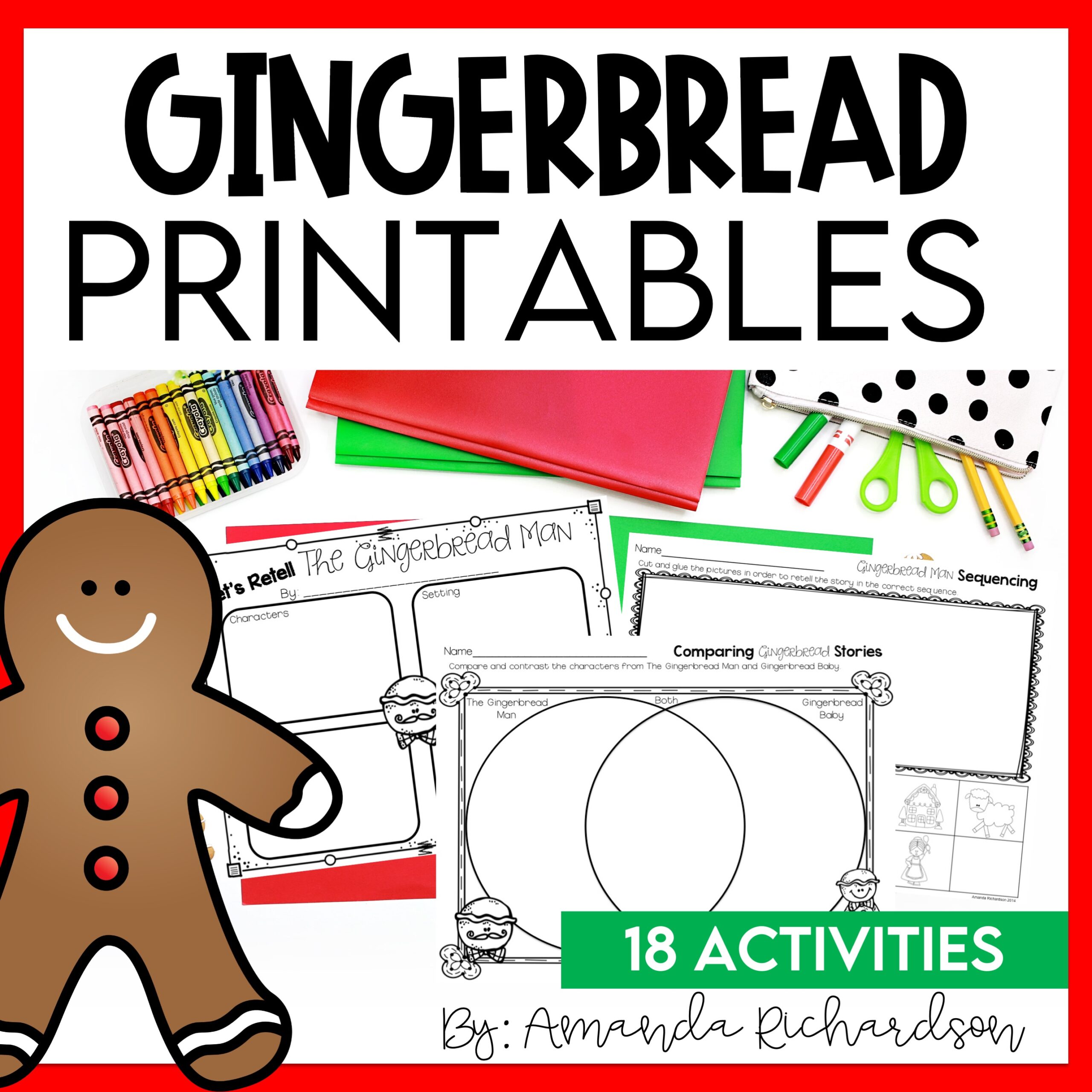
Want all of this ready to print? My Gingerbread Man Reading Comprehension Activities set pairs printables with favorite gingerbread books, so you can read the story and go straight into the activity.
Every activity in this post is covered, from the retelling foundation all the way to opinion writing. Just print and read.
Which gingerbread book do your students love most, and how do you take it beyond retelling? Share your favorite idea in the comments below.