









Spiders are one of those topics that instantly get students talking. Bring up a spider in a kindergarten or first grade classroom and suddenly everyone has a story to tell! I’m not sure I can blame them. It’s a fun way to connect!
That natural curiosity makes spiders perfect for a hands-on spider science experiment and lesson. Instead of simply learning the parts of a spider, or how they are different than insects, or reading facts about spider webs, you can encourage students to think like scientists by starting with a question:
How do spiders walk across their webs without getting stuck?
This simple spider science experiment gives little scientists the chance to make predictions, test different materials, record observations, and learn more about the amazing structures that help spiders survive.
Before jumping into the spider science experiment, spend a few minutes building and discussing background knowledge.
Show students a photograph of a spider web and ask them what they notice.
That last question may lead to some surprising discoveries!
Then pose the big question: If part of a spider’s web is sticky, why doesn’t the spider get stuck? Let your students predict before you explain anything!
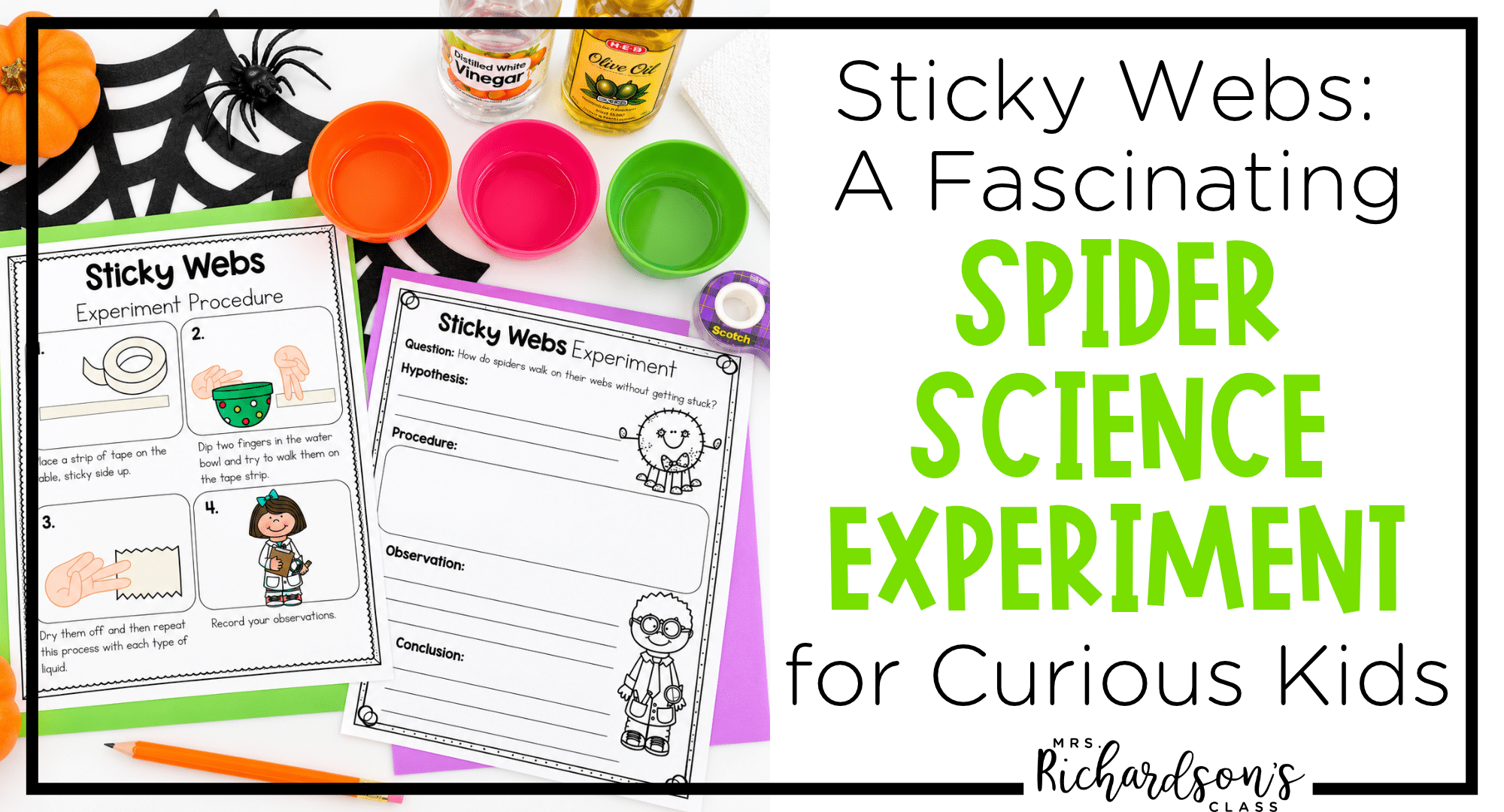
Now it’s time to investigate. For this spider science experiment, you can use something you probably already have in your classroom: tape!!
Place a strip of tape sticky-side up and let students use two fingers as their pretend “spider legs.” They’ll investigate what happens when their fingers interact with the sticky surface under different conditions.
Before testing, encourage students to make a hypothesis.
Then test, observe, and compare!
I love experiments like this for young learners because the science isn’t happening on a worksheet. Students can actually experience the difference, talk about what they’re noticing, and use their observations as evidence. This is how we are scientists!
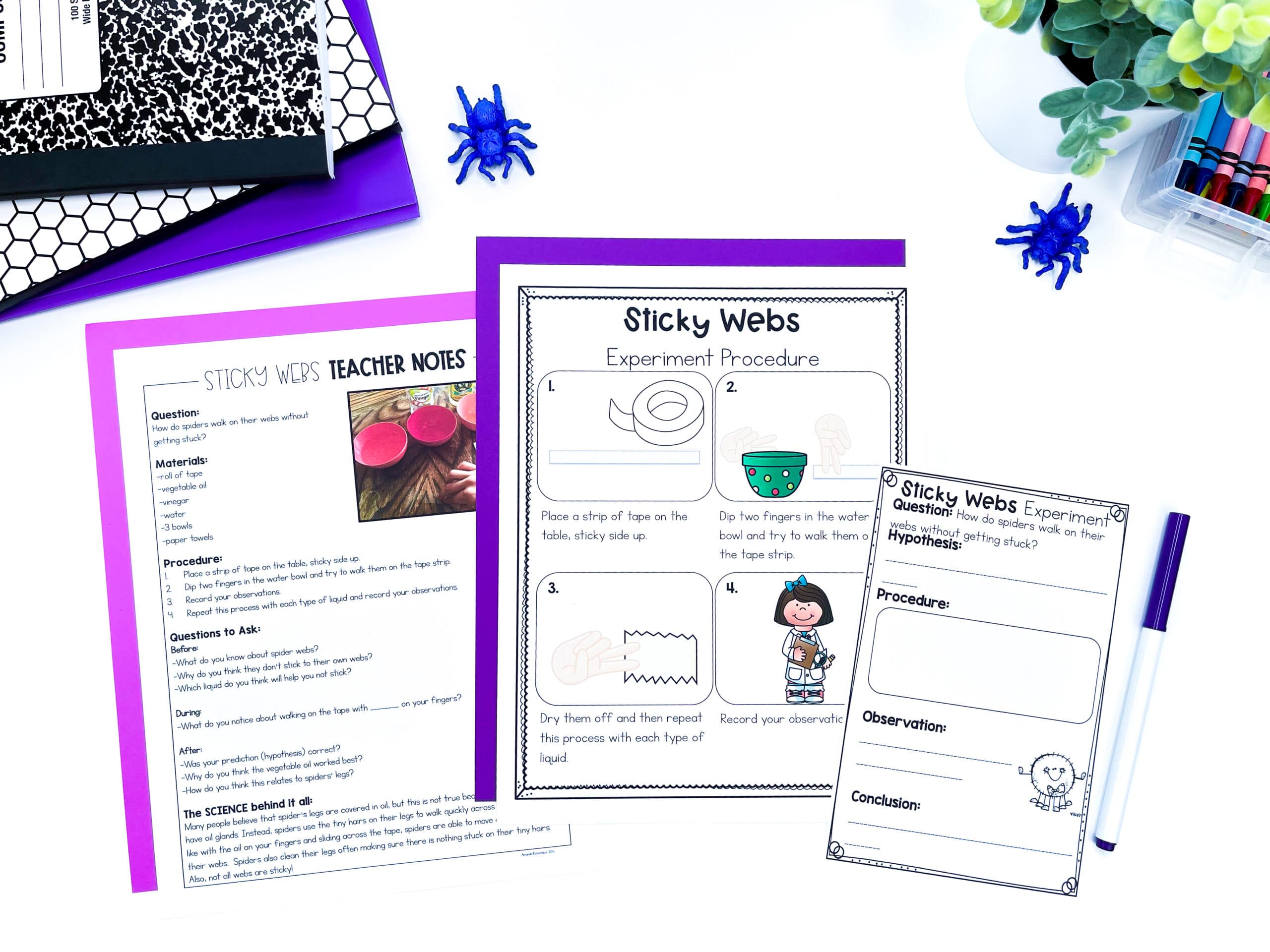
The complete experiment in my resource includes the materials, teacher directions, visual student directions, discussion questions, and recording page, so you can easily walk students through the entire investigation.
After students have investigated, come back together to discuss the real science.
Their spider science experiment is a model, so make sure students understand that a spider isn’t simply dipping its legs in vegetable oil before walking across its web!
Spider legs have tiny hairs, called setae, that can reduce how much of the leg contacts sticky silk. Spiders also use careful movements to minimize contact, and research indicates that a chemical coating on their legs may help reduce adhesion. Plus, in some webs, spiders can travel primarily along strands that aren’t sticky. Discover Wildlife talks more about this!
That’s a pretty incredible design for such a tiny animal!
For young students, you can bring the idea back to one simple concept: A spider has structures that help it move and survive in its environment.
That makes this experiment a natural fit with the K–2 science standards. Texas teachers can connect it especially well to TEKS K.13(B), 1.13(A), and 2.13(B), which build students’ understanding of animal structures, movement, behaviors, and survival. You can also incorporate CCSS ELA standards through informational reading, collaborative conversations, drawing, and writing about observations.
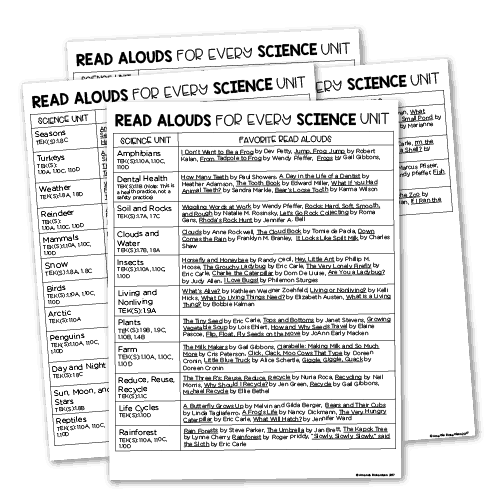
You know I love pairing read alouds with science! You can even get a FREE list of science read alouds HERE!
Try adding a nonfiction spider read aloud before or after your experiment. Some favorites are:
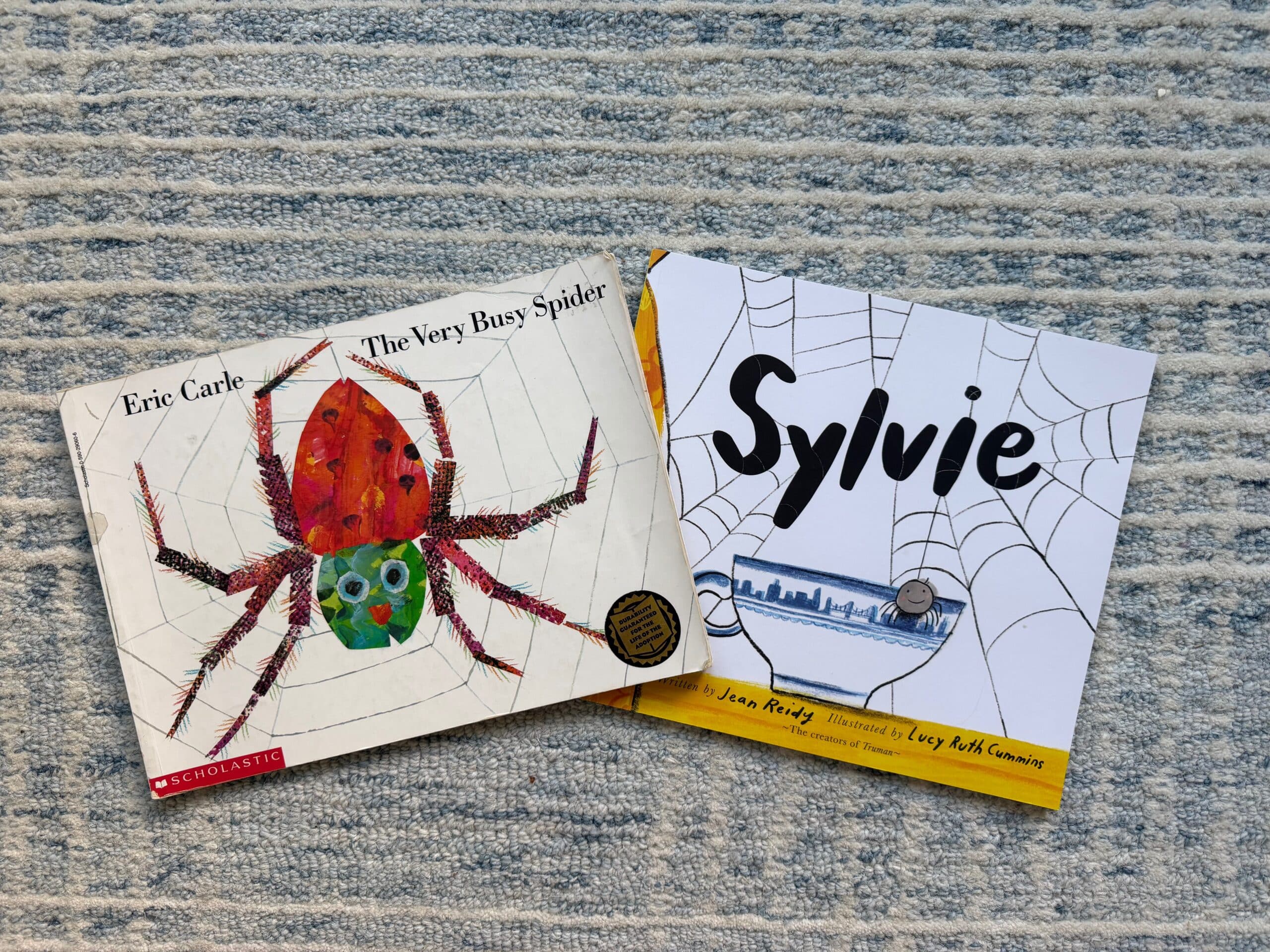
You could also pair your science learning with a fiction favorite like The Very Busy Spider by Eric Carle. After reading, compare what students learned from the fictional story with the facts they’ve discovered through their science investigation.
There are so many easy ways to extend this lesson throughout your day.
Students can examine photographs of different types of webs and compare their shapes. Give partners yarn and challenge them to construct a web between classroom objects. Head outside for a spider-web hunt. Or have students draw a close-up spider leg and add tiny hairs before explaining how that structure helps a spider.
You could even create a class anchor chart and record new learning after the spider science experiment.
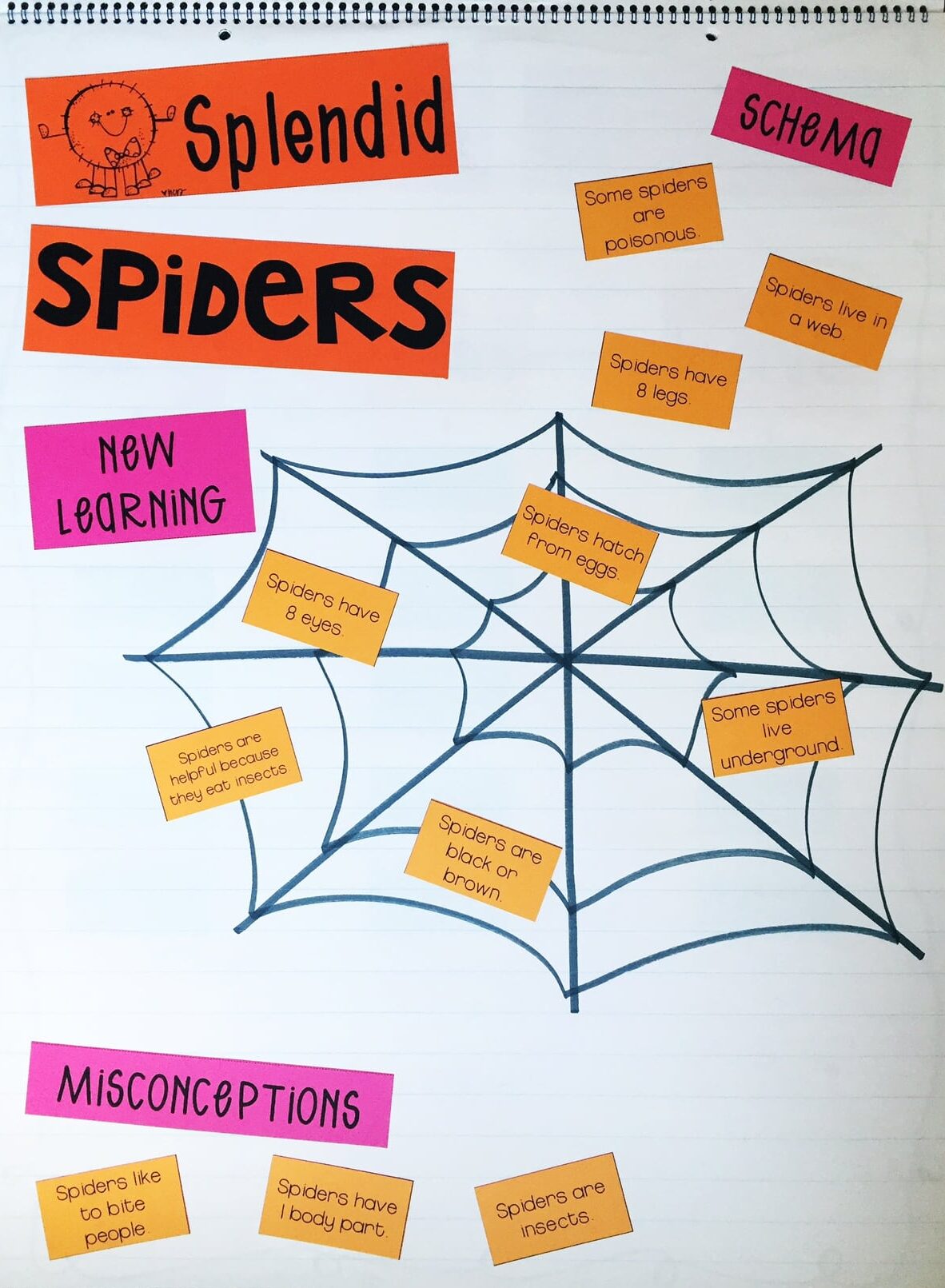
These simple activities help turn one fun spider science experiment into meaningful science learning.
The best part of a spider science experiment isn’t simply that students think it’s fun. They’re asking questions, making a hypothesis, testing ideas, observing results, and discussing what the evidence tells them.
That’s exactly what we want our littlest scientists doing!
This spider investigation is one of the 11 experiments included in my Fall Science Experiments resource. Each experiment includes teacher directions, visual student directions, and a student recording page to make hands-on science easier to manage in a busy K–2 classroom.
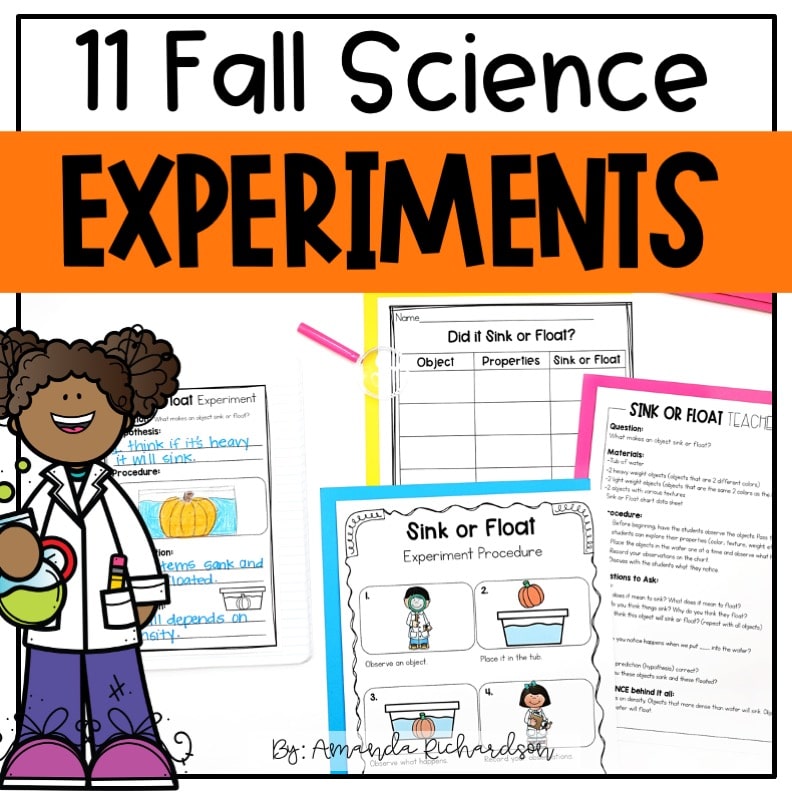
So instead of trying to pull together a spider science experiment at the last minute, you can grab the materials, gather your scientists, and get ready to investigate.
And when someone inevitably asks, “But HOW does a spider not get stuck?!”
Perfect.
You’ve got them wondering and that’s exactly where great science begins!