






Teaching fractions in kindergarten can be tricky, but it also can be a blast! There are many hands-on activities that you can do. In math, it’s all about providing experiences that are concrete before moving to abstract. When it comes to fraction activities, that’s exactly where we started! My goal was to provide as many hands-on and visual activities as possible before moving on.
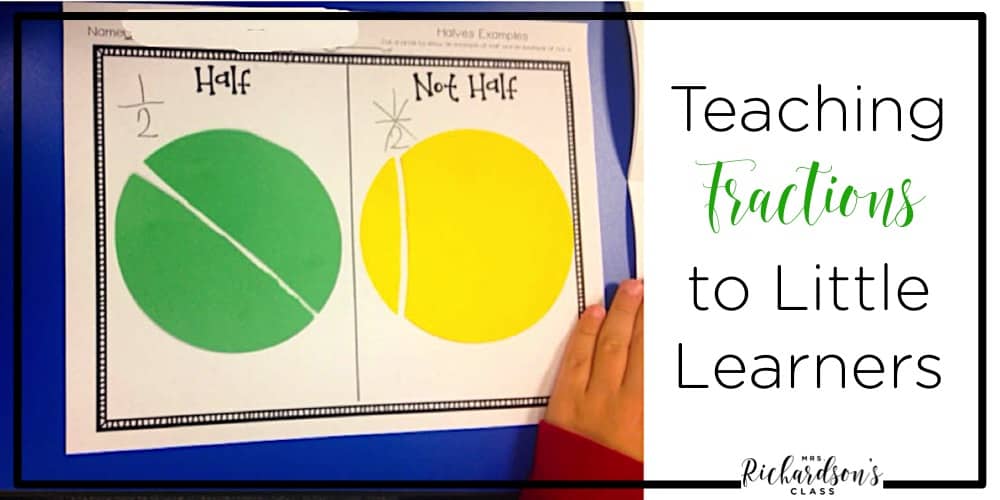
“Fraction” is not a common word we use in everyday language. We may use fractions when we talk, especially when cooking, but it’s not a word that our youngest learners hear often. We started with defining what a fraction is. I was able to easily link their learning back to “fair shares“.
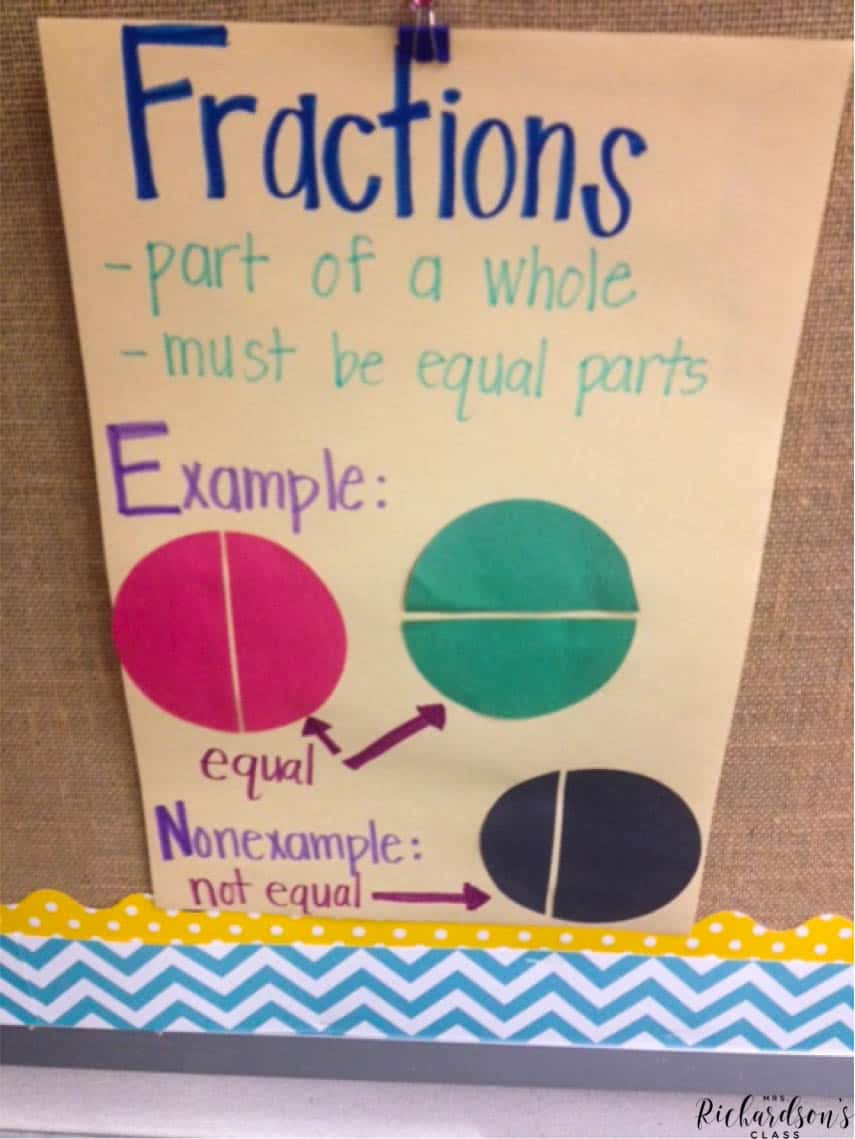
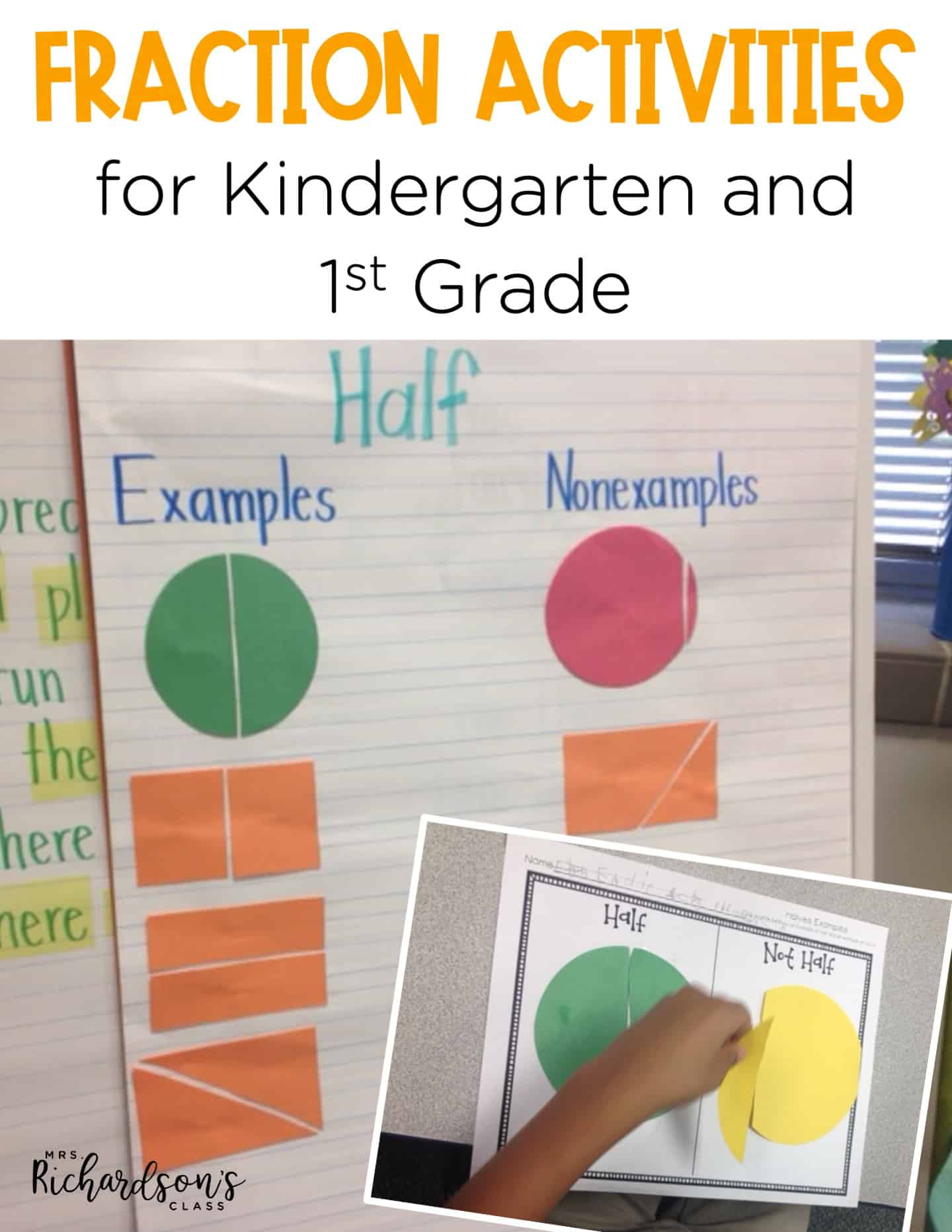
To help anchor our learning and understanding, we made this little anchor chart together. We defined it and gave visual examples to get their wheels spinning. See more math anchor charts HERE.
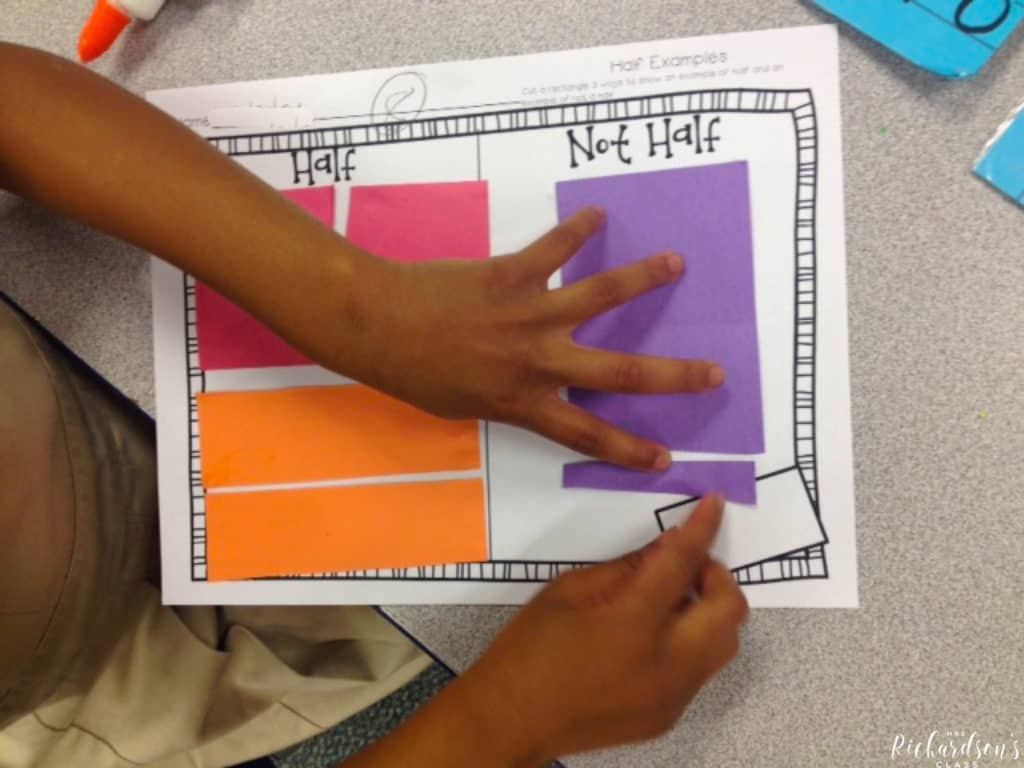
We then practiced cutting different shapes into halves and showing an example of what was a half and what wasn’t a half. I wanted them to see, visually, that halves don’t always look the same. We started with a circle, then moved to rectangles, and finally to triangles as we worked through fraction activities.

The students then got to practice this on their own!
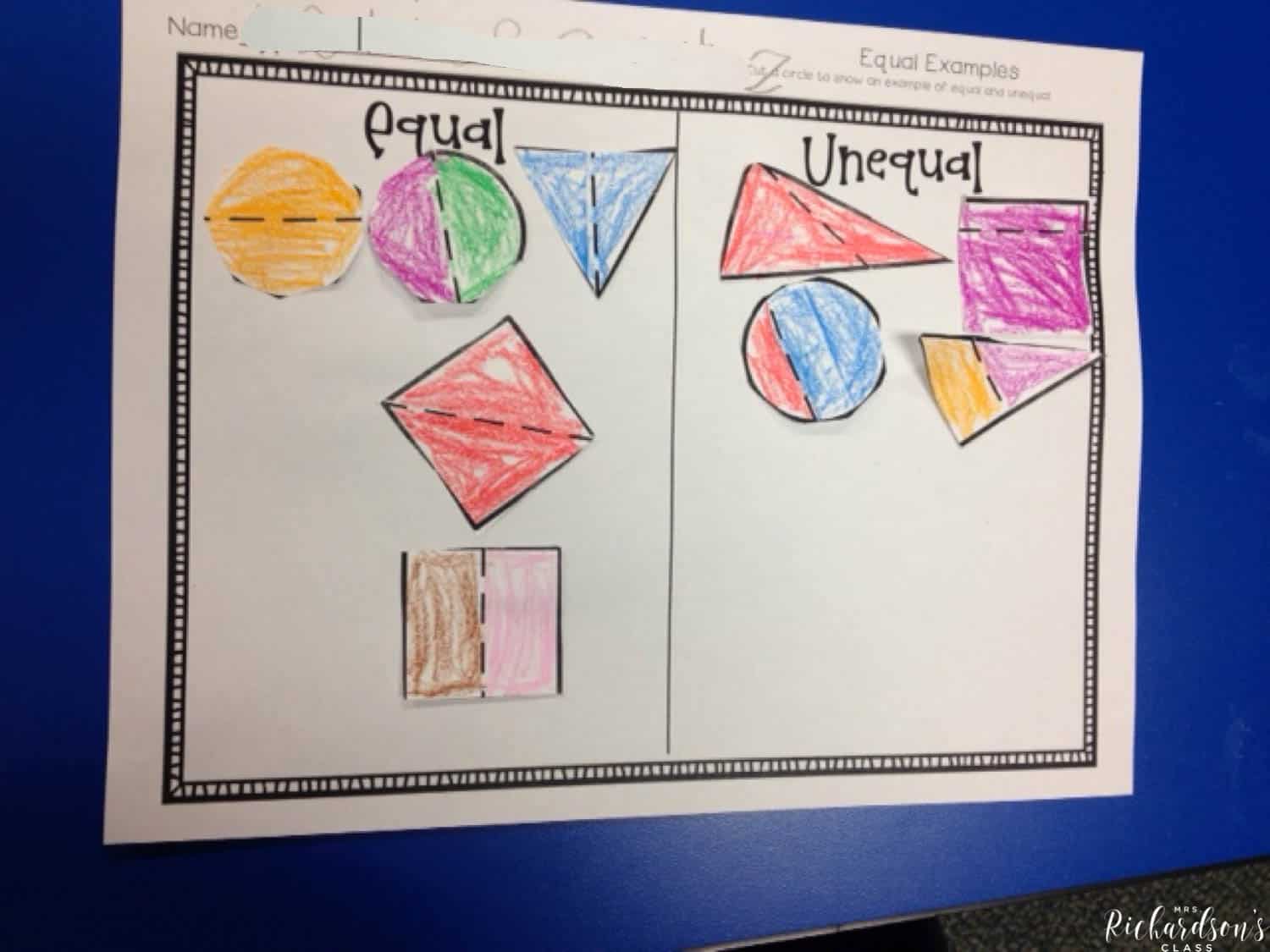
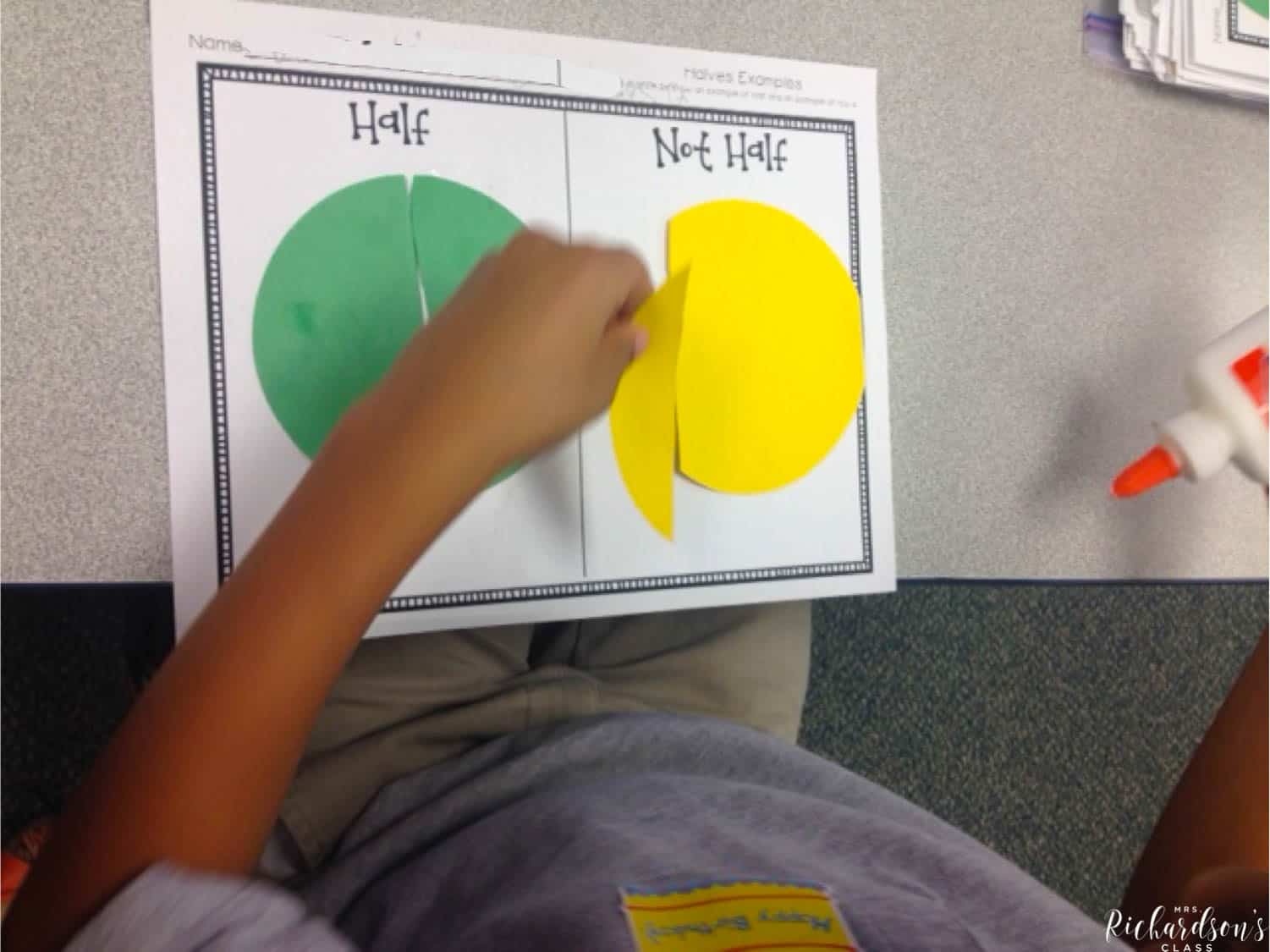
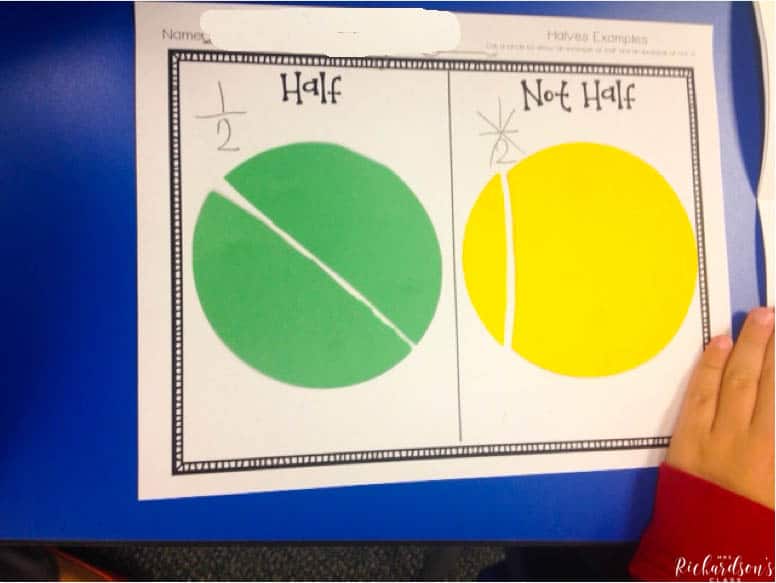
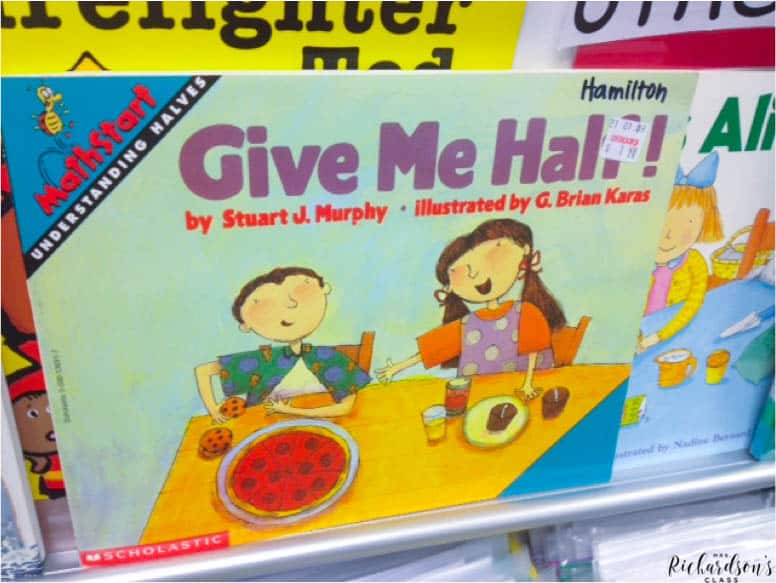
As the week went on, we talked about fractions in real life! How do we use them? Why are they important? Why do they matter? We worked to learn how to draw pictures to help us problem solve with fractions, which was a lot like equal parts or fair shares!
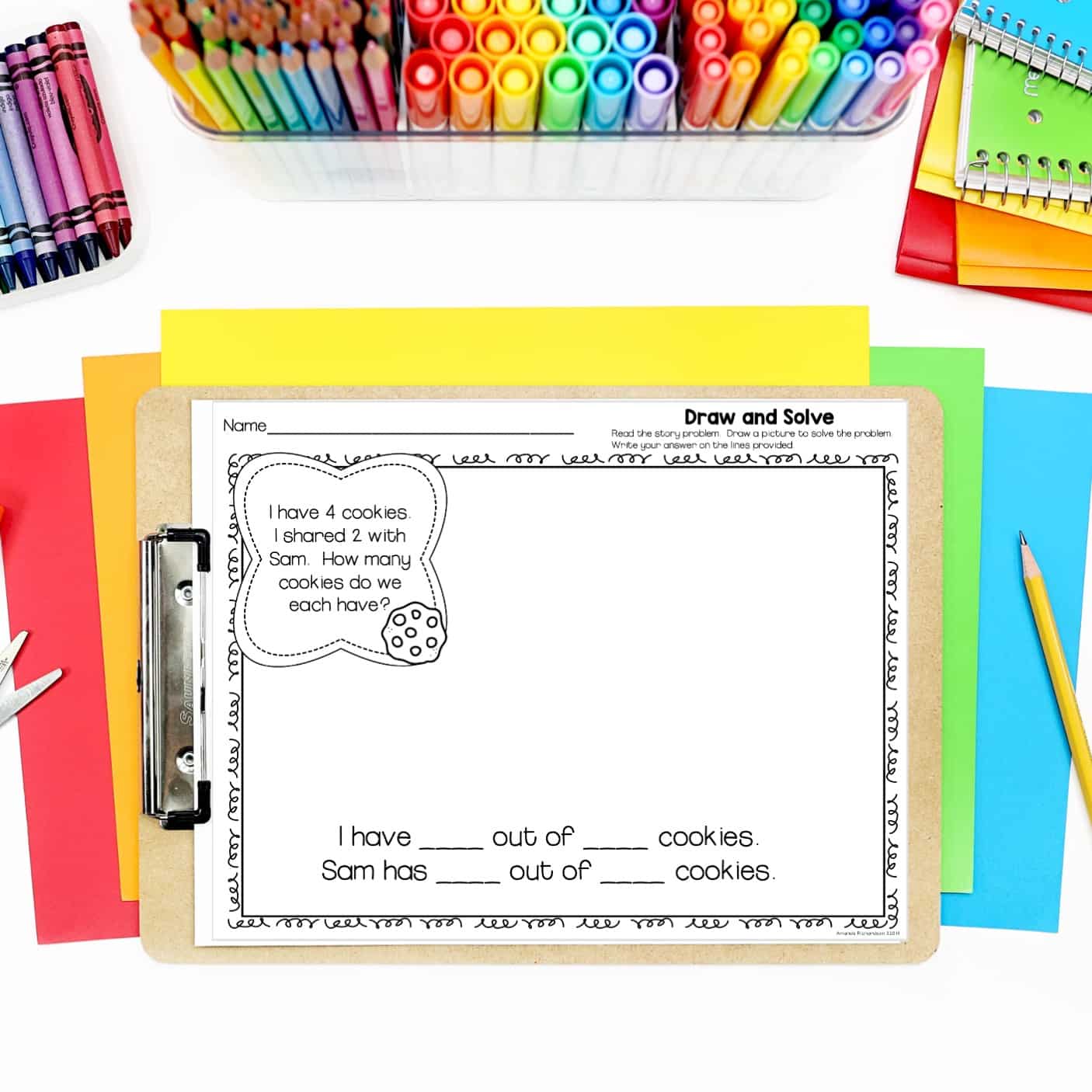
From there, we moved into writing the fractions and placing the examples with their written form.
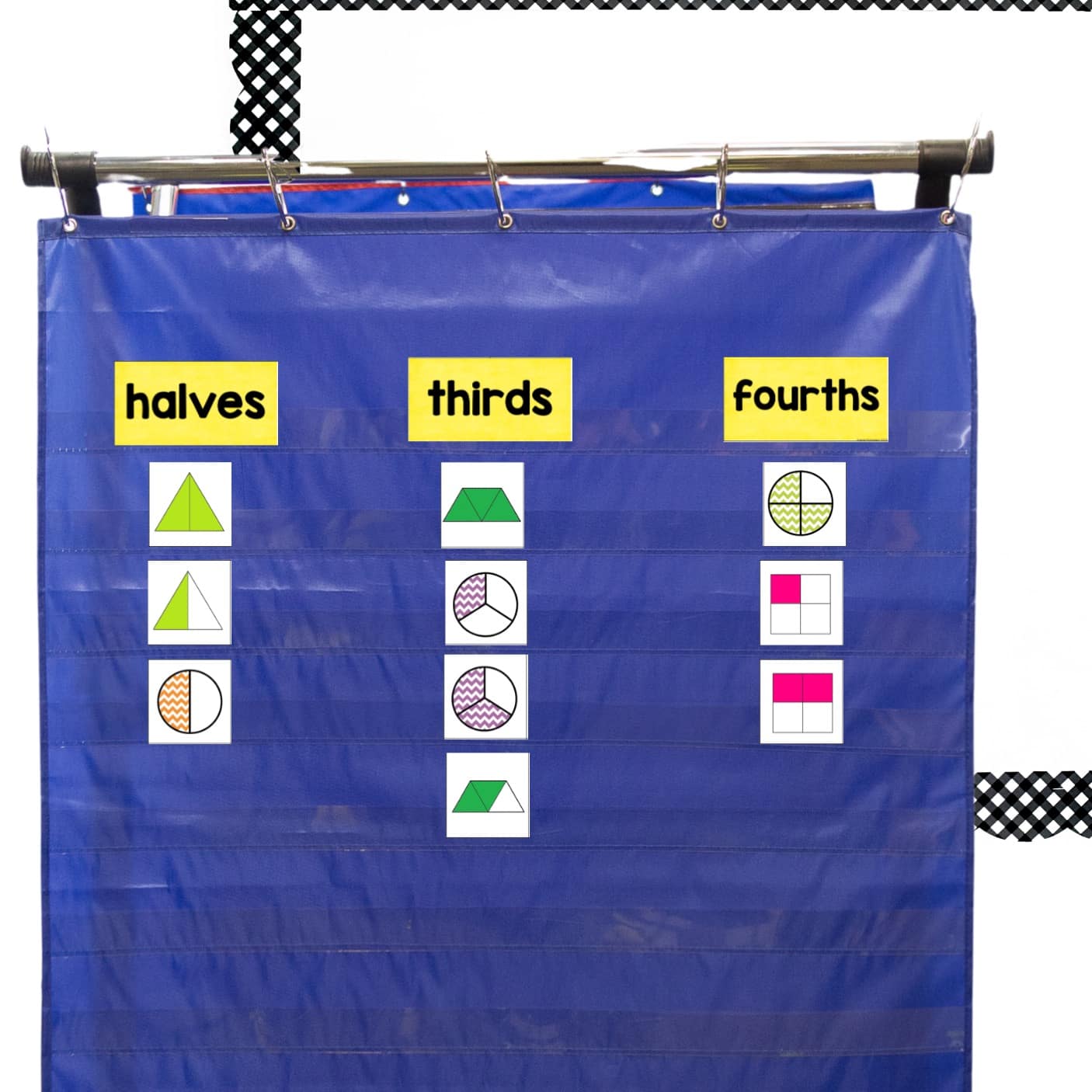
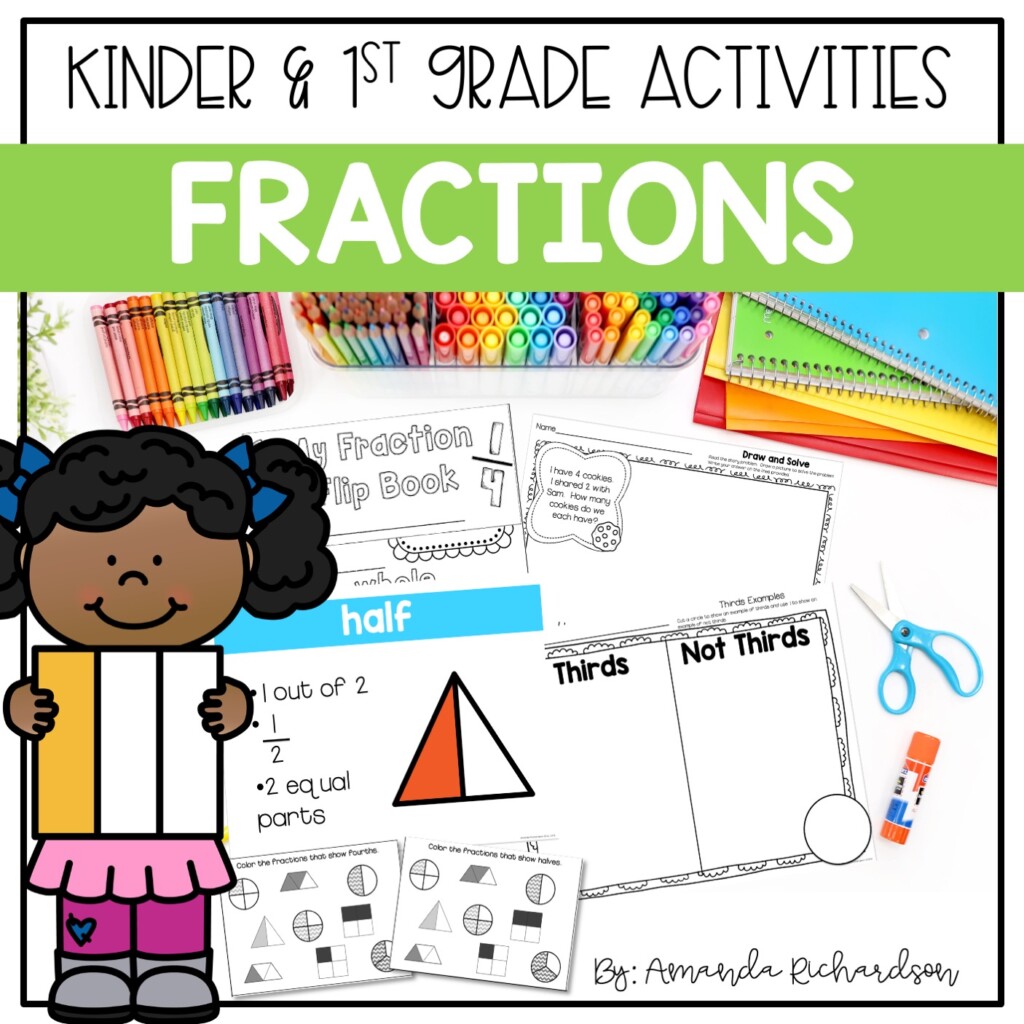
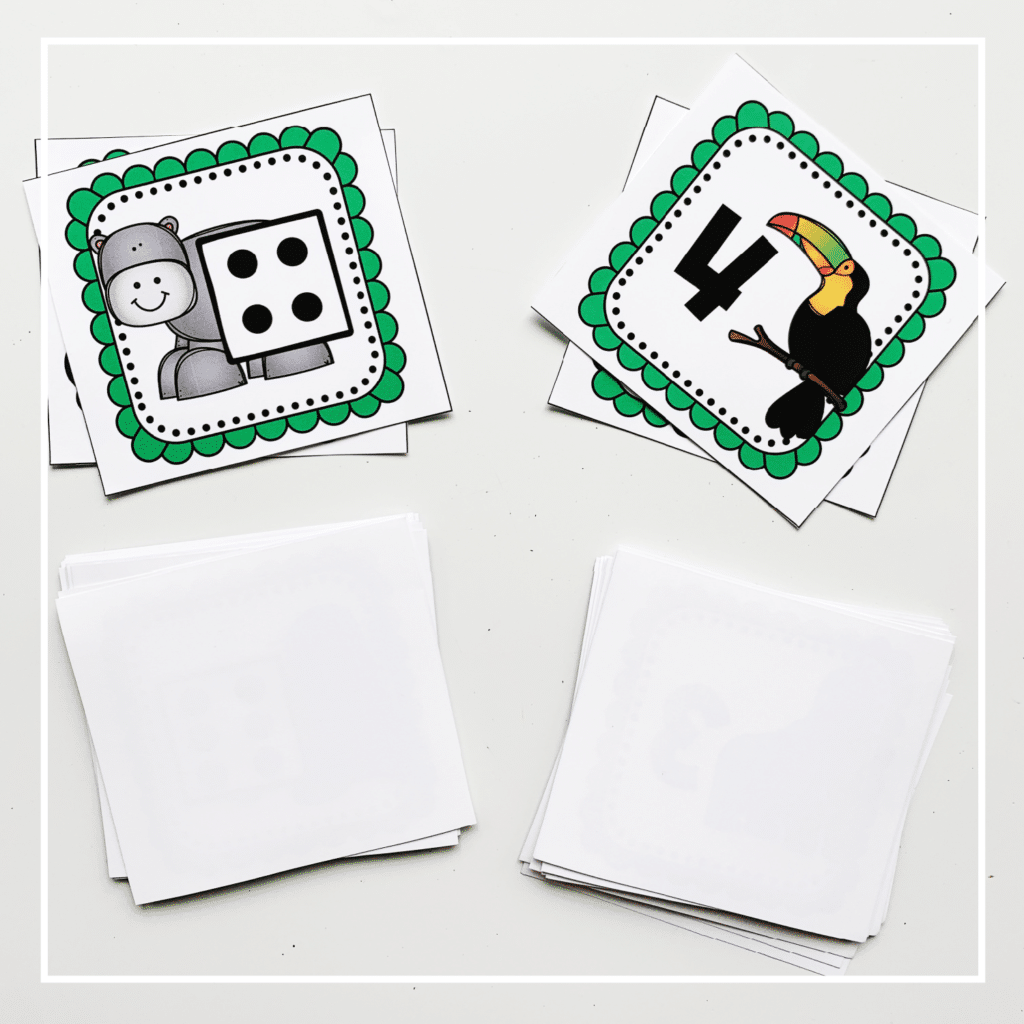
Wrapping up our learning by providing opportunities to keep practicing with math journals and math centers is crucial. Here are a few activities for centers and math journals!
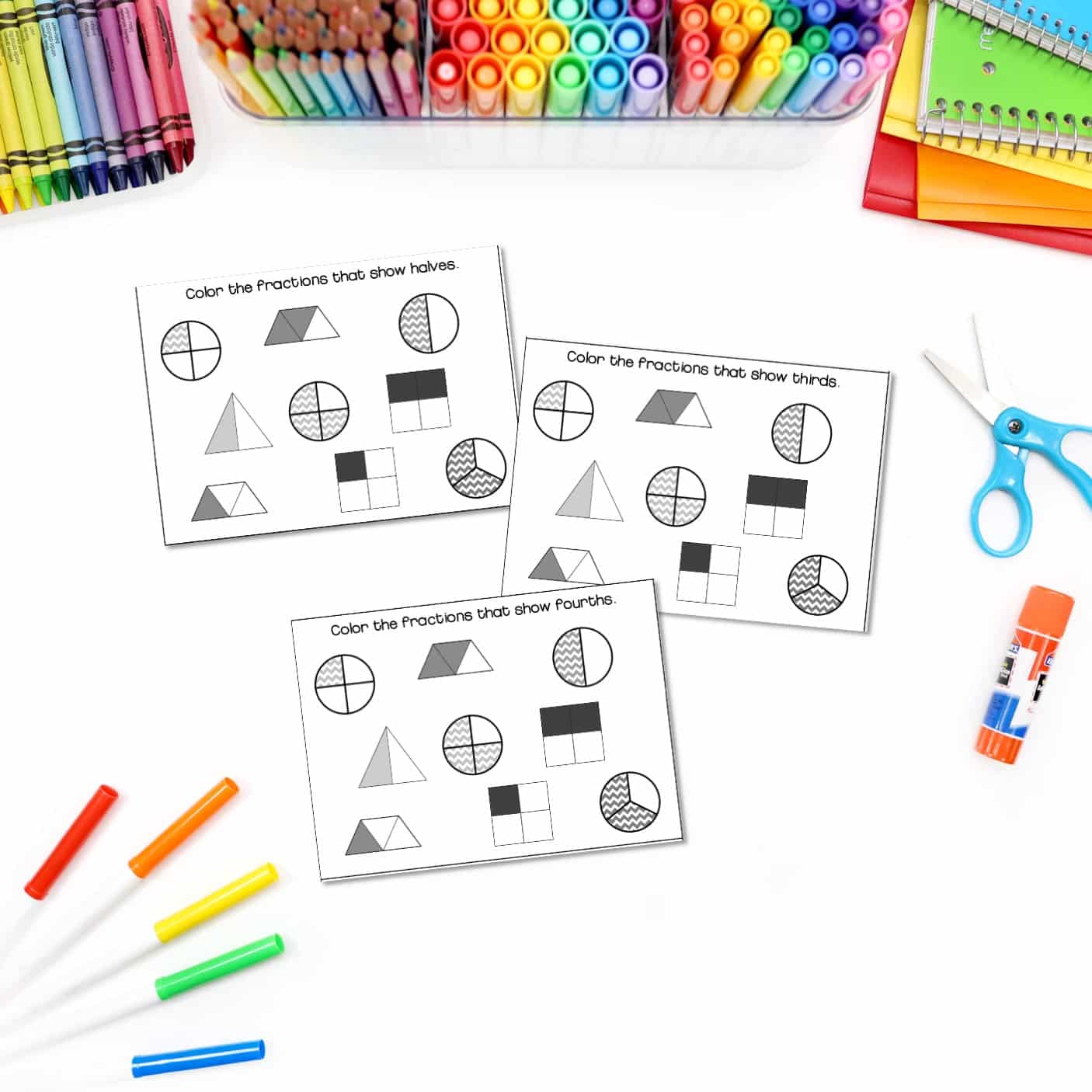
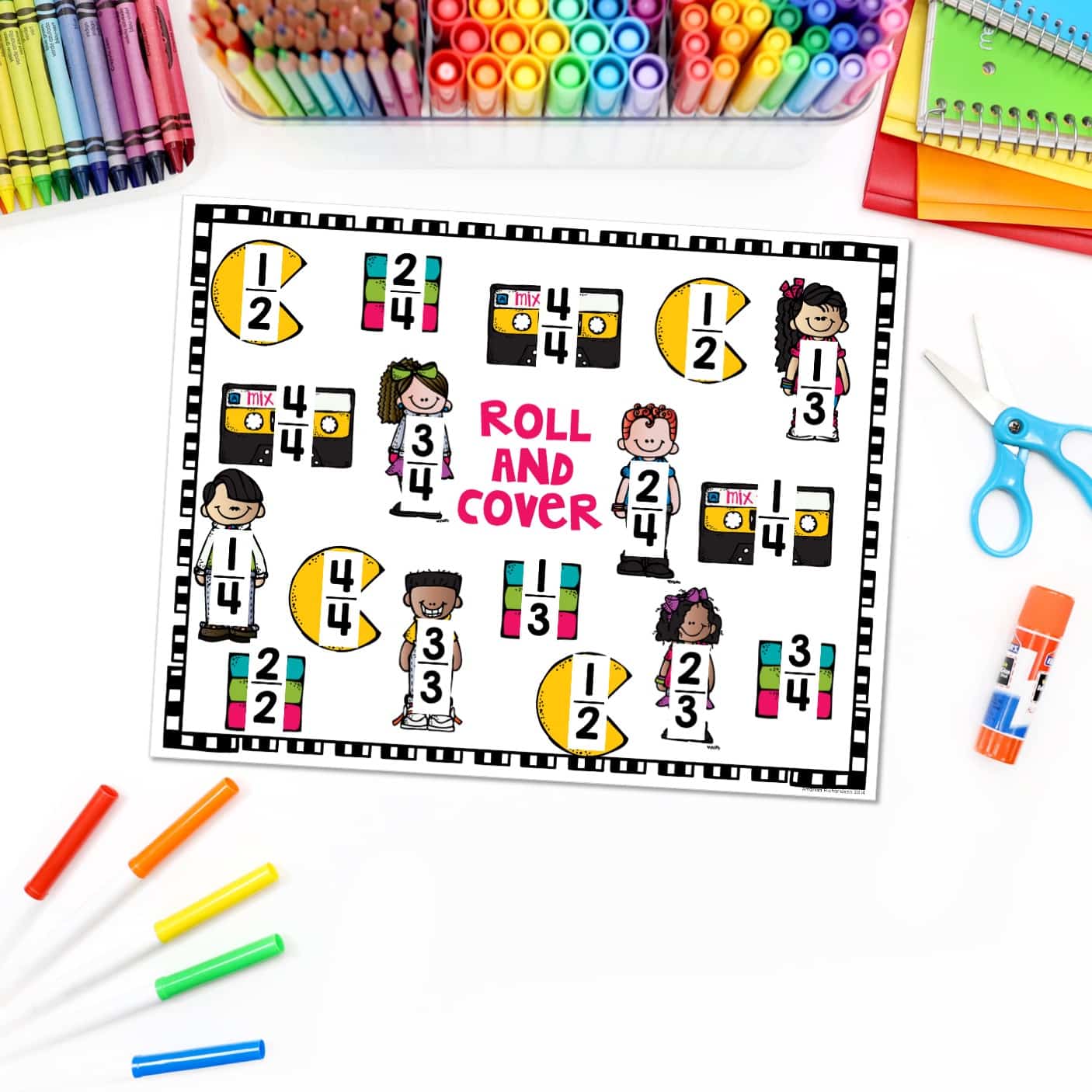
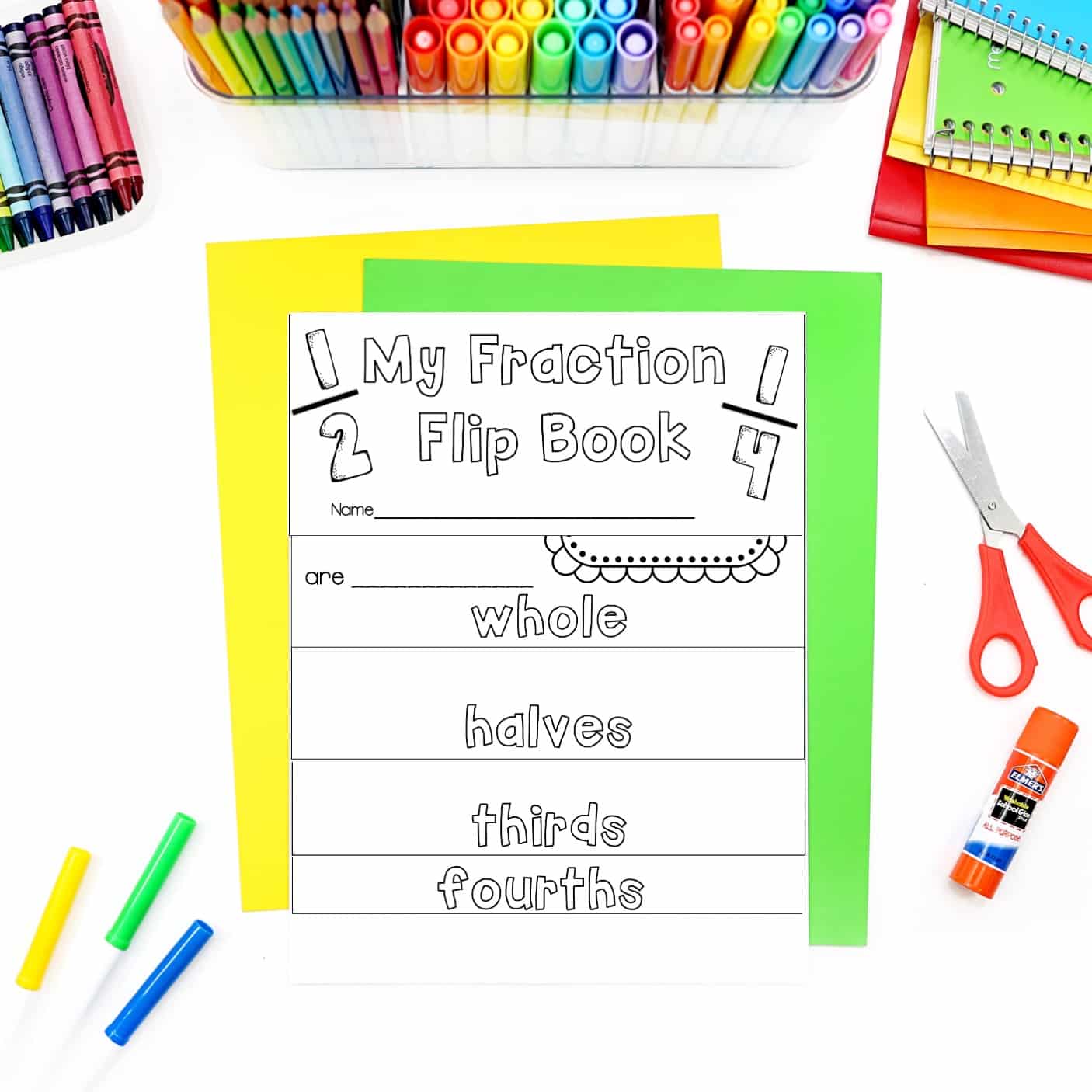
pin it






5 Responses
Too funny! I make all my anchor charts on that size manila paper too! We finished our unit on fractions last week. Your unit is definitely going on my wishlist for next year. Thanks for sharing!
Love this! Do you have to create your own curriculum where you teach or did you use this to supplement? We use EnVision math at my school and in first grade we will hit fractions at the end of the year 🙂 This might come in handy!
Also random but what is the adorable font that says Fraction Anchor Chart sideways on your picture of your chart? 🙂
Shelby
First Time Firstie
A mixture of both. We have our standards to follow, but that is is. So I used this as I taught the concept. We weren’t able to use ALL of it because there are parts that I created with my old firstie friends in mind, but we used everything else that aligned to our TEKS. 🙂
As for the font, it’s a Kimberly Geswein Font, but I can’t remember which one! She is on TpT. Check her out!! She has great work!
Great anchor charts! Where and what size is the mini anchor chart? I agree the others take up so much room! Thanks
Hi Tammie! I apologize for just now seeing this! The mini-anchor charts are on 11×14 manilla paper! I also loved that they would fit on my classroom cabinet doors perfectly! 🙂