






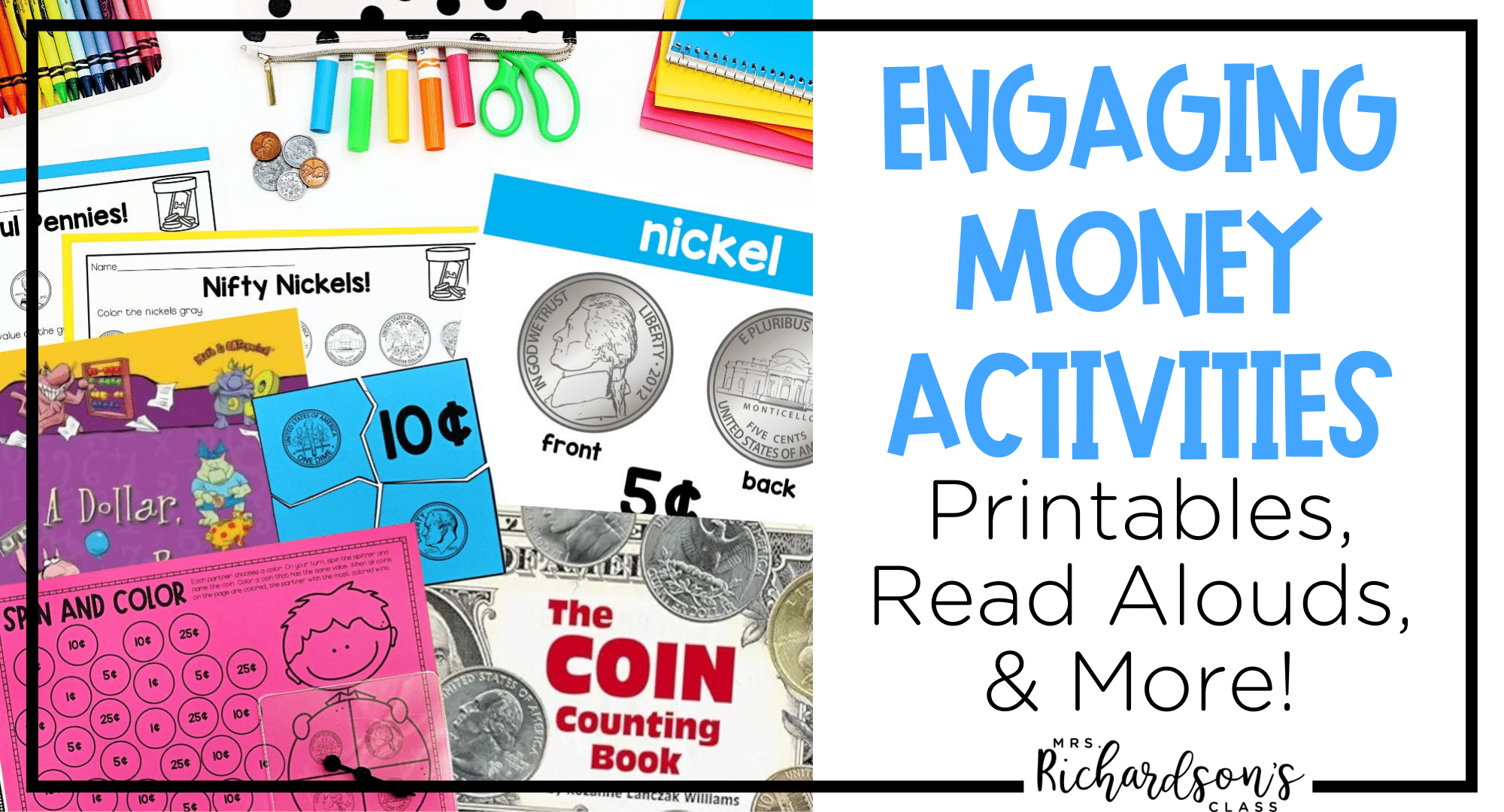
Teaching money in first grade is an important step in building foundational math and financial literacy skills. With the right money activities, students can confidently identify coins, understand their value, and count collections of money, which tends to be the most exciting part for them! Let’s talk about how to make teaching money hands-on, effective, and of course, aligned to first grade.
According to the Texas Math TEKS for 1st Grade, students are expected to:
These standards make it clear that first graders need more than simple coin recognition. They need structured money activities that build understanding step by step.
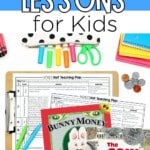
Before jumping into hands-on practice, introduce money concepts through engaging read-alouds. If you are around here often, you know how much I value read alouds and how research supports read alouds as a tool for helping build skilled readers! Books help students connect math to real life and build vocabulary in a natural way.
Some great options include:
These read alouds are great to start discussion about coins. Another set of my favorite little books were from Scholastic years ago. They are by Mary Hill.
When we are beginning to teach money activities, we want to make sure we are scaffolding kids learning well. We want them to have a strong foundation. We should move from identification to counting and then to application. Here’s an example of a sample progression you could follow.
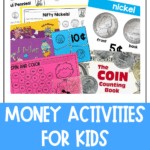
Begin with explicit instruction on coin names and values. Use anchor charts and coin posters so students can visually connect the coin’s appearance to its value.

Hands-on activities might include:


Repetition at this stage is essential. Students must confidently recognize coins before they can count them.
Next, teach how coins relate to each other. For example:
Use manipulatives so students can physically trade coins and see these relationships in action. This builds number sense and supports future work with place value. Using a number line for this is a GREAT way for kids to visually see what is happening abstractly.

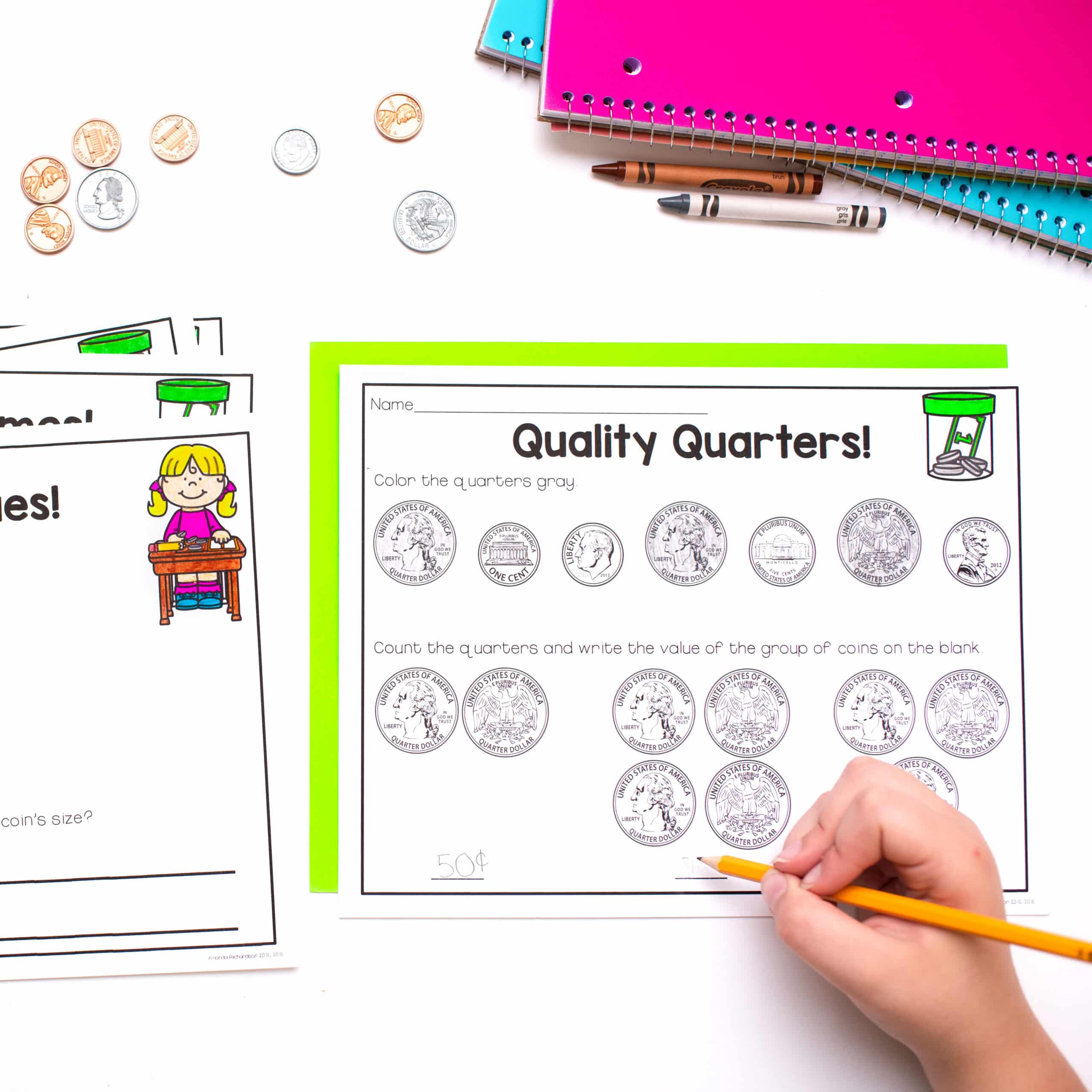
Once students understand values and relationships, they’re ready to count collections. Encourage efficient strategies such as:
Games are especially helpful here. Here are a few you can try!


These types of structured money activities reinforce skills while keeping engagement high.
Students should also practice writing values using the cent symbol (¢). Provide opportunities to:

Now, if you feel your students are ready, you can challenge them to apply their money counting knowledge to word problems. This typically is tricky for first graders because they are still very much so learning to read. You can start with simple word problems such as:
Application problems move students beyond memorization and into reasoning. They really have to put on their thinking cap for this!
Adding songs throughout the unit to help kids remember coin values and names is always fun for them! I liked to add them to our math warm ups.
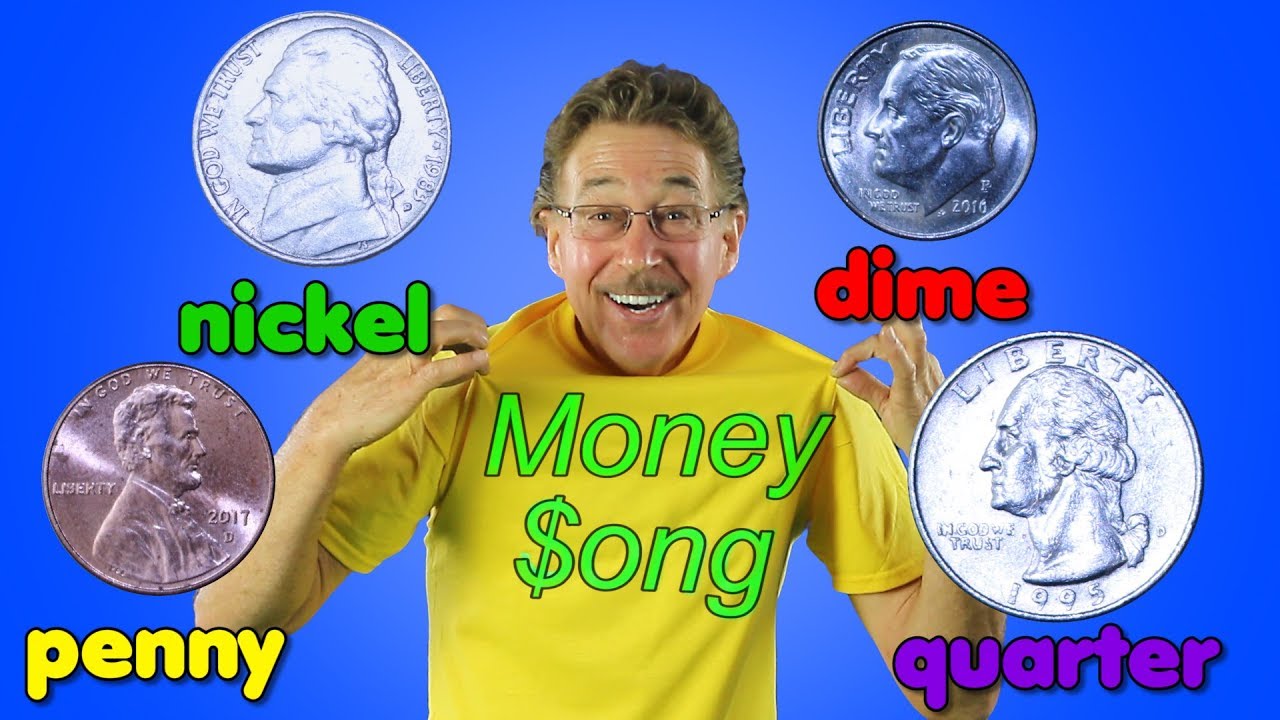
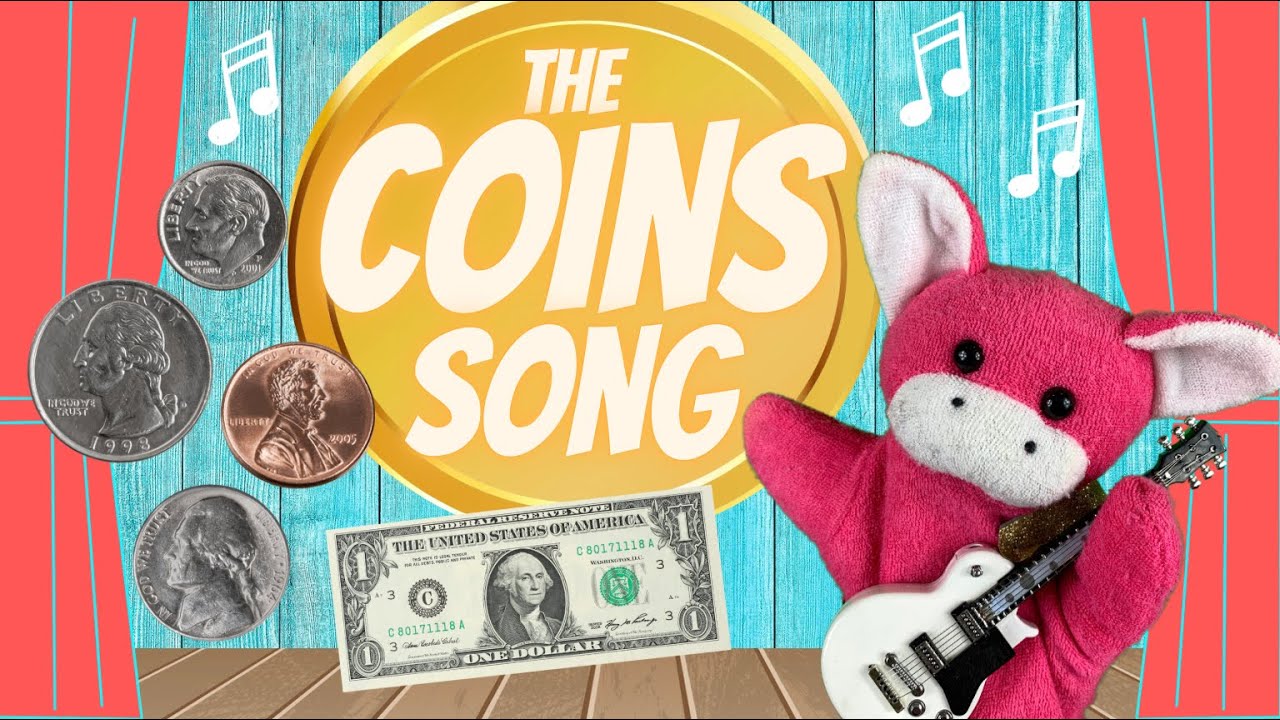
These catchy songs reinforce coin names and values while providing movement and repetition. Use them as a warm-up, brain break, or review tool throughout your money activities.
Planning meaningful, standards-aligned money activities takes time. Lessons need to build logically from identification to counting to application. Activities must be engaging, structured, and developmentally appropriate.
That’s exactly why I created my Money Unit.
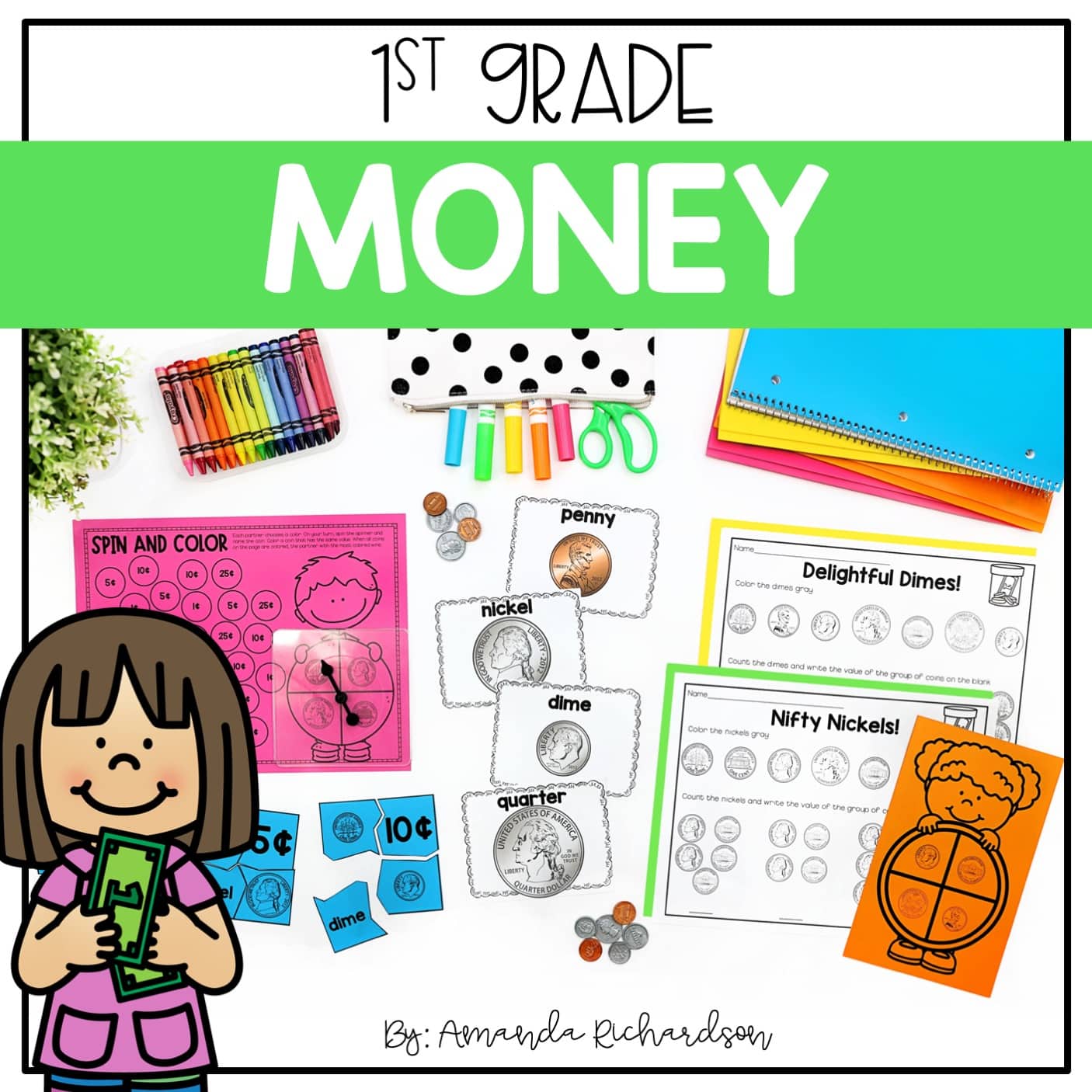
This resource was designed to make your life easier. The lessons are sequenced so the skills build naturally upon each other.
Instead of scrambling to piece together activities, you’ll have everything organized and aligned in one place. The work is done for you, which means you can focus on teaching and supporting your students.
If you’re looking for structured, engaging money activities that align with first grade TEKS and simplify your planning, this unit was created with you in mind!