





Is your classroom buzzing with that restless, cold-weather energy? Indoor recess, early sunsets, and long weeks between breaks can make winter feel endless. I see you, friend.
Here’s what I’ve learned: winter science activities for kindergarten and first grade give that energy somewhere to go. And when you pair each experiment with a read aloud on the same topic, students don’t just watch something cool happen. They build the background knowledge and vocabulary that help them understand what they read.
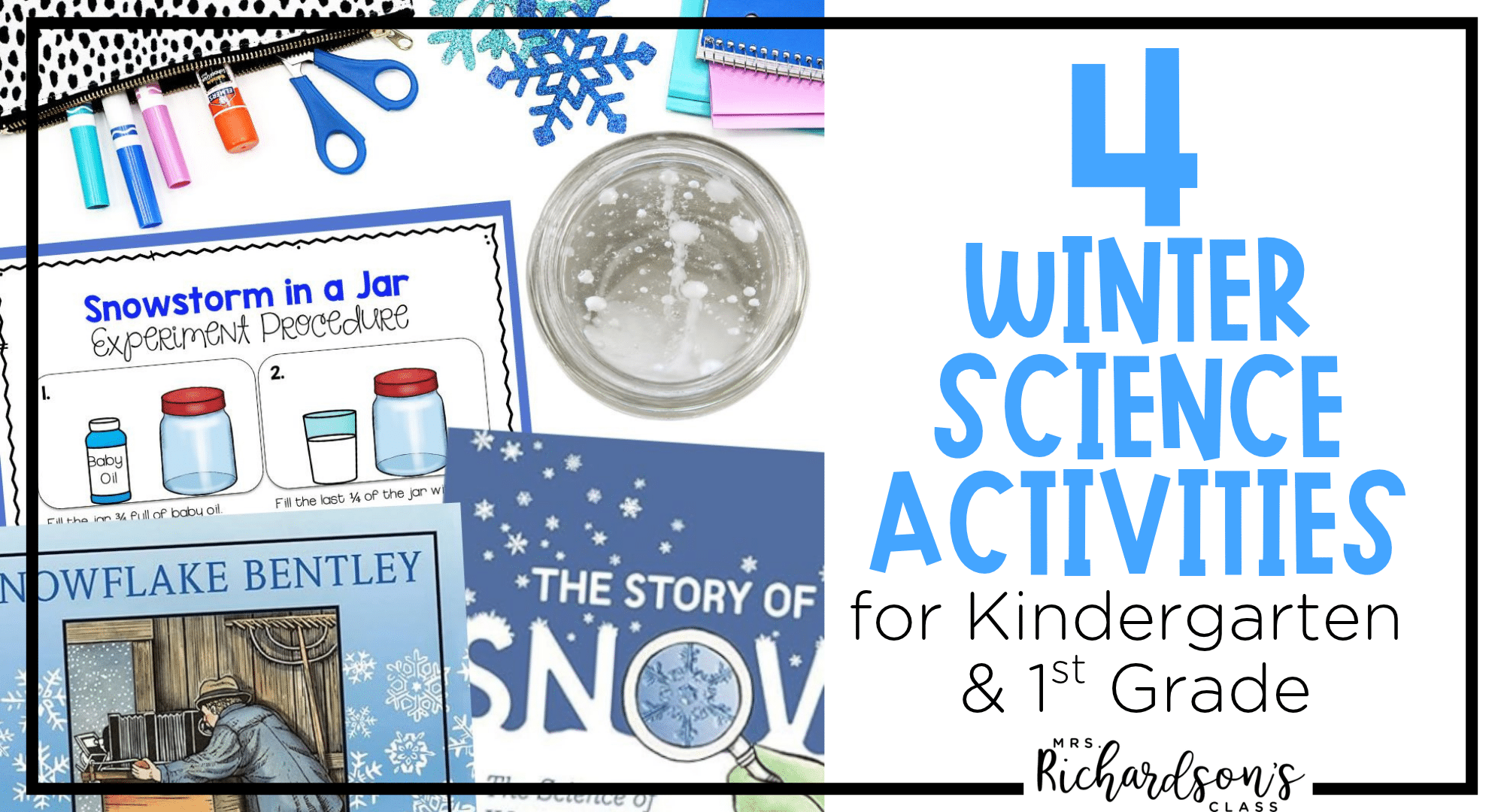
Below are four hands-on winter science activities, each matched with a read aloud that helps build background knowledge as we are building skilled readers throughout our day.
Have you ever read a nonfiction book aloud and watched eyes glaze over at words like crystal or insulate? That usually isn’t a decoding problem. It’s a knowledge problem.
Scarborough’s Reading Rope shows that skilled reading is built from two big strands: word recognition and language comprehension. Background knowledge and vocabulary live in that second strand, and science is one of the best places to build both.
When students hear a word in a read aloud and then see it happen in an experiment, the word sticks. Then they talk about it, draw it, and write about it. That’s knowledge building in action.
Each activity follows the same simple pattern: read the book, do the experiment, then talk and write about what students noticed.
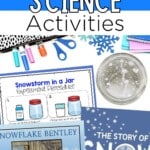
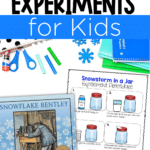
Students fill a jar with baby oil and warm white water, sprinkle in glitter, and let it settle. Then they drop in a piece of an Alka-Seltzer tablet and watch a snowstorm swirl to life. The recording page asks a simple question: will oil and water mix if we add pressure?
Pair it with Snowflake Bentley by Jacqueline Briggs Martin, the true story of Wilson Bentley, a Vermont farmer who spent his life studying and photographing snowflakes. He’s a wonderful model of what scientists do: observe closely and record what they see.
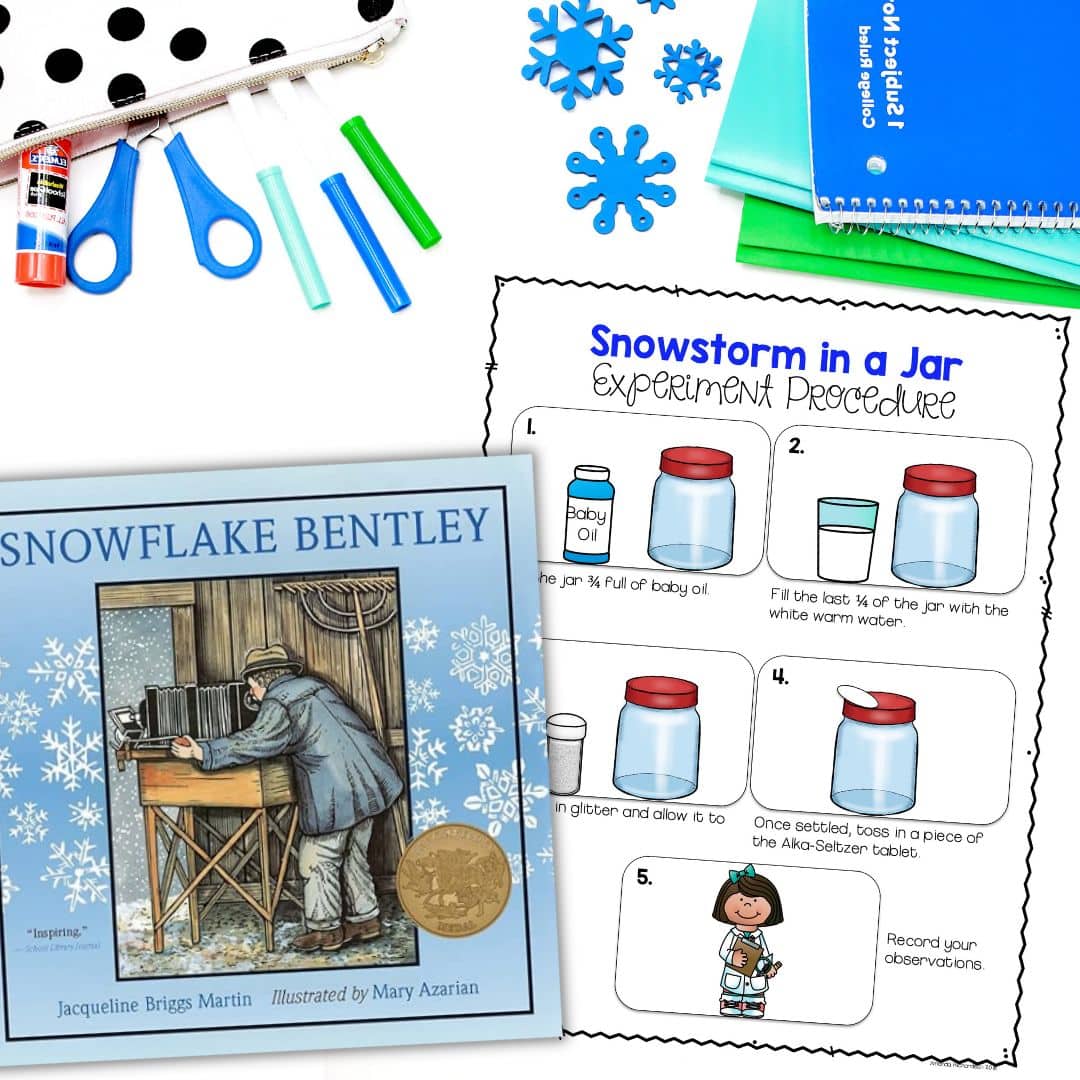
This Snowflake Bentley read aloud lesson accomplishes two goals: it helps teacher readers how to determine importances and builds background knowledge for this snowstorm experiment.
Click here to grab your free Snowstorm in a Jar experiment, complete with visual student directions and a science journal page. Want more on this one? Here’s how I make a snowstorm in my classroom.

How much water is really in snow? Students fill a measuring cup with 2 cups of snow, pour it into a tub, and wait for it to melt. Then they pour the water back into the measuring cup and measure. The answer surprises them every time.
Pair it with The Story of Snow by Mark Cassino with Jon Nelson, a nonfiction book with real photographs that shows how snow crystals form. My Story of Snow read aloud lesson focuses on main idea and key details.
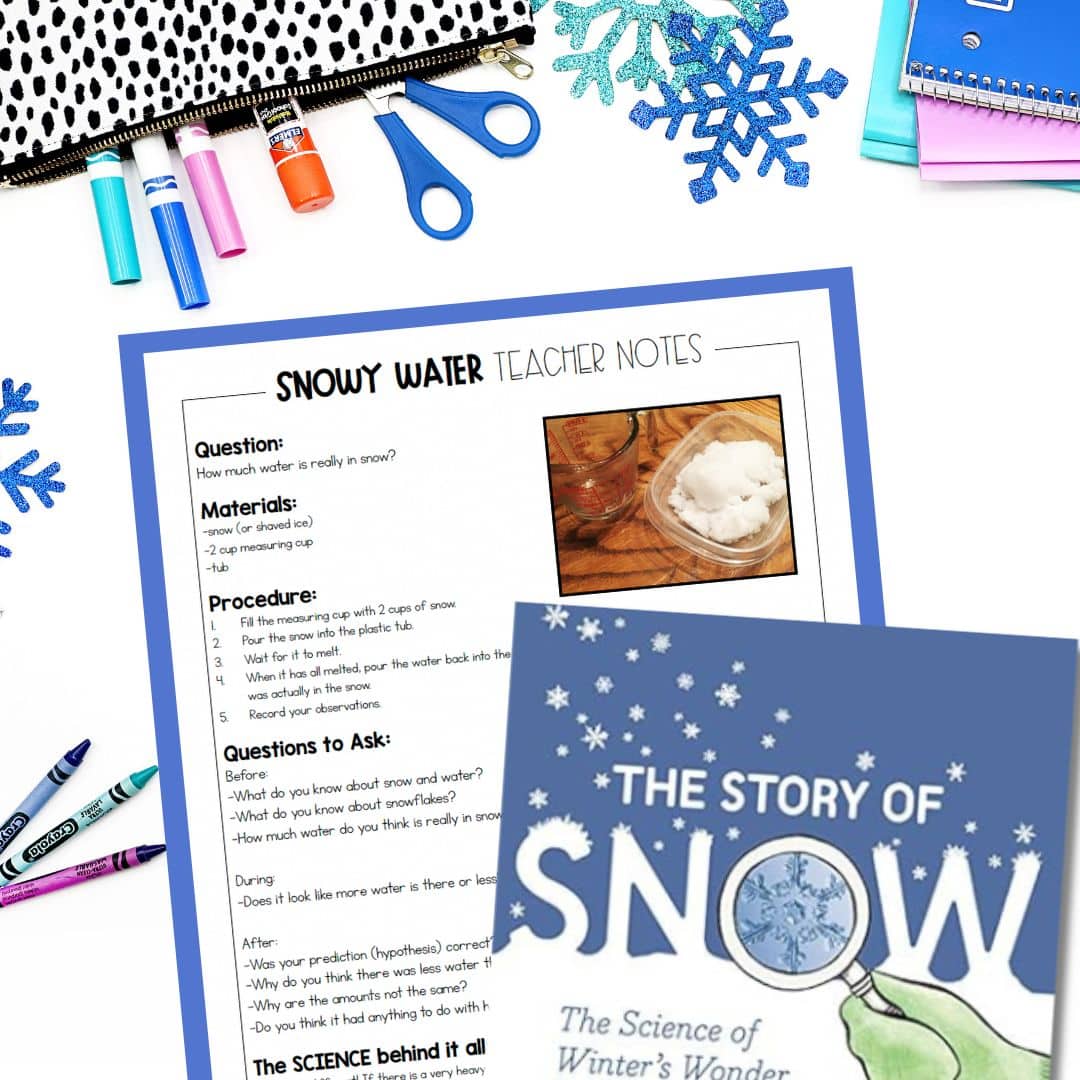
For this, have students mark their prediction on the measuring cup with a dry-erase marker before the snow melts. Comparing the line to the real water level makes the conclusion easy to see. This is simple experiment to do and is a must for winter science activities for kindergarten and first grade classrooms.
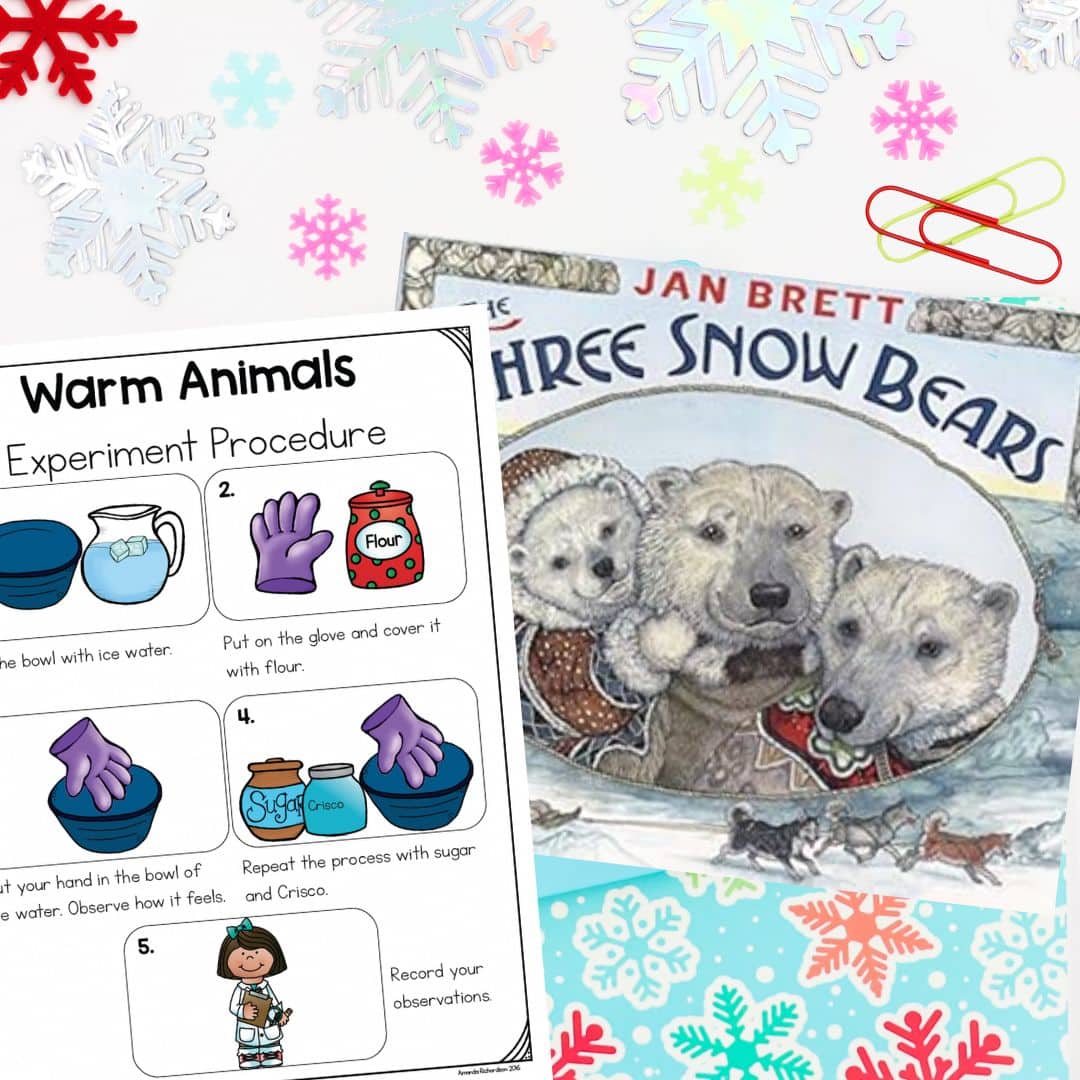
How do animals in the Arctic stay warm? Students put on a glove, cover it with flour, and dip their hand into a bowl of ice water. Then they repeat the test with sugar and with Crisco to find out which covering keeps their hand warmest, just like a layer of fat keeps Arctic animals warm.
Pair it with The Three Snow Bears by Jan Brett, an Arctic twist on Goldilocks starring a family of polar bears. After reading, ask: how do the bears stay warm out on the ice? In the Three Snow Bears read aloud lesson you can easily focus on summarizing while also building background knowledge and curiosity for the winter science activities for kindergarten and first grade learners!
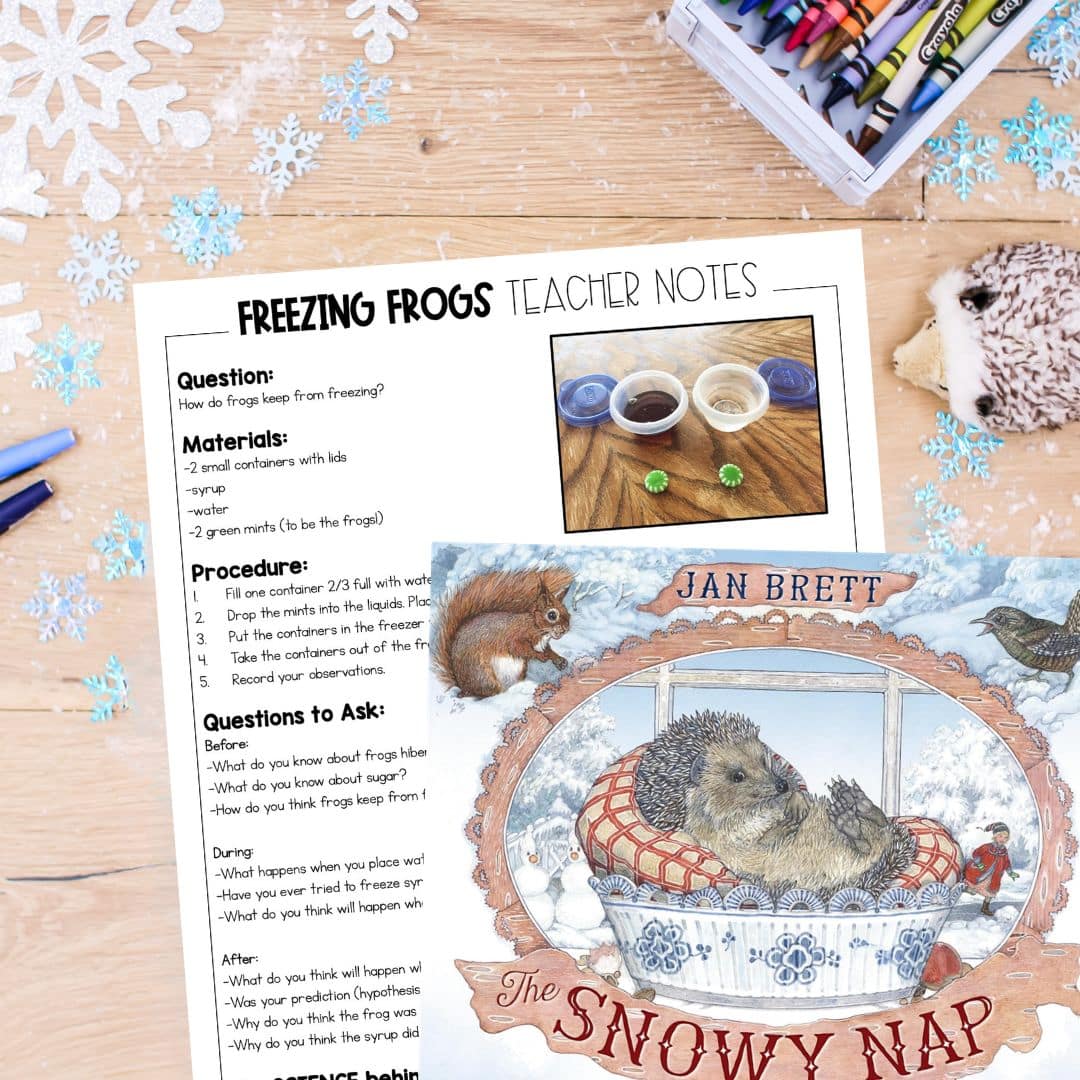
How do frogs keep from freezing? Students fill one container with water and one with syrup, then put both in the freezer for 24 hours. The next day, they compare what happened. It’s a simple way to show how the sugar in some frogs’ bodies helps them survive freezing winter temperatures. I’m not sure there are more exciting winter science activities for kindergarten and first grade learners than this!
Pair it with The Snowy Nap by Jan Brett, where Hedgie the hedgehog tries to stay awake to see winter instead of hibernating. It’s a natural way to compare different ways animals get through the cold. My Snowy Nap read aloud lesson focuses on compare and contrast as you are working to build skilled readers. You can relate this to science by having students compare and contrast how Hedge stays warm and how the frog stays warm.
Let’s be honest: winter weeks are packed. You don’t need a full science block to make this work. Try this simple three-day rhythm:
Need ideas for that last step? Here’s how I approach writing about science in the primary classroom. And if you’re planning ahead, check out my tips for teaching science in December.
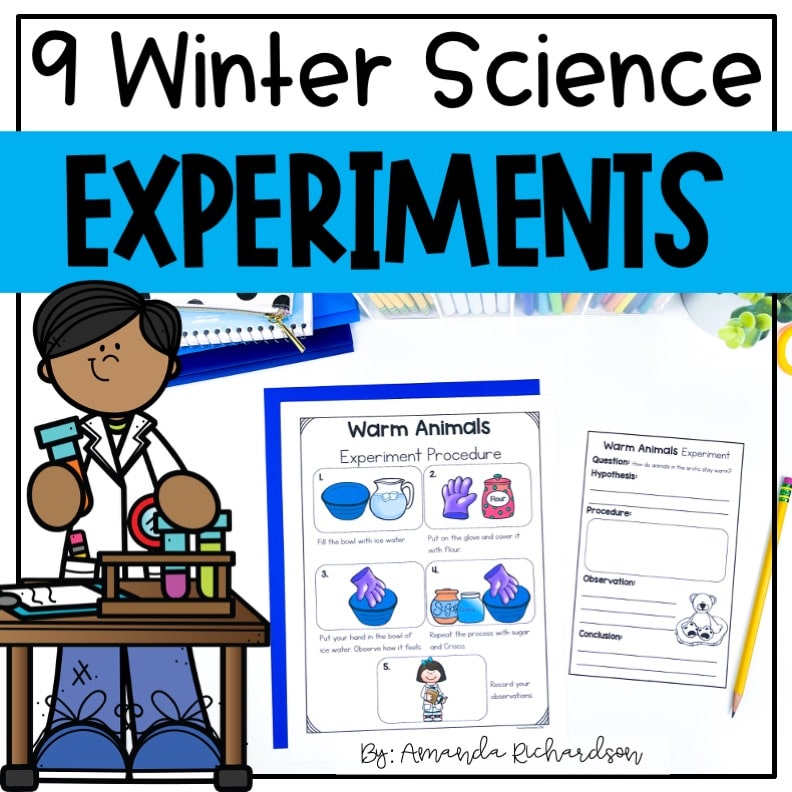
If you’d love to skip the prep and hunting for directions, my Winter Science Experiments resource has the experiments above ready to go. Inside you’ll find:
Print the directions, gather a few simple supplies, and your students are doing real science, with a recording page that gets them writing about what they learned.
Winter science activities for kindergarten and first grade learners don’t have to be a lot on your plate. If we are truly looking for ways to incorporate reading into every part of our day as we strive to build skilled readers, and if we want to make learning hands-on, grab the books and experiments and you’ll be set!