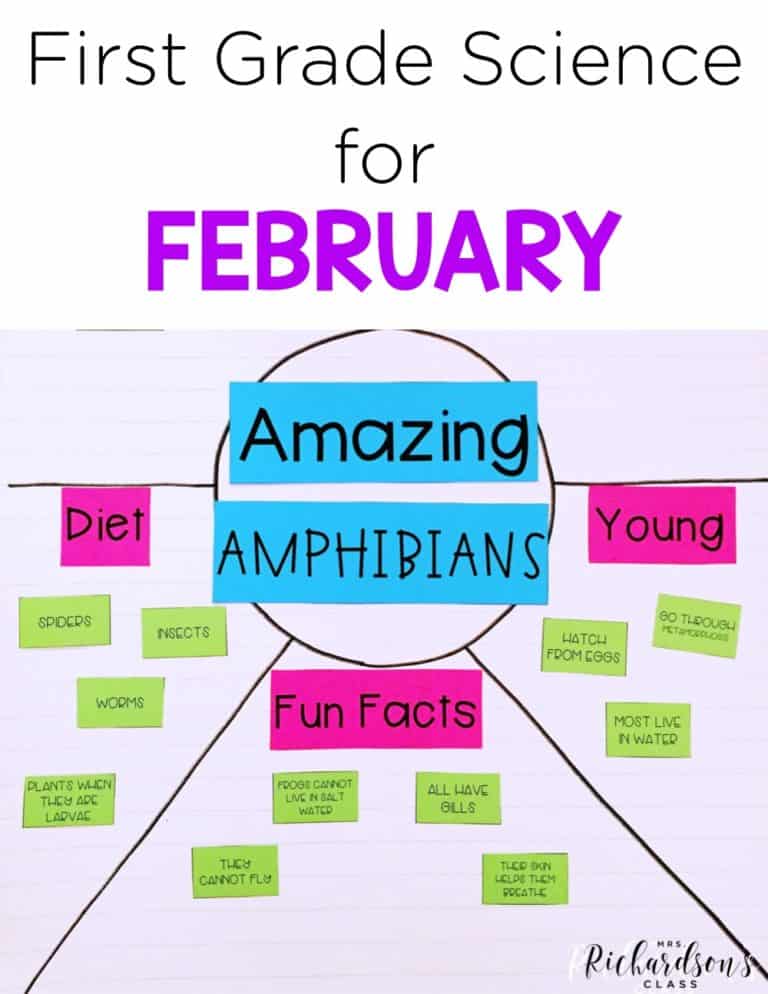








Spring is definitely here and this is the perfect time of year to teach your little learners about insects! I love how our science standards help us tackle this, but I also thoroughly enjoy integrating it in reading and writing! These insect activities will help you engage students, teach standards, and reach every learner.
We always start science units with reading about them. This helps build background knowledge, introduce vocabulary, and build excitement! Usually, we read short, non-fiction texts with real-life photos. The kids are GLUED to the images!

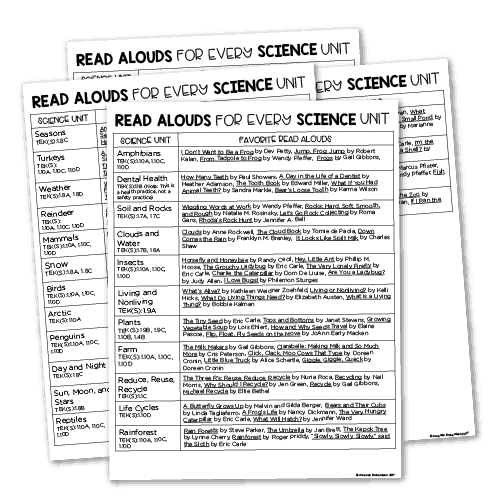
Using read alouds during science provides visual support and expands academic vocabulary. You can read more about using science read alouds and get a free printable list of read alouds for every science topic we cover for the year, including our favorites to pair with our insect activities. Check it out HERE.

Fresh air is always good for everyone, so grab a hand lens and head outside to find some insects. My young scientists always love any opportunity for hands-on insects activities. You can have kids take their science journal, or you can give them a clipboard and piece of paper to record their findings. You can also let students record their learning in their science notebooks when you return to the classroom.

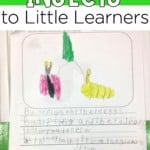
Writing about science is a great way to let students share their learning, integrate science throughout the day, support ELLs in the classroom, and allow students to streamline their thinking. It also gives students time to ask questions that come up.
Often kids have the misunderstanding that spiders are insects. This fun video shares about the differences between insects and arachnids.

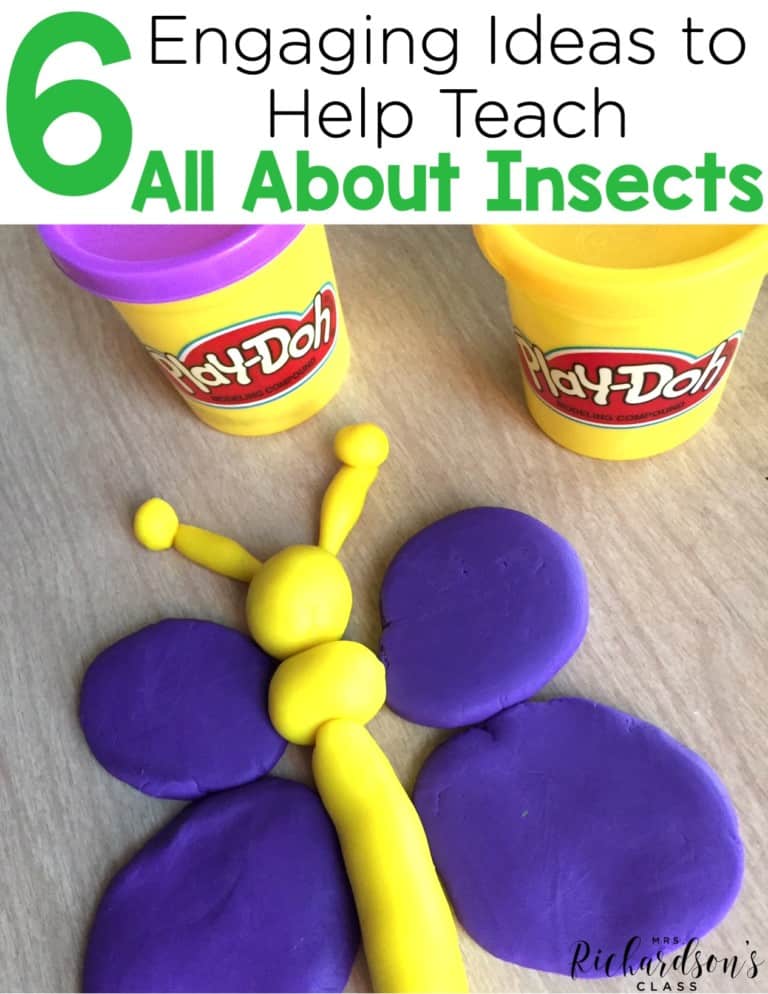
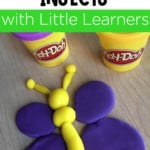
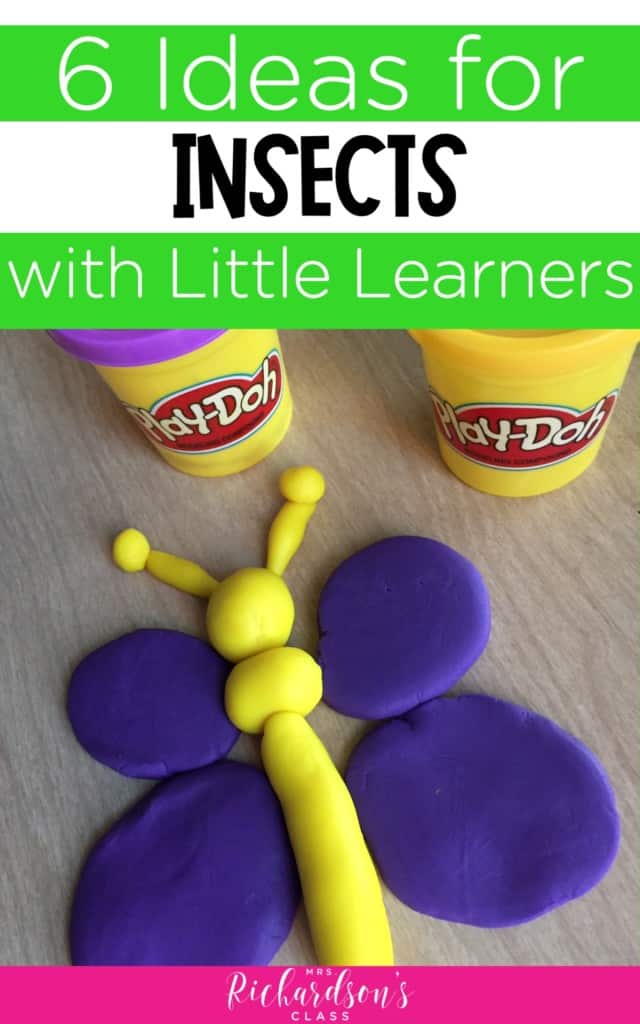
Play-Doh is always a hit with my students! It’s like Christmas when I pull it out for us to use! Have your students build a variety of insects and label their parts. You can make this a listening activity and informally assess by saying, “Make your head. Make the thorax. Make the abdomen.”
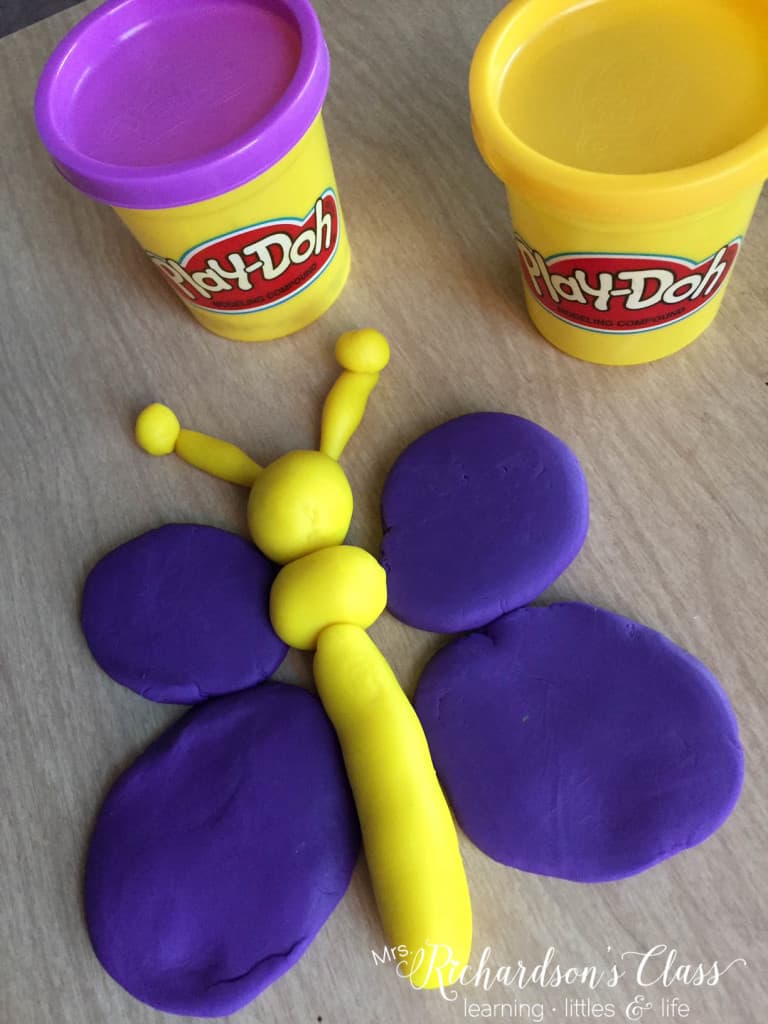
You can then have students draw and label these in their science notebooks to record their learning. This would also be an easy way to incorporate an assessment on insect parts.
One of my favorite insect activities is to bring them into our classroom and let the kids watch metamorphosis happen! I was able to do this a few times with my class and it was a total hit!! You can order a kit from Monarch Watch HERE.
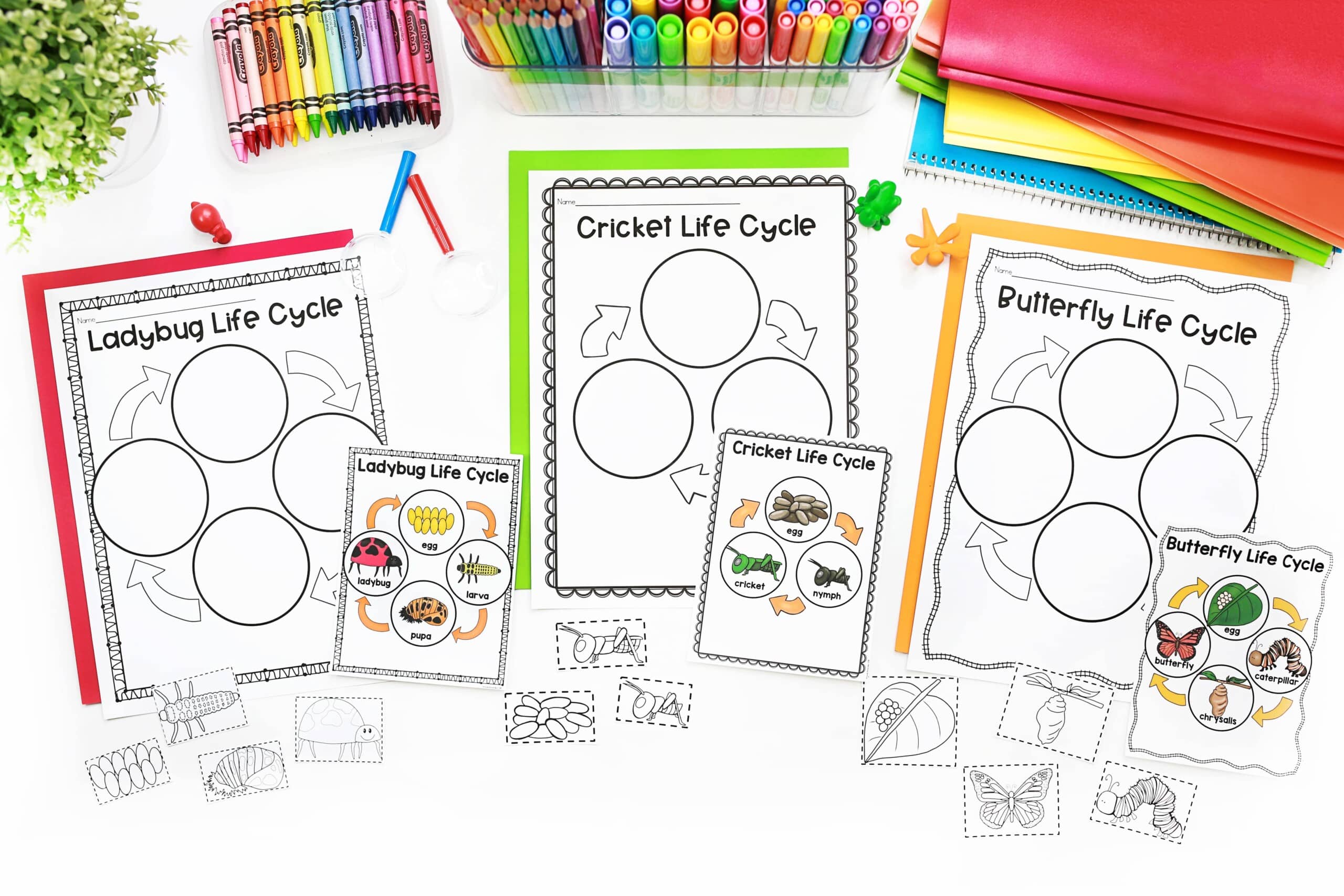
Then, you’ll easily be able to teach all about the butterfly life cycle as the caterpillars grow right in front of your students’ eyes. The All About Insects unit includes life cycle teaching posters and a cut-and-paste for students to show their learning.
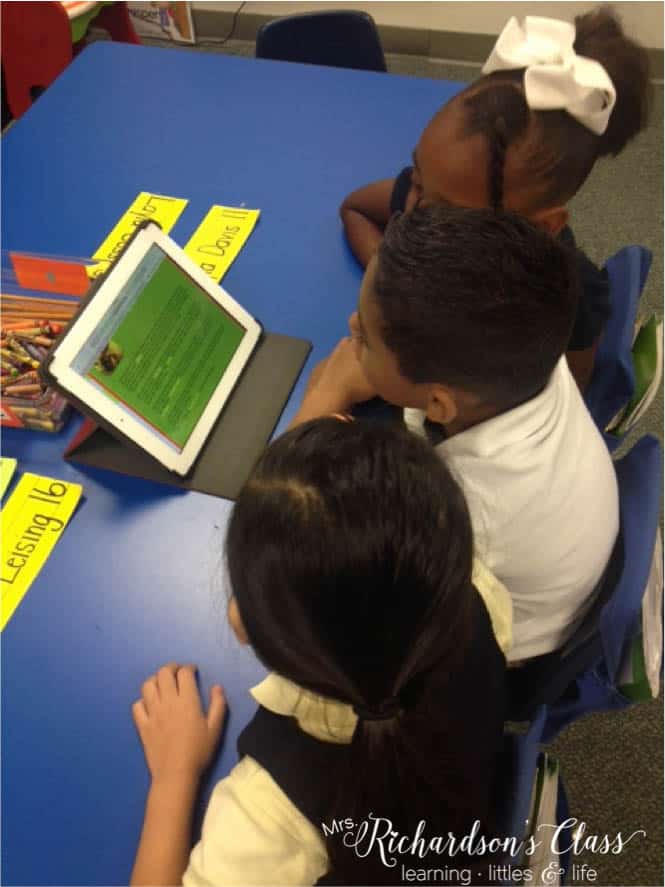
Animals and insects are the perfect time to teach students how to research. They are high-interest topics and my students were always eager to get started every day! It’s an easy way to integrate a little bit of technology into your lessons, too, without doing the whole thing on a screen.
For younger students, you can use fact sheets like I have in my Insects Unit. All of the facts needed are right there for students to read (or have them read to them). Then, they can fill out the flipbook. Students can easily glue them into an interactive notebook.


The All About Insects unit not only has everything you’ll need for insect activities and science for the week, it also has literacy components like a mini-reader, read aloud suggestions, shared reading poem and lesson plans for the week, and a writing craft.

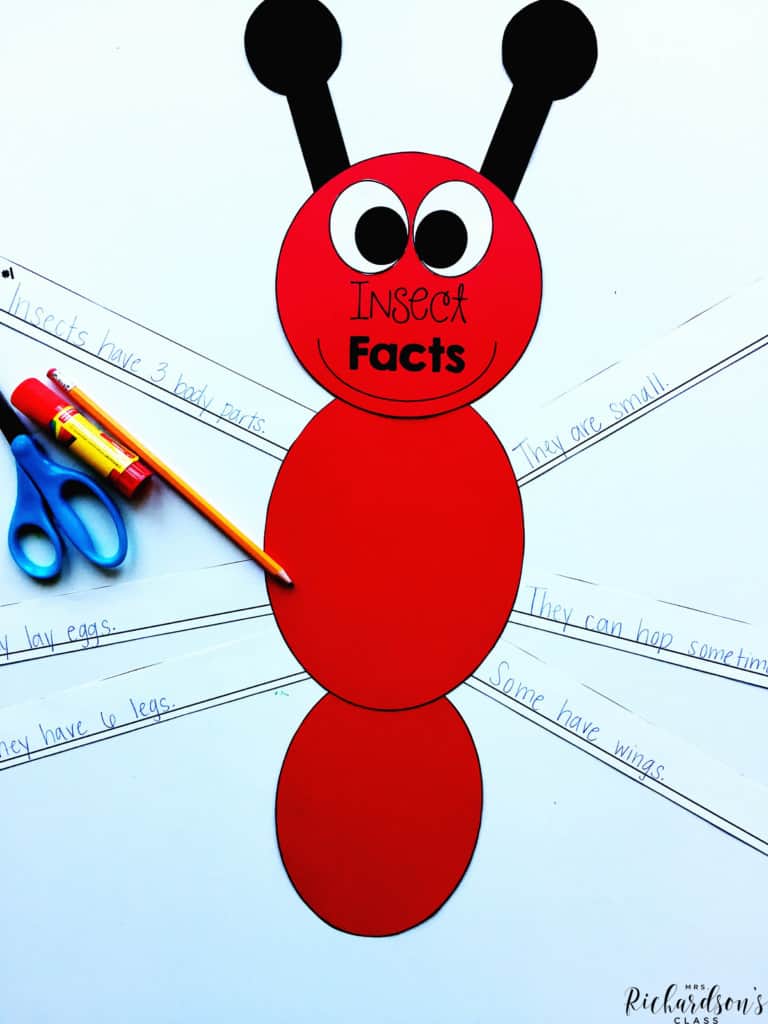
Grab your All About Insects unit to be totally set for a week of insect activities. It includes:
You’ll have everything you need to teach science at your fingertips. The unit teaching plan that’s in the unit makes lesson planning a breeze. Do you have any favorite insect activities to do with your students? I’d love to hear about them!
pin it