






Teaching phonics rules can sometimes feel like a tricky puzzle—especially when letters like G have more than one sound–hard g soft g. As teachers, we know that helping our students become strong, confident readers means having solid phonics instruction. But what about when we, ourselves, didn’t have a strong phonics foundation? Making sense of those tricky phonics patterns and rules in a fun and meaningful way is important. One of those tricky rules is understanding when the letter G makes its hard sound as in goat and when it makes its soft sound as in giraffe– hard go soft g.
Let’s break down the rule, explore a few teaching ideas, and grab a FREEBIE to make it even easier to bring this skill to life in your classroom.
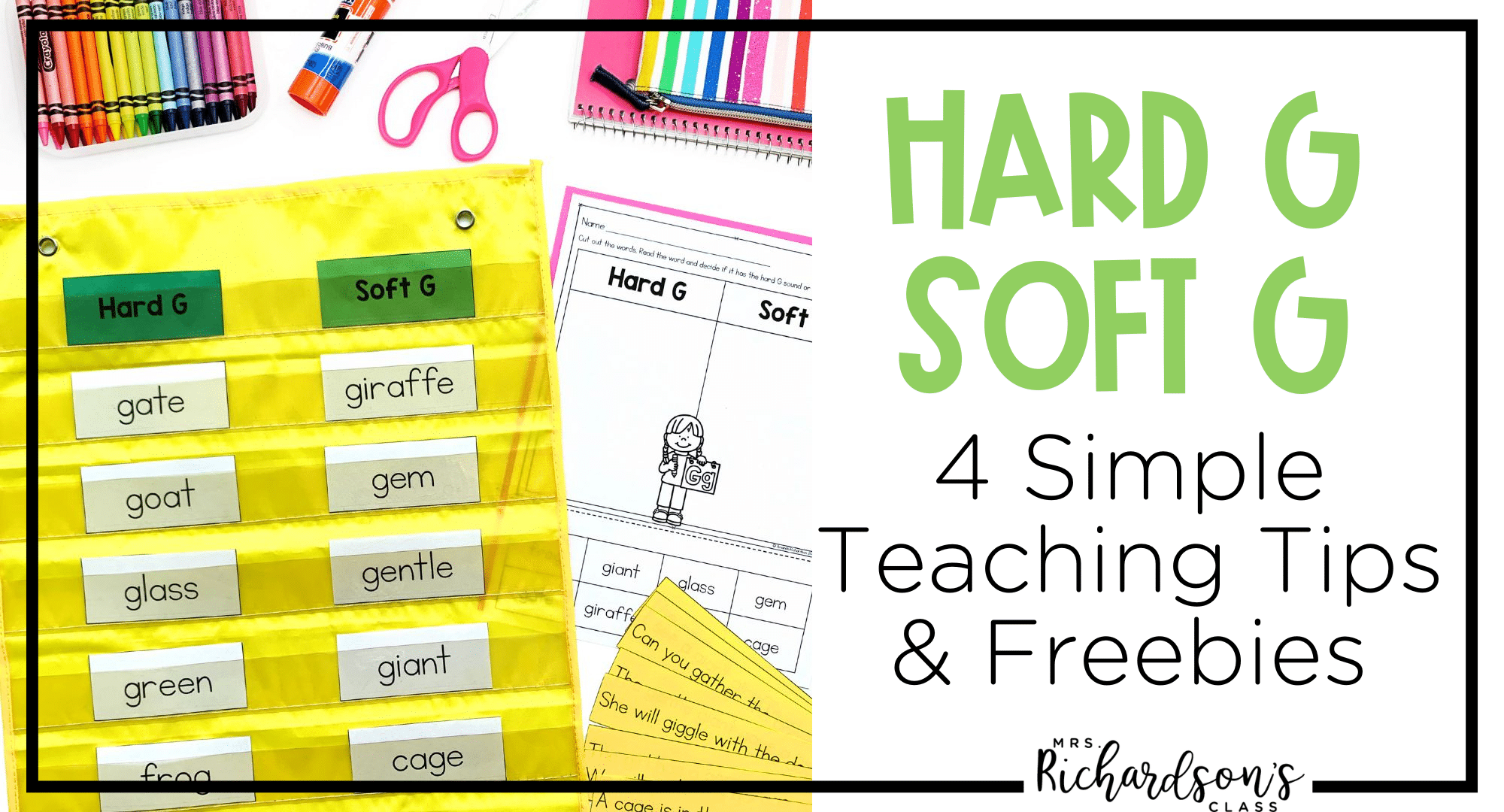
Just like the letter C, the letter G can make two sounds:
So when does G say /g/ and when does it say /j/? Here’s the general rule:
When the letter G is followed by E, I, or Y, it often makes the soft /j/ sound.
When G is followed by A, O, U, or any consonant, it usually makes the hard /g/ sound.
It’s important to emphasize that this is usually the rule—but not always. There are some exceptions like get, give, and girl, where G is followed by E or I but still makes the hard sound. That’s okay! Let your students know there are some rule-breakers, and those are words they’ll learn to recognize over time or have as heart words.
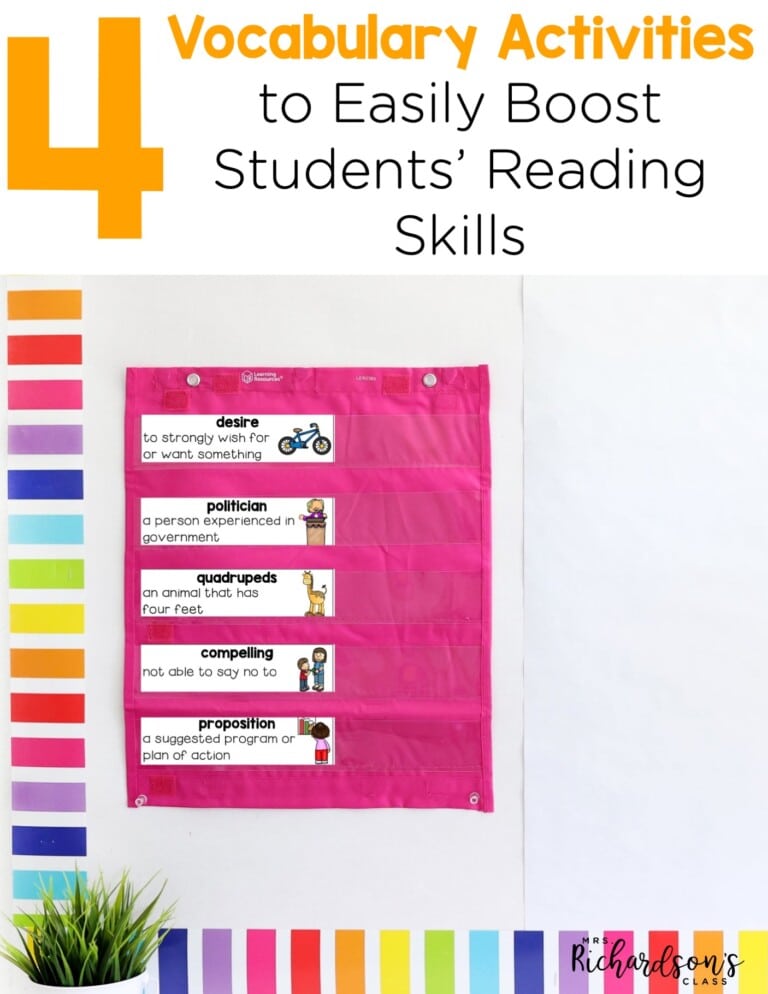
Begin your phonics lesson with a phonemic awareness activity. Say a list of words aloud and have students listen carefully to determine if the G in the word is hard or soft. You can accompany this with a picture sort, too. You can use a simple T-chart on the board or a pocket chart with two columns labeled “Hard G Soft G”. As you say each word (like goat, giraffe, gum, giant), have students help you sort them by sound.
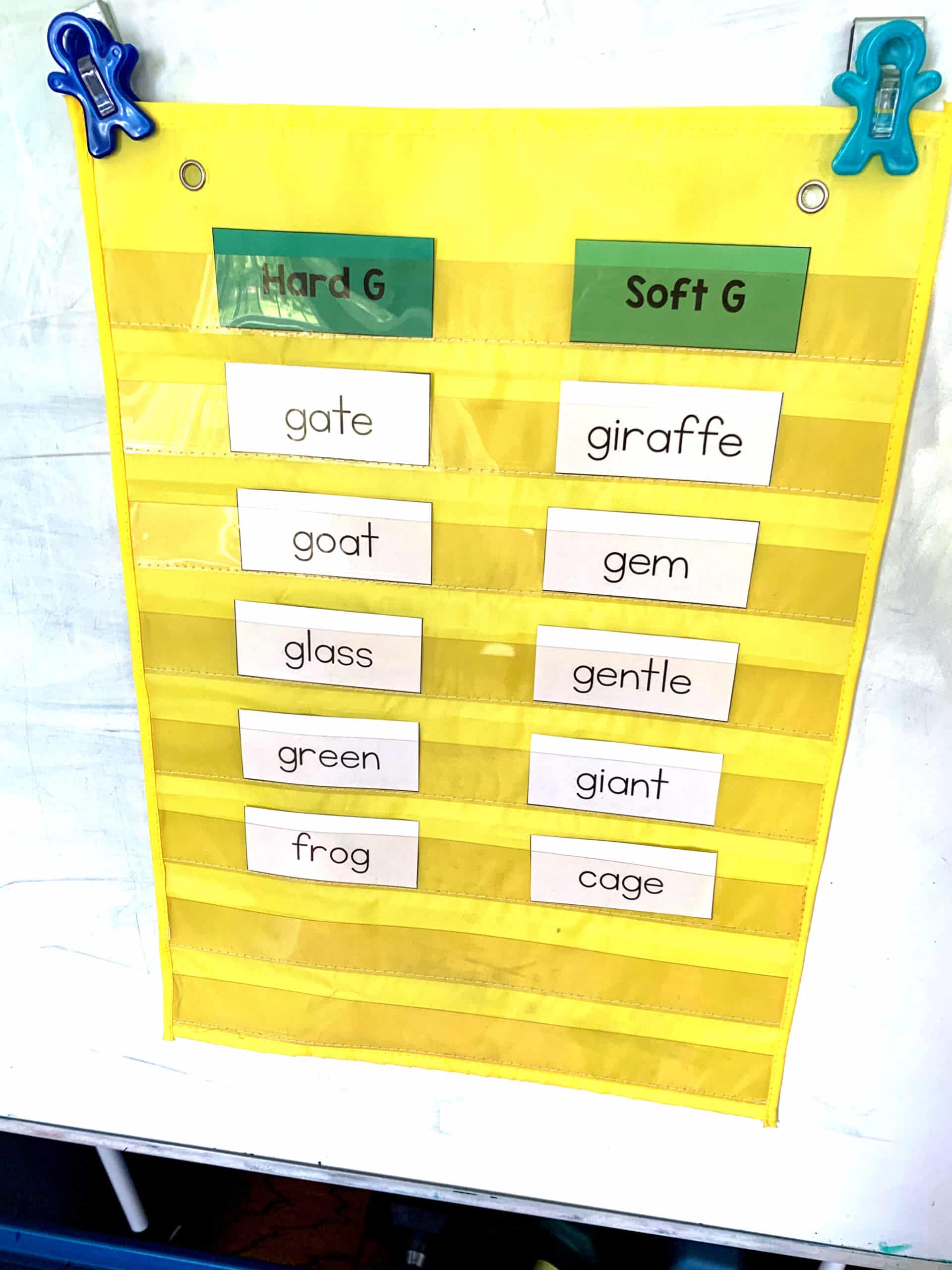
This is a great time to build familiarity through repetition.
Once students can hear the difference between the two sounds, it’s time to explicitly teach the spelling rule. Write several example words on the board for each sound and underline the vowel that follows the letter G. Explain how words like giant, giraffe, and gem follow the soft G rule—G is followed by E, I, or Y. Explain how words like goat, gum, and glass follow the hard G rule–G is followed by A, O, U, or a consonant.
You can even make a class anchor chart together:
Pass out sticky notes and let students add example words to each column throughout the week as they spot them during reading.
Now it’s time to get hands-on with word building. Give students letter tiles or magnetic letters and let them build both Hard G Soft G words. You can call out a list of Hard G Soft G words.
This is a great opportunity to help them see how one letter can change the sound of a word entirely—and why that matters as a reader.
Encourage students to become “phonics detectives”! Give them a decodable passage and ask them to highlight or circle all of the hard G soft G words. Then they sort them into lists.
You can also do a word hunt with classroom books or during shared reading. Challenge students to find a set number of hard G soft G words during independent reading time.
When it comes to phonics instruction, explicit instruction and repetition is key—but that doesn’t mean it has to be boring. Use games, small group practice, and quick activities to keep the learning active. Here are a few simple ideas:
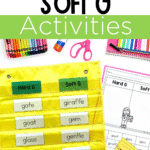
To help you get started, I’ve put together a Hard G and Soft G Freebie with a cut and paste activity, pocket chart sort, and some fluency stripes. These Hard g soft G activities are perfect for first and second grade learners. Whether you’re introducing the rule, reviewing it in small groups, or reinforcing it during independent work, this freebie is ready to go.
Grab these FREEBIES here when you join our email community!
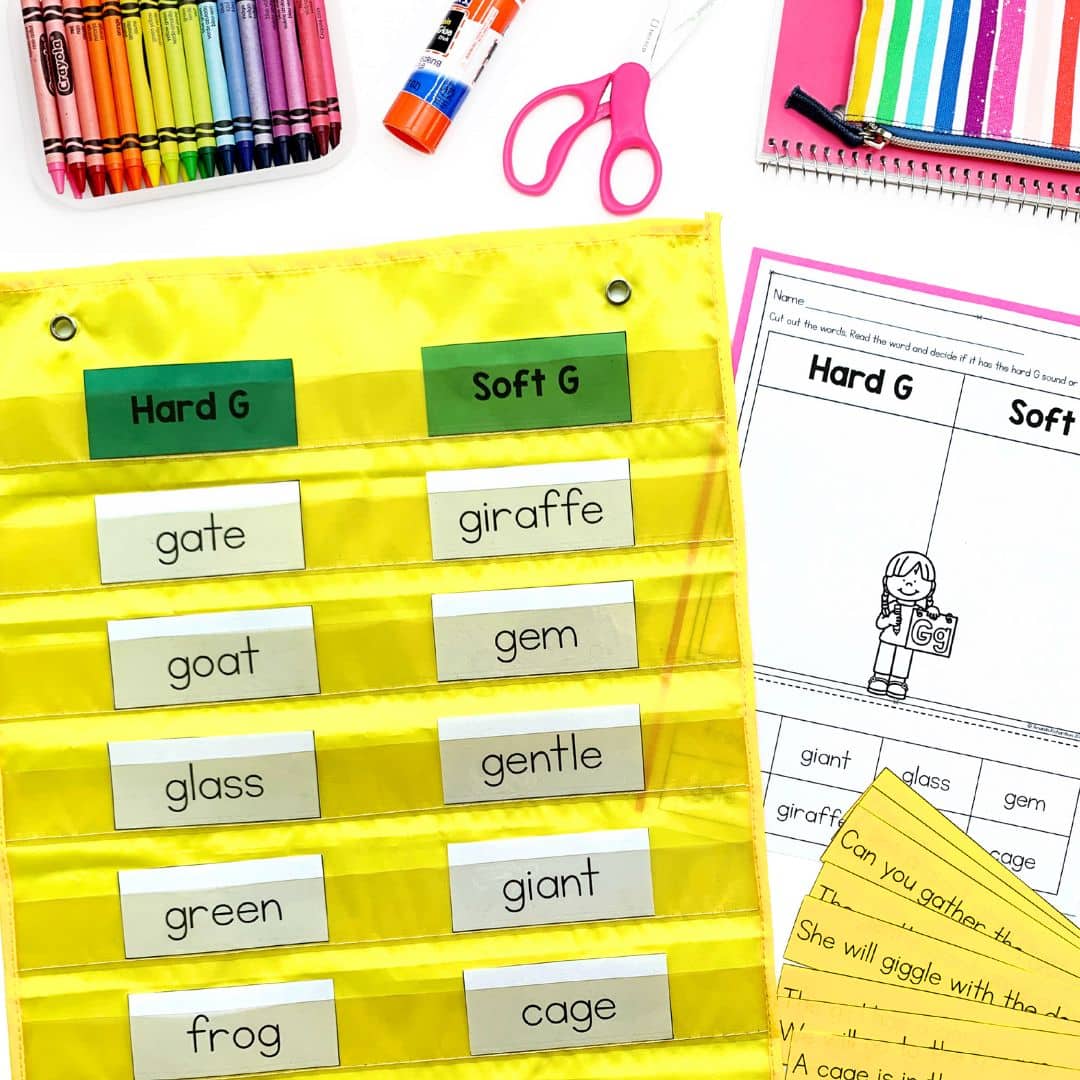
Teaching the hard and soft G rule doesn’t have to feel overwhelming. With a clear explanation, lots of practice, and a few engaging activities, your students will begin to recognize the patterns and use them while reading and writing. Just remember: it’s okay if they stumble over a few rule-breakers. The more exposure and guided practice they get, the more confident they’ll become!