







If you teach early elementary readers, you already know the power of using a decodable text. It’s one of the best tools we have to help students connect phonics skills to real reading. But here’s the thing—decodable text can be used for so much more than just reading small groups (though you all know that’s my favorite)!
Whether you’re working on strong phonics instruction, supporting families at home, or looking for meaningful ways to keep early finishers engaged, decodable text can fit almost anywhere in your literacy block. Let’s take a close look at five practical (and effective!) ways to use decodable text in your classroom.
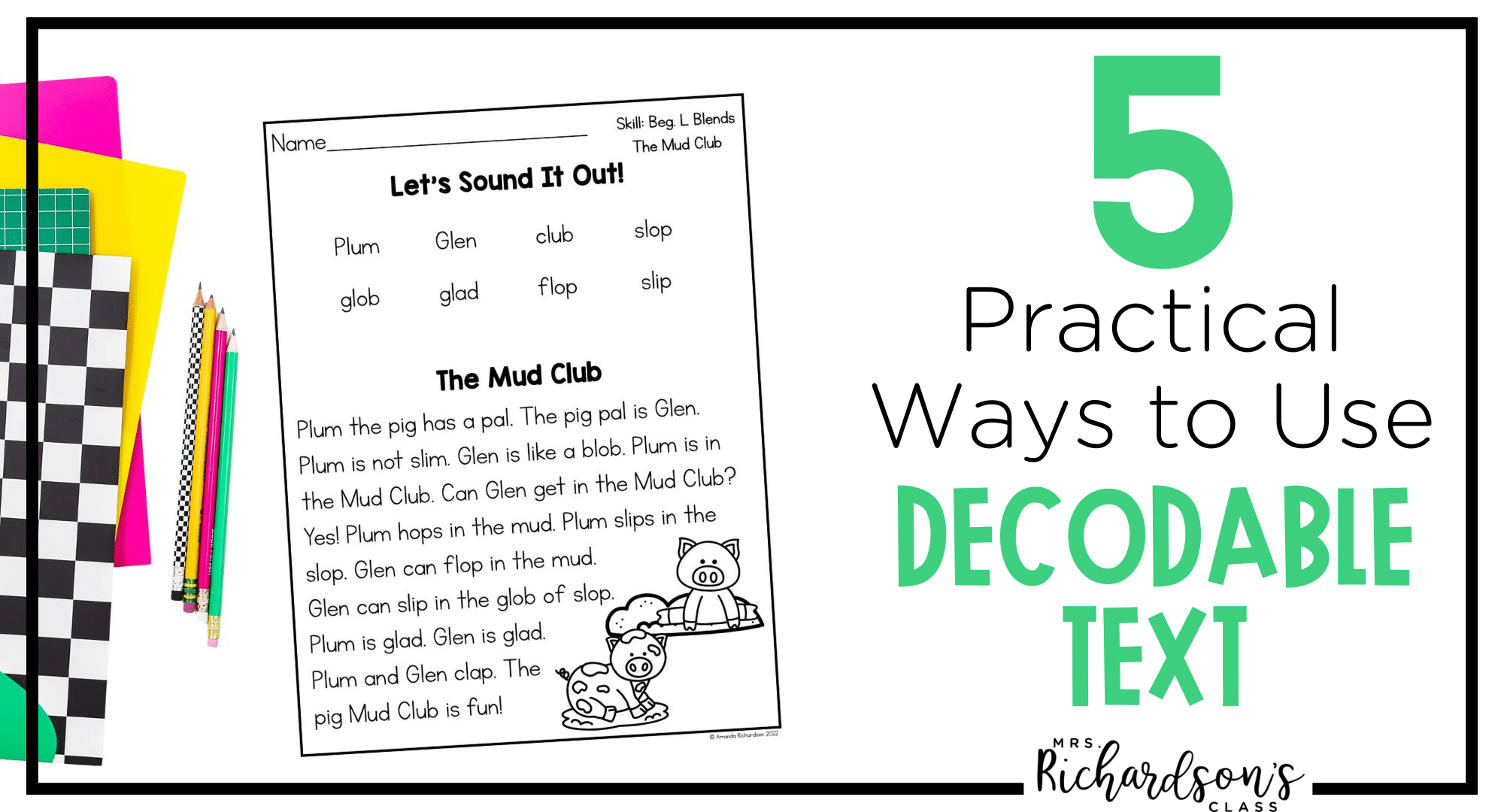
Reading small groups are where the magic happens! During this time, you can focus on a specific phonics skill and give students plenty of opportunities to practice it in connected text.
Using decodable text during reading small group lessons helps students apply what they’ve learned in phonics lessons to actual reading. It bridges the gap between isolated skill practice and fluent reading. It’s a must!
Choose a decodable passage or decodable reader that matches the sound or pattern you’re teaching—for example, CVC short vowels—and have students read aloud while you listen for accuracy and fluency.
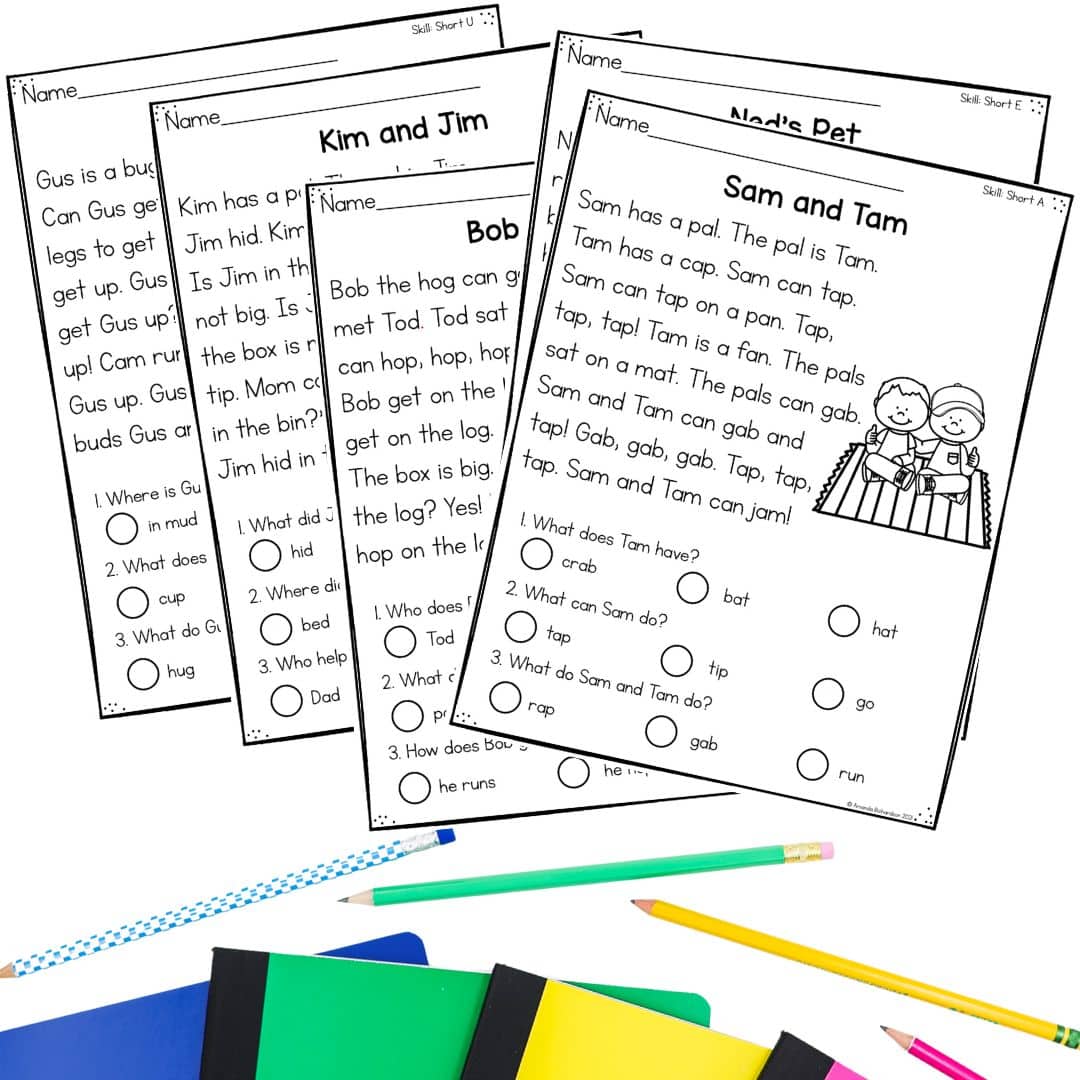
Download this set of 5 FREE passages!
Using decodable text within small groups allows students to practice decoding strategies, practice blending, and you can reinforce high-frequency words that appear in the text. You get the perfect balance of challenge and support during Tier 2 instruction.
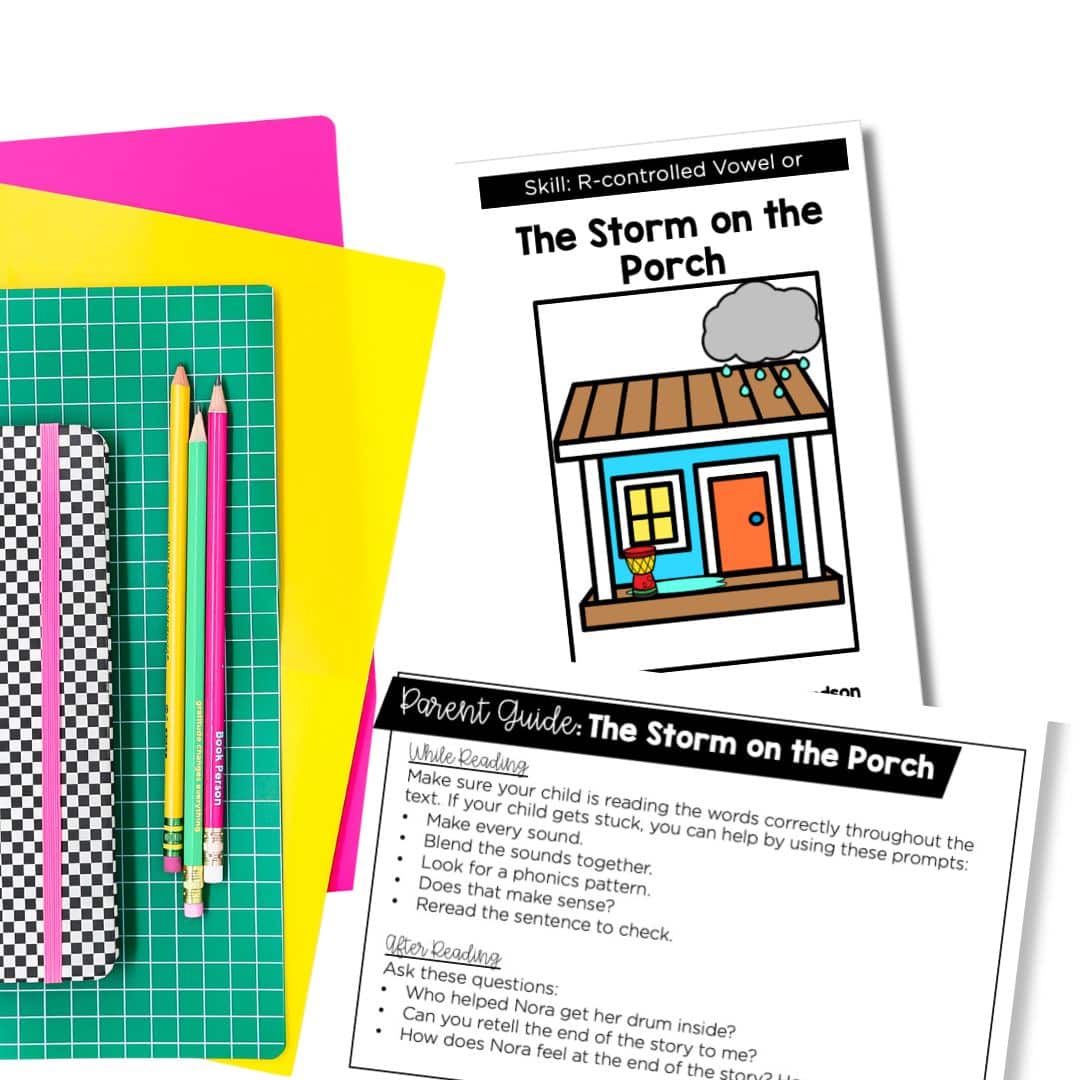
Families want to help their children read, but they often don’t know where to start. Sending home a decodable text makes it easy for parents to support phonics practice in a structured, meaningful way.
You can have families:
This simple step connects home and school learning and helps students get extra decoding practice in a low-stress environment. Decodable text is directly tied to the phonics skills their students are learning or have already learned. You are setting them up for success! This is great for building confidence!
For students who need continued support, decodable text can make all the difference. During intervention, you can use decodable passages or readers to reinforce targeted phonics patterns one step at a time.
The key here is repetition and consistency. You might use the same decodable passage for multiple sessions, focusing on a different skill each time—decoding on day one, fluency on day two, comprehension on day three, dictation on day four.
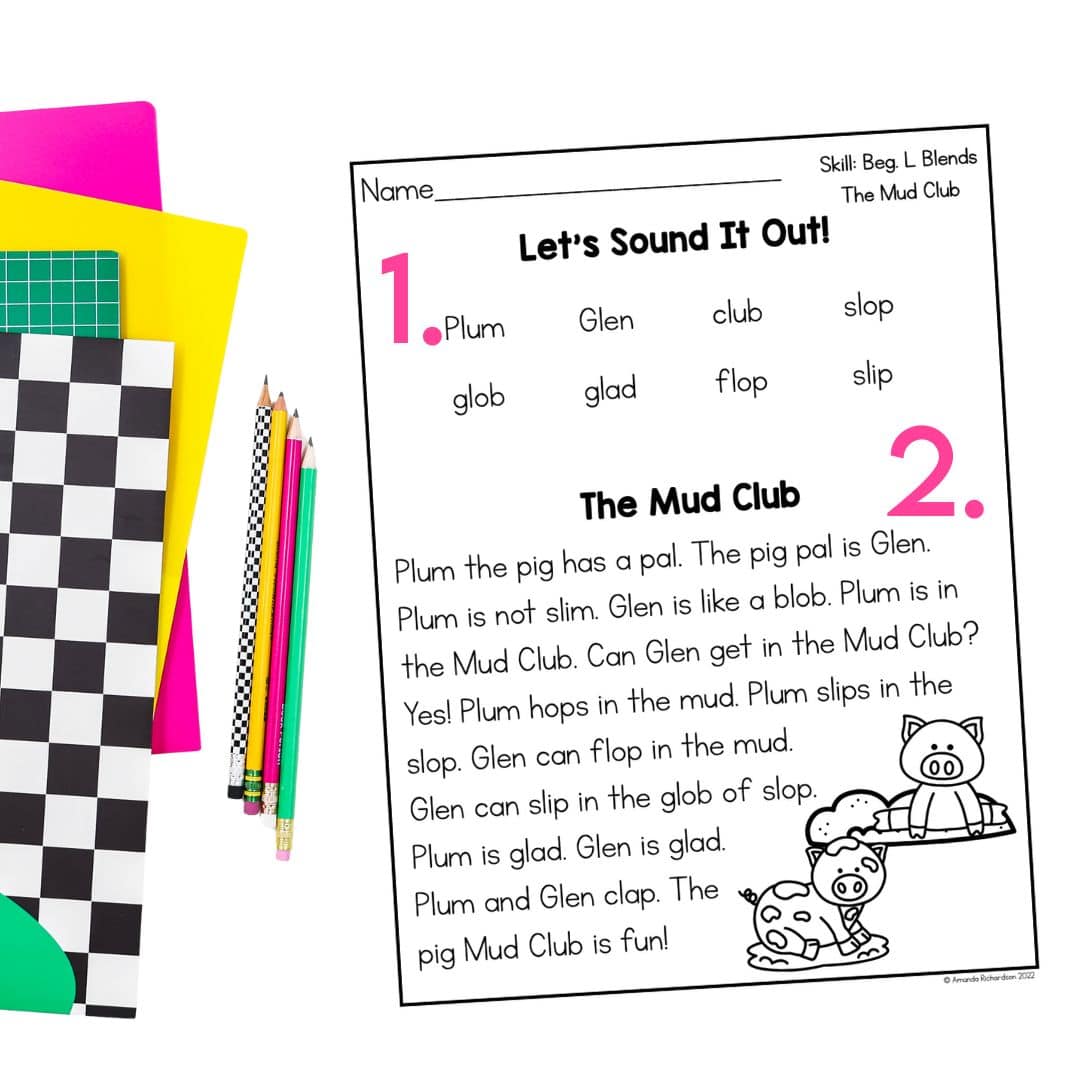

Because the text is controlled and carefully aligned to specific phonics patterns, you will be able to target specific skills students need support with. It also provides a structured way to measure progress as you monitor their decoding and encoding.
Using decodable text in intervention ensures that every minute of instruction is aligned to the student’s exact needs.
Yes—decodable text can absolutely be used for whole group instruction, too! I’ll admit I never used it this way in the classroom and didn’t think of it, but I 100% would do that today!
When introducing a new phonics pattern, try reading a short decodable passage together as a class. Project it on your screen or print it for students to follow along.

You can:
You will get to model what it looks like to work through the text. Students need to see imperfection! We are all learning and growing!
Whole group decodable lessons don’t have to take long—five to ten minutes can be enough to model decoding and build engagement. Think of it as the “I do” and “we do” before your students move into “you do” practice during small groups or literacy centers.
Early finishers can be tricky! You want something that keeps them learning, but you don’t want to create more prep work for yourself.
Decodable text is the perfect solution!
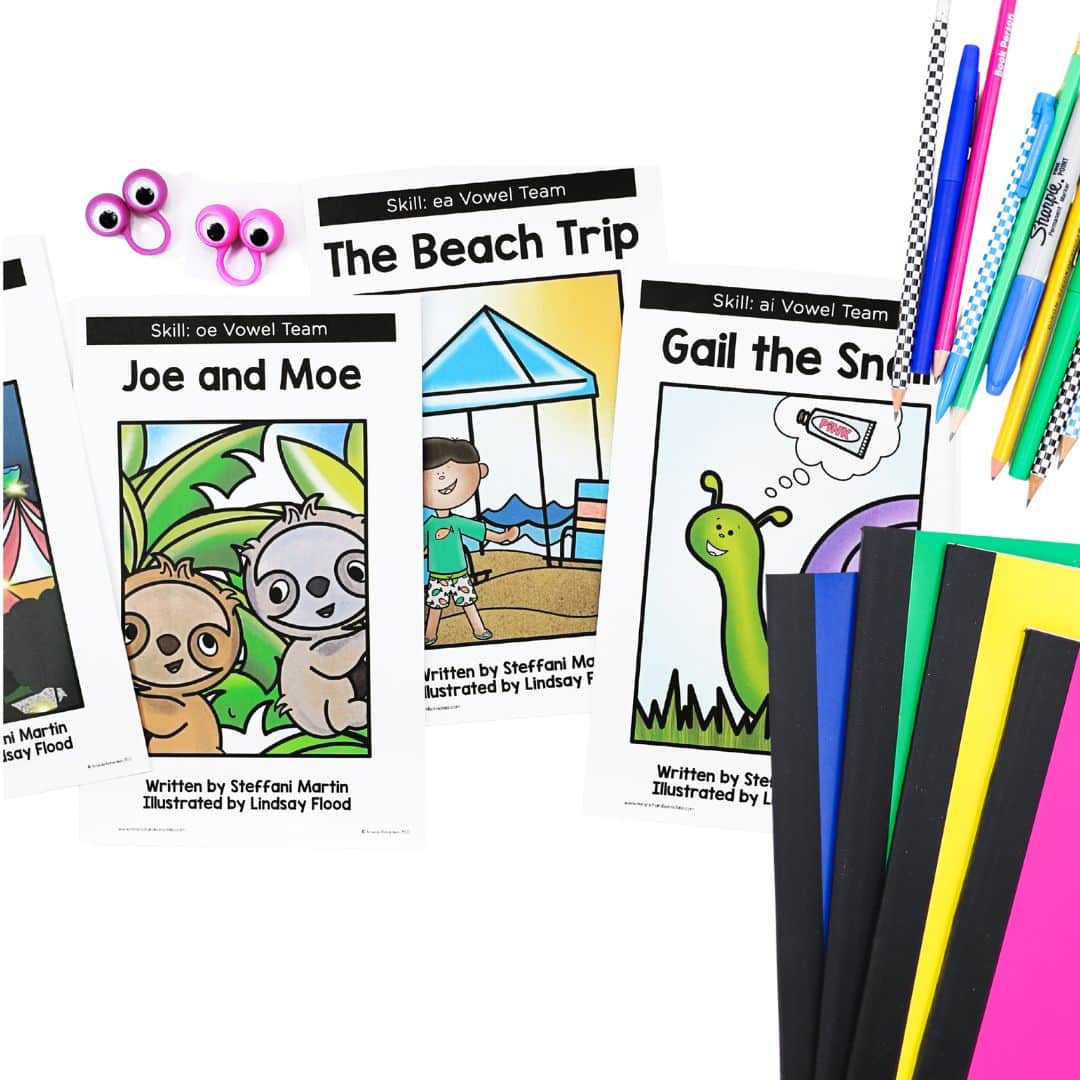
You can create a simple “Decodable Library” or “Independent Reading Basket” organized by phonics skills. Label each set (for example: Short A, Blends, Magic E) so students know what to choose. Early finishers can grab a passage or reader that matches their level and read independently or with a partner.
This not only keeps them engaged but also gives them meaningful practice with decoding, fluency, and comprehension. Plus, it’s an easy way to differentiate—students can work on exactly what they need without you having to design new tasks.
Decodable text isn’t just a tool for beginning readers—it’s a bridge that connects phonics instruction to authentic reading experiences. Whether you use it in small groups, send it home for extra practice, or keep it handy for early finishers, the key is consistency and accessibility.
When students get repeated opportunities to practice decoding in connected text, their confidence and accuracy soar. And when teachers have ready-to-use decodable resources, planning becomes a whole lot easier.
If you’re ready to make decodable text an easy, effective part of your literacy block, I’ve got you covered.
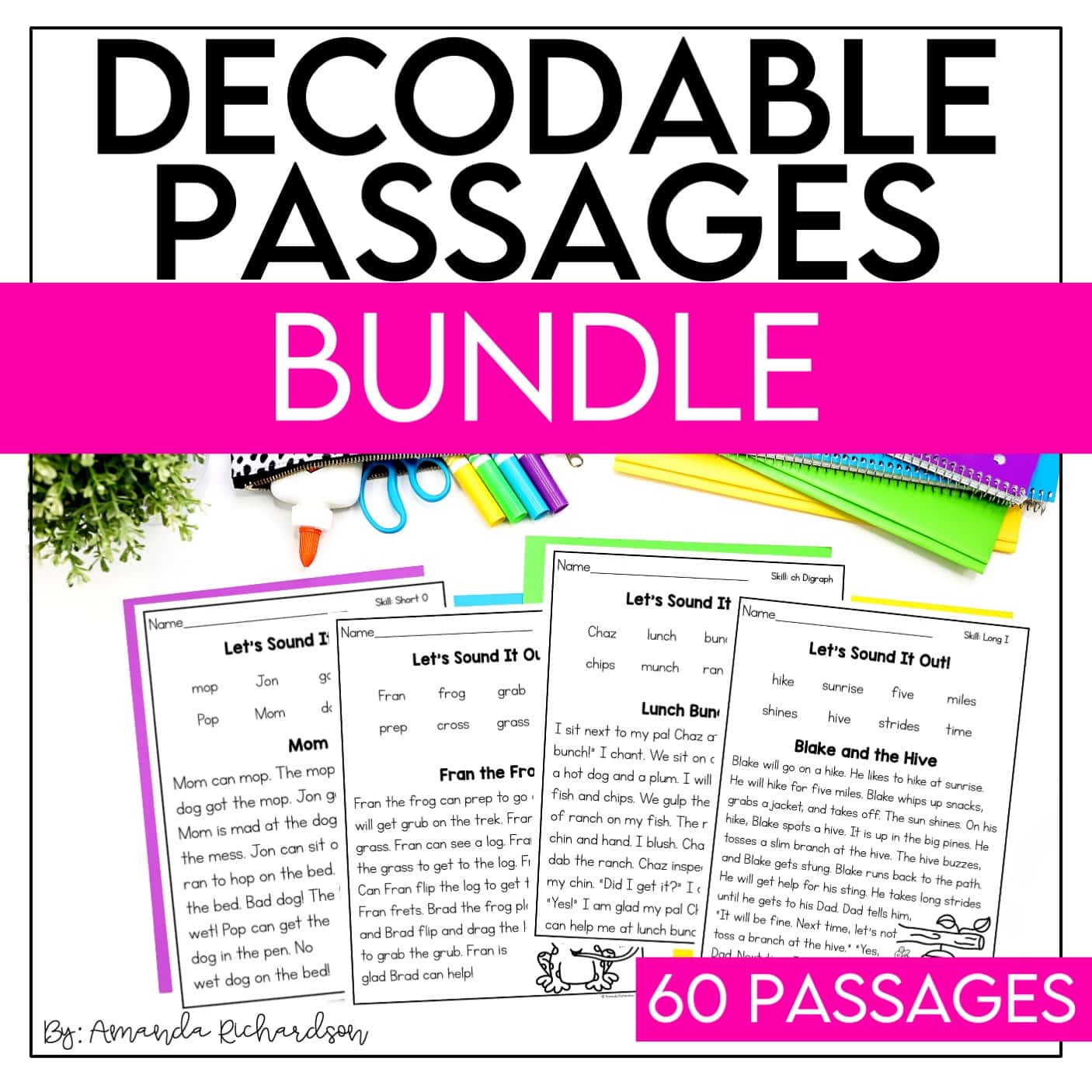
Try my Decodable Passages with Comprehension Questions—perfect for small group, intervention, or at-home practice. Each passage includes comprehension questions and focuses on a single phonics skill, making it simple to target instruction.
Or explore my Decodable Readers and Lessons—ideal for small group instruction where you provide explicit teaching and structured, confidence-building practice.

No matter how you use them, decodable texts are one of the most powerful (and flexible!) tools in your literacy toolkit.
Ready to get started? Pick one new way to use decodable text this week—you’ll be amazed at how quickly your students’ decoding skills take off!